Gutscheinbedingungen

*Gültig bis 20.09.2026 auf (fast) alles. Ausgeschlossen sind Smartboxen, Zeitschriften, Tickets, Lebensmittel, Gaming-Elektroartikel, Tinte/Toner, Gutscheine, Geschenkkarten, Blumen und Abos | Einlösbar in allen Buchhandlungen von Orell Füssli, Barth Bücher, Buchladen Rapunzel, Schuler Orell Füssli, Stauffacher und ZAP unter Vorweisung des Gutscheins, auf www.orellfüssli.ch durch Eingabe des Gutscheincodes. Beim Service „eBooks verschenken“ und bei eBook-Käufen via eReader nicht einlösbar | Mindesteinkaufswert: Fr. 100.- | Nicht mit anderen Rabatten kumulierbar.

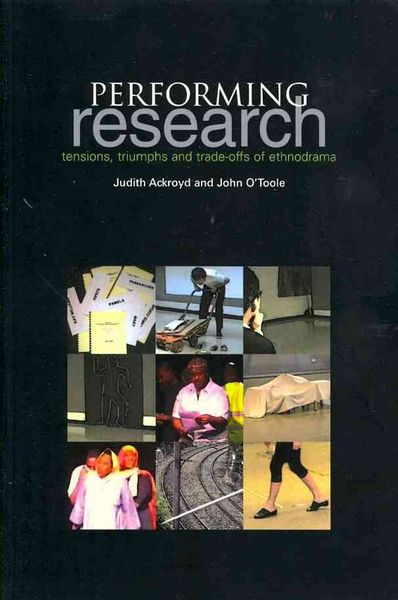
Produktbild: Ackroyd, J: Performing Research

Ackroyd, J: Performing Research Tensions, Triumphs and Trade-offs of Ethnodrama

Fr. 39.90

inkl. gesetzl. MwSt., Versandkostenfrei


Beschreibung

Produktdetails

Einband

Taschenbuch

Erscheinungsdatum

31.05.2010

Verlag

Institute of Education Press

Seitenzahl

232

Maße (L/B/H)

23.4/15.8/1.4 cm

Gewicht

368 g

Sprache

Englisch

ISBN

978-1-85856-446-3

Beschreibung

Produktdetails

Einband

Taschenbuch

Erscheinungsdatum

31.05.2010

Verlag

Institute of Education Press

Seitenzahl

232

Maße (L/B/H)

23.4/15.8/1.4 cm

Gewicht

368 g

Sprache

Englisch

ISBN

978-1-85856-446-3

Noch keine Bewertungen vorhanden

Verfassen Sie die erste Bewertung zu diesem Artikel

Helfen Sie anderen Kundinnen und Kunden durch Ihre Meinung.

Kundinnen und Kunden meinen

Bewertungen (0)

  • Produktbild: Ackroyd, J: Performing Research
  • CONTENTS: Acknowledgements; Contributors; Preface; 1. The human context: Who performs research and why?; Purposes; Respondents and witnesses; The points of view and requirements; But how much fun is it?; 2. Charting the territory: Ethnodrama and its close relations; The transience of labels; Terms and their implications for practice; The family tree; 3. Responsibilities: Social responsibility and social action; Ethics; 4. Ownership and power: Notions of authority, faithfulness and adaptation; Lack of participant homogeneity; Position and the selection of dialogue; Verbatim and characters; Beyond verbatim; Adaptation theory; Performance as reality or fiction; The gatekeepers and power; Other influences of power; Relationships between researcher and participant; 5. Aesthetic and other tensions: The elements of aesthetic form: Dialogue and fiction; Elements of aesthetic form: Mise-en-scene; Fictionalisation and authenticity; Other dramatic elements; Stylisation; Reader's theatre; Dramatic structure; Characters and acting; The commentator or 'researcher'; The paradox of ethnodrama; Conclusion; 6. Alice Hoy is not a building: Women in academia: Introduction; Questions and themes; The performance text; Generating data; Deep space; Performance-based data analysis; Workshop 1: Experimenting with data analysis; The performance text; Performing the play: Part one; As researchers we are also performing; Performing the play: Part two; Aesthetic decisions; Performing the play: Part three; Performing the play: Part four; Performing the play: Part five; Representing the researchers in performance; Performing the play: Part six; The audience; 7. Encounters in child care: Reducing complexity; Creation of characters; Discussion; 8. A Day in December: Introduction; The inciting event; The research project; Prior learning and the lure of the three act structure; Remembering Glenbrook: The structure; Remembering Glenbrook: The content; The Signals: The problematic chapter three; Finding a final turning point; A confrontation; The NIDA Short Course Program; The development of a rehearsal draft; Remembering A Day in December; A discovery; Verbatim theatre and the playwright's challenge; Conclusion: Learning from experience; 9. Scrap Pickers and other local Hong Kong projects: Fast tracking ethnodrama: A two-week assignment in Hong Kong: Introducing the case study; Section 1: The projects; The context of choice; Section 2: The Scrap Pickers project; Aims: Personal and social; The project plan; Pre-performance; Participants' critical reflections; Kate; Will; The relationship between education and research; The relationship between drama and research; The relationship between drama and educational purpose; 10. Performing histories: Voices of black rural community: From oral history to ethnodrama: The journey of the spoken word: Introduction; Stories and marginalised communities; The context of the initial research data and the project leaders; Authenticity and risks of reductionism; Artistic choices and tensions; Script development; Stakeholder interests; Closing reflections; 11. Investigating masculinities in school: It's a play for us: Ethnographic performance as part of an educational ethnography: Back story; Setting the scene; Dramatis personae; The production team: A collaborative approach; Ethical considerations; Prologue to the drama; A script is not the only way to tell a story; Limitations to the data; Sharing the emerging text: Entering into the dialogic; A matter of style and form; Negotiating the performance; The usefulness of ethnographic performance in a school setting; References; Index.