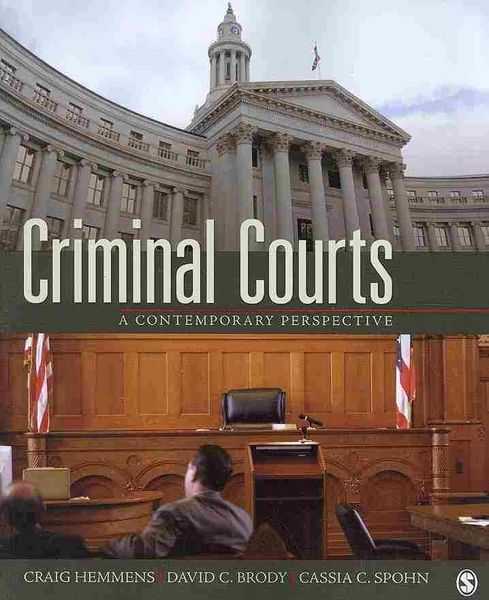
Produktbild: Criminal Courts: A Contemporary Perspective

Criminal Courts: A Contemporary Perspective A Contemporary Perspective

Fr. 52.90

inkl. gesetzl. MwSt., Versandkostenfrei


Beschreibung

Produktdetails

Einband

Taschenbuch

Erscheinungsdatum

Oktober 2009

Verlag

Sage Pubn Inc

Seitenzahl

504

Maße (L/B/H)

22.6/18.5/2.3 cm

Gewicht

839 g

Sprache

Englisch

ISBN

978-1-4129-7956-6

Beschreibung

Produktdetails

Einband

Taschenbuch

Erscheinungsdatum

Oktober 2009

Verlag

Sage Pubn Inc

Seitenzahl

504

Maße (L/B/H)

22.6/18.5/2.3 cm

Gewicht

839 g

Sprache

Englisch

ISBN

978-1-4129-7956-6

Kundinnen und Kunden meinen

0 Bewertungen

Informationen zu Bewertungen

Zur Abgabe einer Bewertung ist eine Anmeldung im Konto notwendig. Die Authentizität der Bewertungen wird von uns nicht überprüft. Wir behalten uns vor, Bewertungstexte, die unseren Richtlinien widersprechen, entsprechend zu kürzen oder zu löschen.

Die Bewertungen sind nach Format, Anzahl Sterne und Datum sortiert.

Verfassen Sie die erste Bewertung zu diesem Artikel

Helfen Sie anderen Kund*innen durch Ihre Meinung

Kundinnen und Kunden meinen

0 Bewertungen filtern

  • Produktbild: Criminal Courts: A Contemporary Perspective
  • Preface
    Acknowledgments
    SECTION I: THE PURPOSE AND STRUCTURE OF AMERICAN COURTS
    CHAPTER 1: INTRODUCTION: LAW AND THE JUDICIAL FUNCTION Why Study Courts? What is Law? The Code of Hammurabi Two Opposing Perspectives: Conflict and Consensus What is the Relationship of Law to Justice? The Rule of Law Justice, the Law, and Packer's Models of Criminal Justice Judicial Functions How Judges "Make Law" Development of the Common-Law System The Role of Courts in the Criminal Justice System Summary Discussion Questions Key Terms Internet Sites Cases Cited References/Future Reading
    CHAPTER 2: SOURCES OF LAW Introduction Sources of Law Sources of Individual Rights Due Process and the 14th Amendment Standard of Review Incorporation of the Bill of Rights Into the 14th Amendment Summary Discussion Questions Key Terms Internet Sites Cases Cited References/Future Reading
    CHAPTER 3: TYPES OF LAW Introduction Types of Law: Criminal and Civil Summary Discussion Questions Key Terms Internet Sites Cases Cited References/Future Reading
    CHAPTER 4: COURT ORGANIZATION AND STRUCTURE Introduction Jurisdiction The Structure and Jurisdiction of U.S. Courts A Brief Historical Overview Federal Courts State Courts Court Actors Overview of the Criminal Process Overview of Defendant's Rights/Due Process Summary Discussion Questions Key Terms Internet Sites Cases Cited References/Future Reading
    SECTION II: COURTROOM ACTORS AND THE COURTROOM WORKGROUP
    CHAPTER 5: PROSECUTORS Introduction Historical Evolution of the American Prosecutor The Federal Prosecutor State Prosecutors The Prosecutor's Duties Assistant Prosecutors At Work The Expansion of the Prosecutor's Discretionary Power Prosecutorial Ethics And Misconduct Community Prosecution Summary Discussion Questions Key Terms Internet Sites Cases Cited References/Future Reading
    CHAPTER 6: DEFENSE ATTORNEYS Introduction Defense Attorney's Role in Criminal Justice System Historical Development of the Right to Counsel Indigent Defense Systems Private Versus Appointed Counsel: Which is Better? Effective Assistance of Counsel Ethics and Lawyer-Client Relationships Realities of Being a Defense Attorney Summary Discussion Questions Key Terms Internet Sites Cases Cited References/Future Reading
    CHAPTER 7: JUDGES Introduction Roles And Duties Of Judges Judicial Selection Judicial Socialization and Development Judicial Accountability and Judicial Independence Summary Discussion Questions Key Terms Internet Sites Cases Cited References/Future Reading
    CHAPTER 8: THE JURY Introduction History of Jury Trials The Role of the Jury Limits On The Right To Trial By Jury Jury Size And Unanimity Requirements The Selection of Jurors Reforms to the Jury System Jury Nullification Summary Discussion Questions Key Terms Internet Sites Cases Cited References/Future Reading
    SECTION III: COURT PROCESSES
    CHAPTER 9: PRETRIAL PROCEDURES Introduction Arrest The Charging Decision Information Indictment Booking Initial Appearance Arraignment Discovery Pretrial Motions Plea Bargaining Jury Selection Summary Discussion Questions Key Terms Internet Sites Cases Cited References/Future Reading
    CHAPTER 10: THE CRIMINAL TRIAL Introduction Opening Statements The Presentation of Evidence Calling Witnesses Evidence and Rules of Evidence Closing Arguments Instructing the Jury Jury Deliberations and Verdict Summary Discussion Questions Key Terms Internet Sites Cases Cited References/Future Reading
    CHAPTER 11: SENTENCING Introduction The Goals of Sentencing The Judge's Options at Sentencing How Do Judges Decide? Modeling the Sentencing Process Summary Discussion Questions Key Terms Internet Sites Cases Cited References/Future Reading
    CHAPTER 12: THE APPELLATE PROCESS Introduction Appealing to a Higher Court The Appellate Courts The "Right" To Appeal The Writ of Habeas Corpus How Do Appellate Courts Decide? Summary Discussion Questions Key Terms Internet Sites Cases Cited References/Future Reading
    CHAPTER 13: SPECIALIZED COURTS Introduction Problem-Solving Courts Drug Treatment Courts Domestic Violence Courts Other Problem-Solving Courts Juvenile Courts Summary Discussion Questions Key Terms Internet Sites Cases Cited References/Future Reading
    Glossary
    Case Index
    General Index
    About the Authors