• Produktbild: The Earth in Transition
  • Produktbild: The Earth in Transition

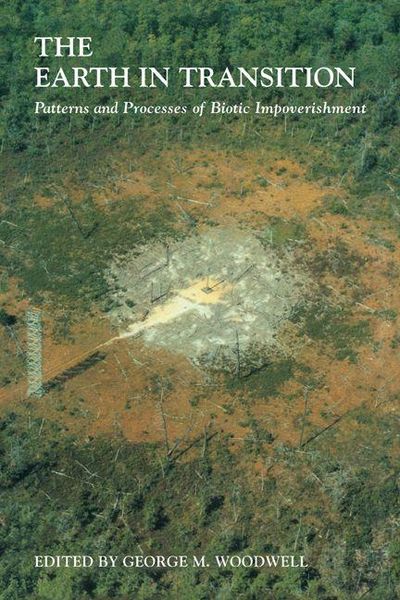
The Earth in Transition Patterns and Processes of Biotic Impoverishment

Fr. 82.90

inkl. gesetzl. MwSt., Versandkostenfrei


Beschreibung

Produktdetails

Einband

Taschenbuch

Erscheinungsdatum

27.02.2010

Herausgeber

Woodwell George M.

Verlag

Cambridge Academic

Seitenzahl

548

Maße (L/B/H)

22.9/15.2/3.2 cm

Gewicht

800 g

Sprache

Englisch

ISBN

978-0-521-39818-3

Beschreibung

Produktdetails

Einband

Taschenbuch

Erscheinungsdatum

27.02.2010

Herausgeber

Woodwell George M.

Verlag

Cambridge Academic

Seitenzahl

548

Maße (L/B/H)

22.9/15.2/3.2 cm

Gewicht

800 g

Sprache

Englisch

ISBN

978-0-521-39818-3

Noch keine Bewertungen vorhanden

Verfassen Sie die erste Bewertung zu diesem Artikel

Helfen Sie anderen Kundinnen und Kunden durch Ihre Meinung.

Kundinnen und Kunden meinen

Bewertungen (0)

  • Produktbild: The Earth in Transition
  • Produktbild: The Earth in Transition
  • Preface; Acknowledgements; List of contributors; Part I. Global Change and the Patterns of Impoverishment: 1. The earth under stress: a transition to climatic instability raises questions about patterns of impoverishment George M. Woodwell; 2. The experimental impoverishment of natural communities: effects of ionizing radiation on plant communities, 1961-1976 George M. Woodwell and Richard A. Houghton; 3. Air pollution and temperate forests: creeping degradation F. Herbert Bormann; 4. The long-term effects of air pollutants on lichen communities in Europe and North America D. L. Hawksworth; 5. Biotic impoverishment in Northern Peatlands Eville Gorham; 6. Climatic change and the survival of forest species Margaret Bryan Davis; 7. The atmosphere and the future of the biosphere: points of interactive disturbance Michael Oppenheimer; Part II. Chronic Disturbance and Natural Ecosystems: Forests: 8. The restoration of Nonsuch Island as a living museum of Bermuda's precolonial terrestrial biome David B. Wingate; 9. Patterns of impoverishment in natural communities: case history studies in forest ecosystems - New Zealand A. F. Mark and G. D. McSweeney; 10. Changes in the eucalypt forests of Australia as a result of human disturbance R. L. Specht; 11. Impoverishment in Pacific Island forests Dieter Mueller-Dombois; 12. Deforestation in Brazilian Amazonia Philip M. Fearnside; 13. Incentives for sustainable forest management Robert Repetto; Part III. Chronic Disturbance and Natural Ecosystems: Woodlands, Grasslands and Tundra: 14. Changes in the Mediterranean vegetation of Israel in response to human habitation and land use Zev Naveh and Pua Kutiel; 15. Bromus tectorum, a biotic cause of ecosystem impoverishment in the Great Basin W. D. Billings; 16. Detecting early signs of regional air-pollution injury to coastal sage scrub Walter E. Westman; 17. Arctic ecosystems: patterns of change in response to disturbance L. C. Bliss; Part IV. Chronic Disturbance and Natural Ecosystems: Aquatic and Emergent Ecosystems; Section A. Marine Systems: 18. Changes in a Red Sea coral community structure: a long-term case history study Y. Loya; 19. Are deep-sea communities resilient? J. Frederick Grassle, Nancy J. Maciolek and James A. Blake; 20. Species dominance-diversity patterns in Oceanic communities John A. McGowan; Section B. Freshwater Systems: 21. Natural and anthropogenically imposed limitations to biotic richness in fresh waters David W. Schindler; 22. Human impacts on the South Florida Wetlands: the Everglades and Big Cypress Swamp William A. Niering; 23. The impoverishment of aquatic communities by Smelter activities near Sudbury, Canada N. D. Yan and P. M. Welbourn; 24. Biotic impoverishment: effects of anthropogenic stress John Cairns Jr and James R. Pratt; Part V. Conclusion: Steps Toward a World that Runs Itself: 25. Steps toward sustainability J. Gustave Speth; 26. A reaction from a multitude Donella H. Meadows; Name index; Subject index.