KI-Beratung Beta

Produktbild: Semi-Supervised and Unsupervised Machine Learning

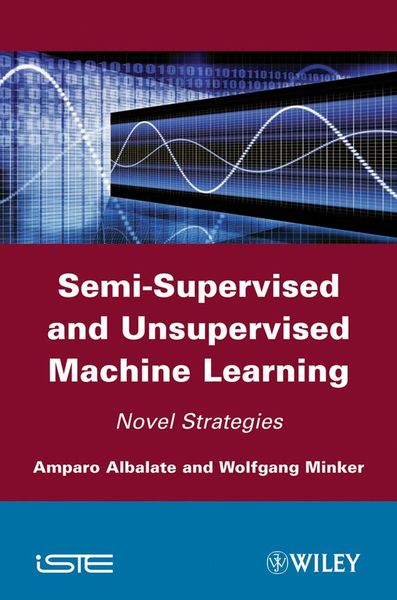
Semi-Supervised and Unsupervised Machine Learning Novel Strategies

Fr. 200.00

inkl. gesetzl. MwSt., Versandkostenfrei


Beschreibung

The book addresses the main topics and techniques used for the rapid design, adaptation, and improvement of high-performance statistical spoken language dialog systems. Over the past few years, statistical methods (or pattern recognition techniques) have been applied to many areas involving the processing...

Beschreibung

The book addresses the main topics and techniques used for the rapid design, adaptation, and improvement of high-performance statistical spoken language dialog systems. Over the past few years, statistical methods (or pattern recognition techniques) have been applied to many areas involving the processing and treatment of text data. Spoken language dialog systems are no exception. For example, automated troubleshooting agents - third generation dialog systems performing problem solving tasks over the phone - attempt to manage the high complexity of dialog by escalating the speech utterance input by the user to a smaller subsystem which carries out specific steps relevant to the input speech. This strategy is commonly referred to as "automatic call routing", and requires an appropriate analysis and categorization of the user's speech components, which would previously have been transcribed into text using an automatic speech recognition module. The performance of the call routing module has a significant and direct influence on the overall success or failure of the dialog flow.
Focusing on third generation dialog systems, this book begins with a survey of techniques used for text-mining, supervised text categorization and information retrieval, as well as typical data preparation and feature reduction models. It also illustrates the main commonalities and differences between these fields. However, one main challenge and driver of current and future research is related to adaptability and portability issues: it is a matter of fact that third generation dialog systems, especially in the problem solving area, are subject to continuous domain fluctuations. Moreover, in a broad application domain, the systems will need to operate with different contextual data, and still provide adequate performances with minimum effort or time cost. The dialog system needs to be capable of adapting to new or different data. This means that there is a need for unsupervised analysis and knowledge discovery tools which assist the dialog in detecting potential new topics (e.g. an emerging problem type), or in discovering the structure of a new data collection, for which nothing else is known or assumed. In this field of application the book also provides an interesting survey of unsupervised methods including cluster analysis, cluster content representation and synthesis, cluster evaluation, unsupervised detection of the true number of clusters/classes in a data-set, and ensembles/agreement of clustering approaches.
Produktdetails

Einband

Gebundene Ausgabe

Erscheinungsdatum

18.01.2011

Abbildungen

w. figs.

Verlag John Wiley & Sons Inc

Produktdetails

Einband

Gebundene Ausgabe

Erscheinungsdatum

18.01.2011

Abbildungen

w. figs.

Verlag John Wiley & Sons Inc
Seitenzahl

320

Maße (L/B/H)

23.6/15.5/2 cm

Gewicht

499 g

Auflage

1. Auflage

Sprache

Englisch

ISBN

978-1-84821-203-9

Herstelleradresse

Libri GmbH
Europaallee 1
36244 Bad Hersfeld
DE

Email: gpsr@libri.de

Noch keine Bewertungen vorhanden

Verfassen Sie die erste Bewertung zu diesem Artikel

Helfen Sie anderen Kundinnen und Kunden durch Ihre Meinung.

Kundinnen und Kunden meinen

Bewertungen (0)

Die Leseprobe wird geladen.
  • Produktbild: Semi-Supervised and Unsupervised Machine Learning
  • PART 1. STATE OF THE ART 1

    Chapter 1. Introduction 3

    1.1. Organization of the book 6

    1.2. Utterance corpus 8

    1.3. Datasets from the UCI repository10

    1.4. Microarray dataset 13

    1.5. Simulated datasets 14

    Chapter 2. State of the Art in Clustering and Semi-Supervised Techniques 15

    2.1. Introduction 15

    2.2. Unsupervised machine learning (clustering) 15

    2.3. A brief history of cluster analysis 16

    2.4. Cluster algorithms 19

    2.5. Applications of cluster analysis 52

    2.6. Evaluation methods 77

    2.7. Internal cluster evaluation 77

    2.8. External cluster validation 80

    2.9. Semi-supervised learning 84

    2.10. Summary 88

    PART 2. APPROACHES TO SEMI-SUPERVISED CLASSIFICATION 91

    Chapter 3. Semi-Supervised Classification Using Prior Word Clustering 93

    3.1. Introduction 93

    3.2. Dataset 94

    3.3. Utterance classification scheme 94

    3.4. Semi-supervised approach based on term clustering 98

    3.5. Disambiguation 113

    3.6. Summary 124

    Chapter 4. Semi-Supervised Classification Using Pattern Clustering 127

    4.1. Introduction 127

    4.2. New semi-supervised algorithm using the cluster and label strategy 128

    4.3. Optimum cluster labeling 132

    4.4. Supervised classification block 154

    4.5. Datasets 159

    4.6. An analysis of the bounds for the cluster and label approaches 162

    4.7. Extension through cluster pruning 164

    4.8. Simulations and results 173

    4.9. Summary 179

    PART 3 . CONTRIBUTIONS TO UNSUPERVISED CLASSIFICATION - ALGORITHMS TO DETECT THE OPTIMAL NUMBER OF CLUSTERS 183

    Chapter 5. Detection of the Number of Clusters through Non-Parametric Clustering Algorithms 185

    5.1. Introduction 185

    5.2. New hierarchical pole-based clustering algorithm 186

    5.3. Evaluation 190

    5.4. Datasets 192

    5.5. Summary 197

    Chapter 6. Detecting the Number of Clusters through Cluster Validation 199

    6.1. Introduction 199

    6.2. Cluster validation methods 201

    6.3. Combination approach based on quantiles 206

    6.4. Datasets 212

    6.5. Results 214

    6.6. Application of speech utterances 223

    6.7. Summary 224

    Bibliography 227

    Index 243