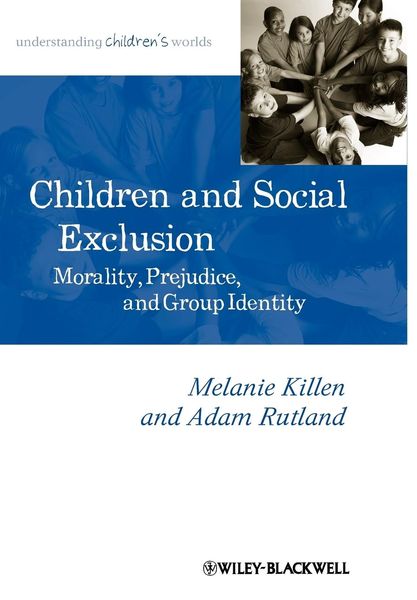
Children and Social Exclusion Morality, Prejudice, and Group Identity
-
- Hardcover ausgewählt
- Taschenbuch
- eBook
-
Sprache:Englisch
Fr. 149.00
inkl. gesetzl. MwSt.,
Beschreibung
Produktdetails
Einband
Gebundene Ausgabe
Erscheinungsdatum
06.05.2011
Verlag
WileySeitenzahl
246
Maße (L/B/H)
23.5/15.7/1.9 cm
Gewicht
463 g
Sprache
Englisch
ISBN
978-1-4051-7651-4
"This is an outstanding book. Through their masterful integration of developmental and social psychological theories and research, Killen and Rutland have made a major contribution to our understanding of children's morality, social identity, exclusion, and intergroup relationships. This very engaging book is a must-read for scholars and others interested in these important and timely topics."
Judi Smetana, University of Rochester
"This book makes important and unique contributions to the study of intergroup relations, morality, and social development. The authors, who are distinguished scholars in this area, introduce original insights that synthesize past research and will guide research in this area for many years to come."
John F. Dovidio, Yale University
"This excellent book offers a sweeping treatment of a problem that all people either experience or fear at some time in their lives: social exclusion. The authors examine the problem from a developmental perspective, offering a comprehensive account of the roots, effects, and broader significance of social
exclusion during childhood. This original, integrative account now stands as the definitive work on this familiar dimension of children's social development."
William Damon, Stanford University
"Killen and Rutland have done an extraordinary job illuminating a critical phenomenon: when and why children exclude other children. This topic has never been more important, and their book is scholarly, fascinating, wise, and extremely valuable. It is a must-read for everyone interested in understanding how to work toward a just society."
Carol Dweck, Stanford University
Social inclusion and exclusion are pervasive aspects of social life. Understanding when exclusion is legitimate or wrong reflects an understanding of morality. While there are times when exclusion is legitimate and fosters group functioning, there are also times when it reflects prejudicial biases and stereotypic expectations. How children weigh fairness and stereotypic expectations when making exclusion decisions is determined by their understanding of group norms, social identity, and friendships with children from other backgrounds. In our contemporary global society, few topics are as timely or pressing as exclusion. Children and Social Exclusion: Morality, Prejudice, and Group Identity delves deeply into the origins of prejudice and the emergence of morality to explain why children include some and exclude others and sheds light on the origins of stereotyping, prejudice, and social justice.
By tackling these important issues from a global perspective, Children and Social Exclusion: Morality, Prejudice, and Group Identity illustrates how the concept of exclusion might be better understood in multiple cultures and reveals its implications in regions of conflict in the world.
Noch keine Bewertungen vorhanden
Verfassen Sie die erste Bewertung zu diesem Artikel
Helfen Sie anderen Kundinnen und Kunden durch Ihre Meinung.