
Gutscheinbedingungen

*Gültig bis 18.08.2026 auf (fast) alles. Ausgeschlossen sind Smartboxen, Zeitschriften, Tickets, Lebensmittel, Gaming-Elektroartikel, Tinte/Toner, Gutscheine, Geschenkkarten, Blumen und Abos | Einlösbar in allen Buchhandlungen von Orell Füssli, Barth Bücher, Buchladen Rapunzel, Schuler Orell Füssli, Stauffacher und ZAP unter Vorweisung des Gutscheins, auf www.orellfüssli.ch durch Eingabe des Gutscheincodes. Beim Service „eBooks verschenken“ und bei eBook-Käufen via eReader nicht einlösbar | Mindesteinkaufswert: Fr. 100.- | Nicht mit anderen Rabatten kumulierbar.

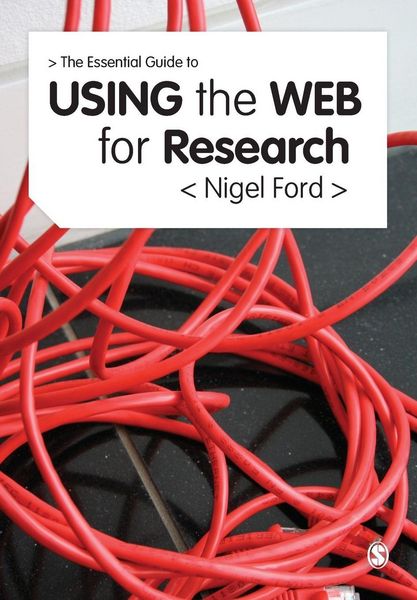
  • Produktbild: The Essential Guide to Using the Web for Research
  • Produktbild: The Essential Guide to Using the Web for Research

The Essential Guide to Using the Web for Research

Fr. 77.90

inkl. gesetzl. MwSt., Versandkostenfrei


Beschreibung

Produktdetails

Einband

Taschenbuch

Erscheinungsdatum

14.10.2011

Verlag

Sage Publications

Seitenzahl

256

Maße (L/B/H)

24.4/17/1.4 cm

Gewicht

440 g

Sprache

Englisch

ISBN

978-0-85702-365-0

Beschreibung

Zitat

Ford offers the answers to the question of how to find interesting web material for your research and it is clear that here is where Ford's expertise comes through. Personally, I use mainly Google, Picarta and some catalogues of universities and research institutions. Ford offers a number of additions to my repertoire. In addition to Google, he includes SciVerse Scopus and Web of Knowledge and advises that a systematic search strategy should constantly be evaluated and, if necessary, adjusted.

Produktdetails

Einband

Taschenbuch

Erscheinungsdatum

14.10.2011

Verlag

Sage Publications

Seitenzahl

256

Maße (L/B/H)

24.4/17/1.4 cm

Gewicht

440 g

Sprache

Englisch

ISBN

978-0-85702-365-0

Herstelleradresse

Libri GmbH
Europaallee 1
36244 Bad Hersfeld
DE

Email: gpsr@libri.de

Noch keine Bewertungen vorhanden

Verfassen Sie die erste Bewertung zu diesem Artikel

Helfen Sie anderen Kundinnen und Kunden durch Ihre Meinung.

Kundinnen und Kunden meinen

Bewertungen (0)

Die Leseprobe wird geladen.
  • Produktbild: The Essential Guide to Using the Web for Research
  • Produktbild: The Essential Guide to Using the Web for Research
  • Introduction
    Why Read This Book?
    The Book¿s Underlying Rationale
    Search Tools Covered in this Book
    Learning and Critical Thinking: The Essentials
    Learning and Assessment Basics
    Essential Learning Components
    Summary
    Clarifying What Is Required of You
    Clarifying the Nature of your Assignment
    Planning your Assignment
    Summary
    Finding High-Quality Information
    Defining ¿Authoritative¿ Information
    Information Seeking
    Summary
    How to Do a Literature Review
    Initial Explorations
    Strategies for Finding High-Quality Academic Sources
    Summary
    Information Sources and Search Tools
    Types of information source
    Types of search tool
    Summary
    Mapping Search Approaches and Techniques to Information Needs
    Directory-Based Browsing and Searching
    Topic Similarity Searching
    Document Similarity Searching
    Filtering
    Citation Searching
    Boolean and Other Advanced Search Engine Operators
    Summary
    Scholarly Search Tools in Detail
    When to Use Which Search Tools
    Google Scholar
    SciVerse Scopus
    Web of Knowledge Incorporating Web of Science
    Summary
    Transforming Information into Evidence-Based Arguments
    Making Information ¿Your Own¿
    Critically Evaluating Information
    Validity, Reliability, Objectivity and Generalisability as Critical Tools
    Developing Your Own Evidence-Based Arguments
    Summary
    Presenting Your Evidence Effectively
    Plagiarism
    Citing Your Sources
    Summary
    Keeping up to Date
    A New Document is Published on your Topic
    Documents in Which You Are Interested Are Cited in a Newly Published Document
    An Author is Cited by a New Document or Publishes a New Document
    A New Issue of a Journal in which you are Interested is Published
    A website in Which You Are Interested is Updated
    Summary
    Organizing and Sharing Your Information
    Mendeley Basics
    Importing Data from Google Scholar and Other Search Tools
    Adding PDF Files to Your Library
    Inserting References into Your Work
    Summary