KI-Beratung Beta

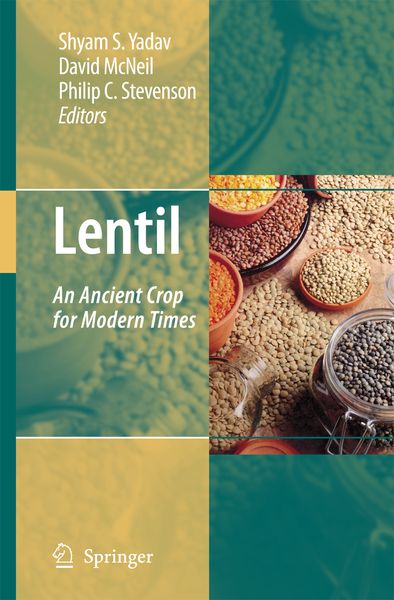
  • Produktbild: Lentil
  • Produktbild: Lentil

Lentil An Ancient Crop for Modern Times

Fr. 191.00

inkl. gesetzl. MwSt., Versandkostenfrei


Beschreibung

On behalf of the United States Department of Agriculture, I am pleased to introduce the book Lentil: An Ancient Crop for Modern Times. The articles and essays in this volume, submitted by nearly 100 researchers, educators, and other experts, contain comprehensive information on a variety of topics of...

Beschreibung

On behalf of the United States Department of Agriculture, I am pleased to introduce the book Lentil: An Ancient Crop for Modern Times. The articles and essays in this volume, submitted by nearly 100 researchers, educators, and other experts, contain comprehensive information on a variety of topics of significance for lentil growers, researchers, and consumers worldwide. Cultivated lentils (Lens culinars), an annual legume crop, have been grown as an important food source for over 8,000 years. They come in two main varieties: macrosperma (with large seeds and little pigmentation), and microsperma (with small seeds and some pigmentation). Depending on their variety and breed, however, lentil seeds can range in color from red-orange, to yellow, green, brown, or black. They are cultivated and consumed throughout the world, with Canada, Turkey and India being the top producers. Although the production of lentils and other pulse legume crops lags far behind cereal production in most nations, including the United States, production remains highly important because of its benefits for producers and consumers alike. Lentil seeds provide high levels of protein and, when consumed in combination with cereals, they provide adequate amounts of essential amino acids for the human diet. Their relatively short cooking time provides an additional advantage. Lentil production is equally beneficial for producers, as lentils have a high tolerance for extreme environmental conditions such as drought and hot temperatures, and can be grown in semiarid regions without irrigation.

Produktdetails

Einband

Taschenbuch

Erscheinungsdatum

19.10.2010

Abbildungen

XXIII, 461 p.

Herausgeber Shyam S. Yadav + weitere

Produktdetails

Einband

Taschenbuch

Erscheinungsdatum

19.10.2010

Abbildungen

XXIII, 461 p.

Herausgeber
Verlag Springer Netherland
Seitenzahl

461

Maße (L/B/H)

23.5/15.5/2.7 cm

Gewicht

733 g

Auflage

Softcover reprint of hardcover 1st edition 2007

Sprache

Englisch

ISBN

978-90-481-7605-2

Herstelleradresse

Springer-Verlag GmbH
Tiergartenstr. 17
69121 Heidelberg
DE

Email: ProductSafety@springernature.com

Noch keine Bewertungen vorhanden

Verfassen Sie die erste Bewertung zu diesem Artikel

Helfen Sie anderen Kundinnen und Kunden durch Ihre Meinung.

Kundinnen und Kunden meinen

Bewertungen (0)

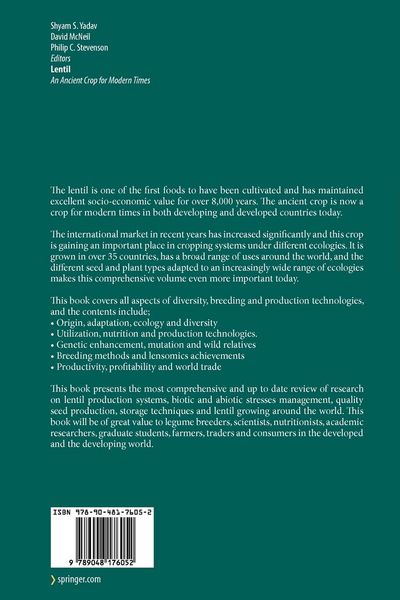
  • Produktbild: Lentil
  • Produktbild: Lentil
  • History and Origin.- Lens Biodiversity.- Adaptation and Ecology.- Uses and Consumption.- Nutritional Value.- Global Production and World Trade.- Lentil-Based Cropping Systems.- Rhizobium Management and Nitrogen Fixation.- Nutrient and Irrigation Management.- Weed Management.- Commercial cultivation and Profitability.- Genetics and Cytogenetics of Lentil.- Mutation Breeding.- Wild Relatives And Biotechnological Approaches.- Breeding Methods and Achievements.- Varietal Adaptation, Participatory Breeding and Plant Type.- Lensomics: Advances in Genomics and molecular Techniques for Lentil Breeding and Management.- Lentil Diseases.- Abiotic Stresses.- Insect Pests of Lentil and Their Management.- Quality Seed Production.- Drying and Storing Lentils: Engineering and Entomological Aspects.- Lentil Growers and Production Systems around the World.