KI-Beratung Beta

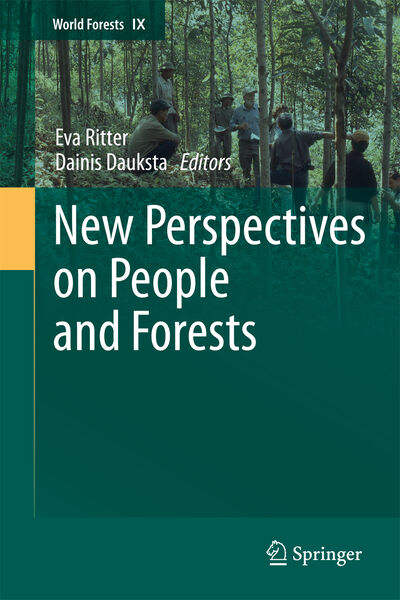
  • Produktbild: New Perspectives on People and Forests
  • Produktbild: New Perspectives on People and Forests
Band 9

New Perspectives on People and Forests

Aus der Reihe World Forests

Fr. 191.00

inkl. gesetzl. MwSt., Versandkostenfrei


Beschreibung

Produktdetails

Einband

Gebundene Ausgabe

Erscheinungsdatum

06.05.2011

Abbildungen

XVIII, 250 p.

Herausgeber

Eva Ritter + weitere

Verlag

Springer Netherland

Seitenzahl

250

Maße (L/B/H)

24.1/16/2 cm

Gewicht

519 g

Auflage

1. Auflage

Sprache

Englisch

ISBN

978-94-007-1149-5

Beschreibung

Rezension

From the reviews:

“The book is the exploration of the cultural, biological, spiritual, economic, and emotional components of the forested landscape of northern Europe from the earliest records of interactions between humans and forests to the present day. … This volume should certainly be considered as part of the literature of landscape ecology, as it considers throughout the interactions between humans, forests, and forested landscapes. … For those with a humanistic or philosophical bent, it is likely a worthwhile read … .” (Ralph E. J. Boerner, Landscape Ecology, Vol. 27, 2012)

Produktdetails

Einband

Gebundene Ausgabe

Erscheinungsdatum

06.05.2011

Abbildungen

XVIII, 250 p.

Herausgeber

Verlag

Springer Netherland

Seitenzahl

250

Maße (L/B/H)

24.1/16/2 cm

Gewicht

519 g

Auflage

1. Auflage

Sprache

Englisch

ISBN

978-94-007-1149-5

Herstelleradresse

Springer-Verlag KG
Sachsenplatz 4-6
1201 Wien
AT

Email: ProductSafety@springernature.com

Noch keine Bewertungen vorhanden

Verfassen Sie die erste Bewertung zu diesem Artikel

Helfen Sie anderen Kundinnen und Kunden durch Ihre Meinung.

Kundinnen und Kunden meinen

Bewertungen (0)

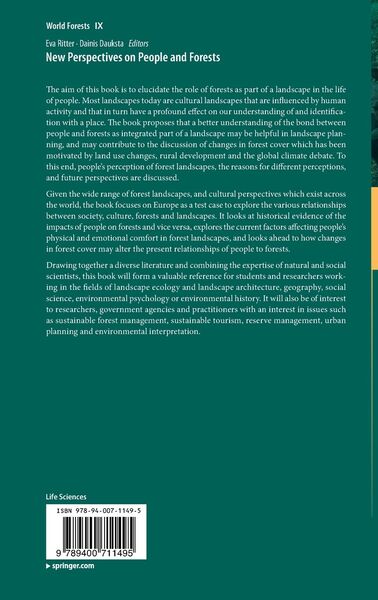
  • Produktbild: New Perspectives on People and Forests
  • Produktbild: New Perspectives on People and Forests
  • PrefaceContentAbout the authorsContributorsPART I1 Introduction – The crooked timber of humanityDainis Dauksta2 Forests in landscapes – The myth of untouched wildernessEva Ritter2.1 People and forests in prehistoric times2.1.1 Hunter-gatherers in Europe2.1.2 The mid-Holocene elm decline2.1.3 The Great Transition2.1.4 Early agricultural impacts on forests2.2 Forest development in historical times2.2.1 The great deforestation of the Ancient World2.2.2 Impacts on forests in Northern and Central Europe2.2.3 Forest protection and forest expansion2.3 Conclusion3 Overcoming Physicophobia – Forests as the sacred source of our human originsRoy Jackson3.1 The forest as nothing more than useful3.2 Rousseau: Friend of the forest3.2.1 The demystification of the forest3.2.2 The “Savage Man”3.3 Nietzsche and the sacredness of nature3.3.1 Nietzsche’s criticism of modernity3.3.2 Nietzsche’s “religious” experience3.4 ConclusionPART II4 Royal forests – Hunting and other forest use in Medieval EnglandDella Hooke4.1 Forests as game reserves4.1.1 The location of forests4.1.2 Forest rights and administration4.2 Medieval hunting4.2.1 Anglo-Saxon hunting and game reserves4.2.2 Medieval hunting methods4.2.3 Hunting iconography in medieval literature4.3 The use of other forest resources4.3.1 Forest pasture4.3.2 Other forest products4.4 The decline of the forests4.5 Hunting in post-medieval times4.6 Conclusion5 Forests as commons – Changing traditions and governance in EuropeChristopherShort5.1 Introduction to the commons5.2 History of forests as commons in Europe5.2.1 Northwestern Europe and the Alps5.2.2 Southern Europe5.2.3 United Kingdom5.3 How the role and use of forests is changing5.4 The relationship between people and forest commons5.5 Conclusion6 New forest owners – Small scale forestry and changes in forest ownershipÁine Ní Dhubháin6.1 What is small-scale forestry?6.2 Characteristics of small-scale forests6.3 Owners of small-scale forests6.3.1 Ownership structure6.3.2 Objectives of small-scale forest owners6.4 Nature of small-scale forests6.5 Consequences of the changing ownership structure6.5.1 Forest fragmentation6.5.2 Recreation and access6.5.3 Timber production6.5.4 Nature conservation6.6 Conclusion7 Forest and recreation – New functions of afforestation as seen in DenmarkCarla K. Smink7.1 Forest recreation: a policy perspective7.2 Forest use in Denmark7.3 Afforestation: creation of recreation opportunities7.4 ConclusionPART III8 From post to pillar – The development and persistence of an arboreal metaphorDainis Dauksta8.1 The wooden post in prehistory and the growth of symbols8.1.1 Timber circles8.1.2 Celtic and La Tène sites8.2 The layering of connected symbols8.2.1 The anthropomorphic tree8.2.2 The lopped tree, the axe and the thunder god8.2.3 The Maypole8.3 The Classical column8.4 Two modern vestiges of the sacred pillar8.5 Conclusion9 Landscape painting and the forest – The influence of cultural factors in the depiction of trees and forestsDainis Dauksta9.1 Medieval symbolic and factual landscapes9.1.1Symbols of Christ, crucifixion and redemption9.1.2 Perspective, nature and classical mythology9.1.3 Hunting, forestry and country life9.2 Poetic landscapes as concept9.3 New symbolic and factual landscapes9.4 Modern transcendentalism and symbolism9.4.1 David Jones; a coalescence of ancient themes9.4.2 Modern symbolism: irony, the sacred and the secular9.5 Conclusion10 Space and place – Popular perceptions of forestsCarl Griffin10.1 Space and place10.1.1 A range of perceptions, a range of perspectives10.1.2 Understanding popular perceptions of forests10.2 Forests in the landscape and the popular imagination10.2.1 Changing meanings, changing contexts10.2.2 Forests as places apart10.3 The cultural distinctiveness of forests10.3.1 Floral and faunal cultures10.3.2 Everyday cultures10.4 Conclusions: persistences and reimaginings11 Materiality and identity – Forests, trees and senses of belongingOwain Jones11.1 Introduction11.2 Identity11.3 Forests, identity and place11.3.1 Forests as material places of becoming11.3.2 Forests of places of (sensed) dwelling11.4 Forests and practices of identities11.4.1 Global sense of identity11.4.2 National sense of identity11.4.3 Regional sense of identity11.4.4 Local and individual sense of identity11.5 Complex and contested identities11.5.1 Forests as spaces of otherness11.5.2 Forests as places to lose identity11.5.3 Forests as places to find identity11.5.4 Forests: Gender and identity11.6 Conclusion12 Definition and concepts – The etymology and use of the concepts forests and landscapeHanna Byskov Ovesen and Kirsten Krogh Hansen12.1 The use of concepts12.2 Forest12.2.1Etymology12.2.2 Present use12.3 Landscape12.3.1 Etymology12.3.2 Present use12.4 ConclusionPART IV13 Tree use and landscape changes – Development of a woodland area in SwedenMårten Aronsson and Eva Ritter13.1 The area of Bråbygden13.2 Tree species in the Bråbygden area13.2.1 The natural tree vegetation13.2.2 The function and use of tree species13.3 Human impact on forests, trees and the landscape13.3.1 Grazing and browsing13.3.2 Forest fires and slash-and-burn cultivation13.3.3 Tar distillation and charcoal production13.3.4 Pollards and leaf-fodder harvesting13.3.5 Population growth13.4 Landscape development during medieval times13.5 Landscape development since the 18th century13.5.1 Forest description and forest functions13.5.2 Landscape development13.5.3 Land us changes during the 20th century 13.6 Some thoughts about the future14 Forest landscapes in Europe – Visual characteristics and the role of arboricultureEva Ritter14.1 Landscape perception and analysis14.1.1 Landscape perception and preferences14.1.2 Concepts of landscape analysis14.2 Visual landscape characteristics14.2.1 Degree of openness14.2.2 Complexity and contrast14.3 Tree use and landscape development14.4 Aesthetics in landscape management14.5 ConclusionPART V15 Conclusions – Towards a symbiotic relationshipEva Ritter and Dainis Dauksta15.1 Contradicting forest values15.2 Changing attitudes and relationships15.3 Future perspectivesIndex.