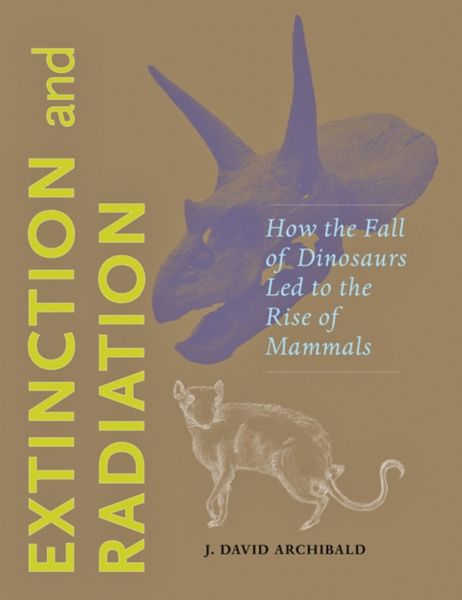
Extinction and Radiation How the Fall of Dinosaurs Led to the Rise of Mammals
-
- Englisch ausgewählt
Fr. 99.90
inkl. gesetzl. MwSt.,
Beschreibung
Produktdetails
Einband
Gebundene Ausgabe
Erscheinungsdatum
10.05.2011
Abbildungen
schwarz-weiss Illustrationen, Zeichnungen, schwarz-weiss, schwarz-weiss Illustrationen, Karten
Verlag
University PressesSeitenzahl
120
Maße (L/B/H)
28.5/22.3/1.4 cm
Gewicht
594 g
Sprache
Englisch
ISBN
978-0-8018-9805-1
In the geological blink of an eye, mammals moved from an obscure group of vertebrates into a class of planetary dominance. Why? J. David Archibald's provocative study identifies the fall of dinosaurs as the factor that allowed mammals to evolve into the dominant tetrapod form.
Archibald refutes the widely accepted single-cause impact theory for dinosaur extinction. He demonstrates that multiple factors--massive volcanic eruptions, loss of shallow seas, and extraterrestrial impact--likely led to their demise. While their avian relatives ultimately survived and thrived, terrestrial dinosaurs did not. Taking their place as the dominant land and sea tetrapods were mammals, whose radiation was explosive following nonavian dinosaur extinction.
Archibald argues that because of dinosaurs, Mesozoic mammals changed relatively slowly for 145 million years compared to the prodigious Cenozoic radiation that followed. Finally out from under the shadow of the giant reptiles, Cenozoic mammals evolved into the forms we recognize today in a mere ten million years after dinosaur extinction.
Extinction and Radiation is the first book to convincingly link the rise of mammals with the fall of dinosaurs. Piecing together evidence from both molecular biology and the fossil record, Archibald shows how science is edging closer to understanding exactly what happened during the mass extinctions near the K/T boundary and the radiation that followed.
Noch keine Bewertungen vorhanden
Verfassen Sie die erste Bewertung zu diesem Artikel
Helfen Sie anderen Kundinnen und Kunden durch Ihre Meinung.