• Produktbild: Why Literature?
  • Produktbild: Why Literature?

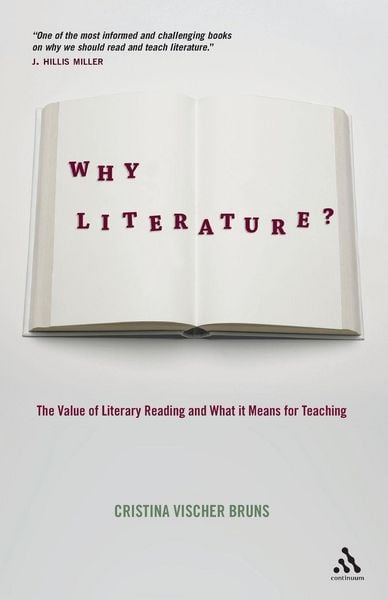
Why Literature? The Value of Literary Reading and What It Means for Teaching

Fr. 56.90

inkl. gesetzl. MwSt., Versandkostenfrei


Beschreibung

Produktdetails

Einband

Taschenbuch

Erscheinungsdatum

05.05.2011

Verlag

Bloomsbury Academic

Seitenzahl

176

Maße (L/B/H)

21.6/14/1 cm

Gewicht

228 g

Sprache

Englisch

ISBN

978-1-4411-2465-4

Beschreibung

Produktdetails

Einband

Taschenbuch

Erscheinungsdatum

05.05.2011

Verlag

Bloomsbury Academic

Seitenzahl

176

Maße (L/B/H)

21.6/14/1 cm

Gewicht

228 g

Sprache

Englisch

ISBN

978-1-4411-2465-4

Herstelleradresse

Libri GmbH
Europaallee 1
36244 Bad Hersfeld
DE

Email: gpsr@libri.de

Kundinnen und Kunden meinen

0 Bewertungen

Informationen zu Bewertungen

Zur Abgabe einer Bewertung ist eine Anmeldung im Konto notwendig. Die Authentizität der Bewertungen wird von uns nicht überprüft. Wir behalten uns vor, Bewertungstexte, die unseren Richtlinien widersprechen, entsprechend zu kürzen oder zu löschen.

Die Bewertungen sind nach Format, Anzahl Sterne und Datum sortiert.

Verfassen Sie die erste Bewertung zu diesem Artikel

Helfen Sie anderen Kund*innen durch Ihre Meinung

Kundinnen und Kunden meinen

0 Bewertungen filtern

  • Produktbild: Why Literature?
  • Produktbild: Why Literature?
  • Acknowledgments Preface - Situating the Questioner Introduction - the Questioner and Its Importance 1. Why Read Literature? Literary Reading as Instructive Literary Reading as a Source of Pleasure The Varied Effects of Literary Experience and Why They Matter Shock Recognition Enchantment The Mechanism of Literature's Effects and Its Importance: Literature as a Transitional Object Literature, Transitional Space, and Cultural Contact 2. From Words on Paper to an Object in Transitional Space: Reading for the Formative Use of Literature Literary Reading and the Self's State in Transitional Space Making Visible the Moves of the Reader My own experiences as a reader . . . and a teacher Jeffrey Wilhelm's remedial readers Immersion and Reflection: The Two Moves of the Reading Process in Conflict The role of immersive reading When reflective reading undermines immersive reading Sustaining the Tension: Immersion and Reflection as Interdependent 3. Recent Conceptions of Literary Education and Their Potential Impact on Students' Formative Use of LiteratureLiterary Education as the Instructor's Activity Literary Education in which Students Are Actively Involved Literary education that prioritizes the ideological critique of texts Literary education that prioritizes students encounters with texts The Challenge of the School Context 4. Toward a Literary Education Conducive to the Formative Use of Literature Principles for Instruction The priority of immersion in a text Beginning with students' experience of texts Reflection and analysis in a supporting role Attending to culture The complication of casting students as co-inquirers Making Space for Students What students bring to the class A Receptive environment for students' contributions Ideas for Practice Works Cited Index