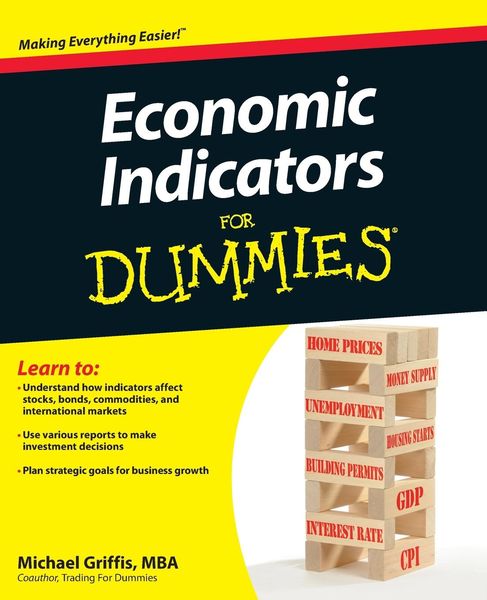
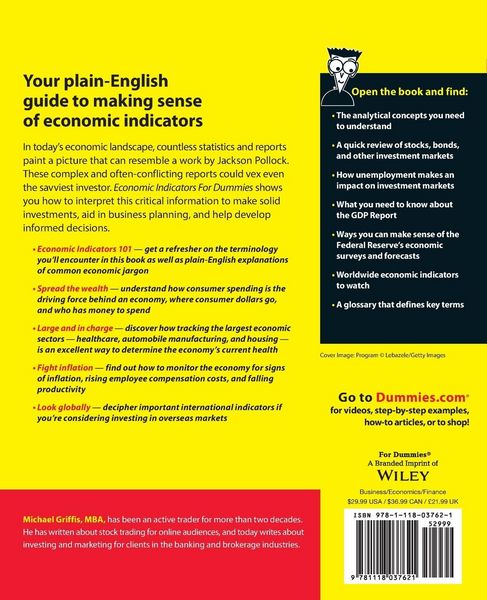
• Produktbild: Economic Indicators For Dummies
  • Produktbild: Economic Indicators For Dummies

Economic Indicators For Dummies

Fr. 42.90

inkl. gesetzl. MwSt., Versandkostenfrei


Beschreibung

Produktdetails

Einband

Taschenbuch

Erscheinungsdatum

04.10.2011

Verlag

John Wiley & Sons

Seitenzahl

416

Maße (L/B/H)

23.5/19.1/2.3 cm

Gewicht

762 g

Auflage

1. Auflage

Sprache

Englisch

ISBN

978-1-118-03762-1

Beschreibung

Produktdetails

Einband

Taschenbuch

Erscheinungsdatum

04.10.2011

Verlag

John Wiley & Sons

Seitenzahl

416

Maße (L/B/H)

23.5/19.1/2.3 cm

Gewicht

762 g

Auflage

1. Auflage

Sprache

Englisch

ISBN

978-1-118-03762-1

Herstelleradresse

Libri GmbH
Europaallee 1
36244 Bad Hersfeld
DE

Email: gpsr@libri.de

Noch keine Bewertungen vorhanden

Verfassen Sie die erste Bewertung zu diesem Artikel

Helfen Sie anderen Kundinnen und Kunden durch Ihre Meinung.

Kundinnen und Kunden meinen

Bewertungen (0)

Die Leseprobe wird geladen.
  • Produktbild: Economic Indicators For Dummies
  • Produktbild: Economic Indicators For Dummies
  • Introduction 1

    About This Book 1

    Conventions Used in This Book 2

    Foolish Assumptions 3

    What Not to Read 4

    How the Book Is Organized 4

    Part I: Figuring Out the Economy 4

    Part II: Making Money, Spending Money: Employment and Consumer Indicators 4

    Part III: The Essence of Business: Product and Service Indicators 5

    Part IV: Inflation, Productivity, Interest Rates, and Commodities: Oh My! 5

    Part V: International Intrigue: Indicators beyond the United States 5

    Part VI: The Part of Tens 6

    Icons Used in This Book 6

    Where to Go from Here 6

    Part I: Figuring Out the Economy 7

    Chapter 1: Introducing Economic Indicators 9

    Understanding What Economic Indicators Are 10

    Reading the economy through economic indicators 10

    Cycling through economic ups and downs 11

    Identifying What Indicators Indicate 12

    Tracking consumer spending 12

    Looking at the big picture 13

    Eyeing manufacturing 14

    Counting up the number of bought, sold, and newly built homes 15

    Monitoring inflation 15

    Measuring productivity 16

    Looking at loans and commodity purchases 16

    Following worldwide economies 17

    Knowing How to Start Following Economic Indicators 18

    Analyzing the data 19

    Tracking economic indicator release dates 19

    Chapter 2: Explaining Economic Jargon 21

    Identifying Types of Economic Indicators 21

    Summarizing economic results 22

    Surveying for information 22

    Indexing the economy 24

    Understanding How Economists Analyze the Data 27

    Measuring growth 27

    Annualizing reported data 29

    Smoothing data with moving averages 32

    Massaging Economic Data to Make the Results More Useful 35

    Adjusting for inflation 35

    Adjusting for seasonal fluctuations 37

    Considering the Timeliness of Economic Indicators 37

    Leading indicators make forecasts 38

    Coincident indicators are no coincidence 38

    Lagging indicators can't foretell the future 39

    Looking into the Future with Consensus Forecasts 39

    Finding consensus forecasts 40

    Analyzing the accuracy of the consensus 40

    Amending and Modifying Data with Revision Reports 41

    Revising previous reports 41

    Changing benchmarks 42

    Cha-Ching: Money, Interest Rates, and the Economy 43

    Understanding the Fed's monetary measures 43

    Setting short- and long-term interest rates 44

    Chapter 3: Understanding the Big Picture: The Economy and Its Footprints 45

    Taking a Closer Look at the Business Cycle 46

    Identifying the phases of the cycle 46

    Growing into expansion 49

    Slowing into recession 49

    Reviewing the Key Financial Markets 50

    Investing in stocks 50

    Holding bonds 53

    Trading commodities 55

    Tracking currencies 56

    Figuring Out What's What in Economic Reports 57

    Finding what's important in each report 58

    Seeing how reports are assembled 59

    Showing Economic Fashions without the Runway 59

    Understanding market sensitivity 60

    Determining an indicator's accuracy and timeliness 61

    Seeing who's interested in what 61

    Part II: Making Money, Spending Money: Employment and Consumer Indicators 65

    Chapter 4: Counting Jobs and Unemployment 67

    Tracking the BLS Employment Situation Report 68

    Counting workers and the unemployed 68

    Highlighting key parts of the jobs report 73

    Deciphering employment numbers 75

    Predicting market reactions due to employment changes 77

    Looking at Unemployment Insurance Claims 79

    Keeping track of unemployment insurance claims 80

    Smoothing jobless claim fluctuations 81

    Analyzing the claims numbers 82

    Determining how the market