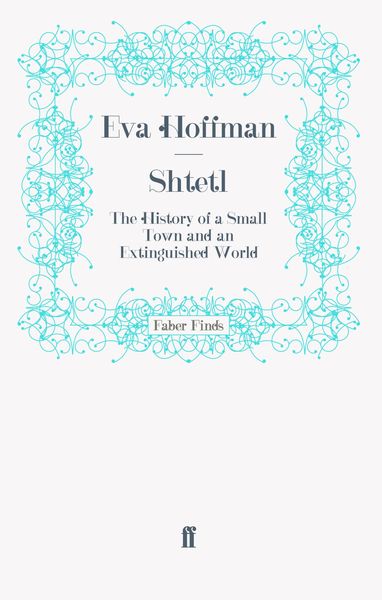
Shtetl The History of a Small Town and an Extinguished World
-
- Englisch ausgewählt
Fr. 29.90
inkl. gesetzl. MwSt.,
-
Kostenlose Lieferung ab Fr. 30 Einkaufswert
Schweiz & Liechtenstein:
Versandkostenfrei ab Fr. 30.00
Versandkosten bis Fr. 30.00: Fr. 3.50Andere Lieferländer
Fr. 18.00 unabhängig vom Warenwert
Beschreibung
Produktdetails
Einband
Taschenbuch
Erscheinungsdatum
15.04.2011
Verlag
Faber & FaberSeitenzahl
302
Maße (L/B/H)
19.8/12.6/2.1 cm
Gewicht
322 g
Sprache
Englisch
ISBN
978-0-571-25611-2
The sub-title is important: The History of a Small Town and an Extinguished World. The small town is Bransk, in eastern Poland. Before World War II, Bransk was a shtetl whose population was equally divided between Poles and Jews. Today there are no Jews.
In Shtetl, Eva Hoffman reconstructs the lost world of East European Jewry She explores the rich culture and institutions of Polish Jews, and looks at the forms of multicultural coexistence during several centuries, the shades of prejudice and tolerance and the phases of conflict and comity. By probing the deep ambivalence that coloured relations between Poles and Jews on the eve of World War II, Shtetl throws new light on motives which influenced Christian villagers´ decisions to rescue or betray their Jewish neighbours when the Nazis invaded.
´Charting the ebbs and flows of repression and tolerance, uprisings and occupation, migration and assimilation of Poland´s history, Shtetl provides a rare and valuable analysis of the troubled relationship between Poles and Jews over the centuries. For the Jews, Poland is the symbol of murder where the Nazis set up their killing fields and where the Polish post-war response was further brutality, followed by amnesia: for the Poles, there remains a feeling of unfairness that their own wartime sufferings are overlooked. Hoffman´s interest lies in rescuing the past from the evasions, concealments and half-truths demanded by post-war politics and national pride - as well as from the additions of the imagination, which all memory to some extent invokes.´ Caroline Moorehead, Daily Telegraph
´A luminous and deeply engrossing social history´ Lisa Appignanesi, Independent
´This is a subtle, fair, scrupuously even-handed piece of work. It begs moral questions of us all ... Hoffman gives no answers, but she asks the questions, and observes the moral hazards with a rare sensitivity.´ Julia Neuberger, Irish Times
Noch keine Bewertungen vorhanden
Verfassen Sie die erste Bewertung zu diesem Artikel
Helfen Sie anderen Kundinnen und Kunden durch Ihre Meinung.