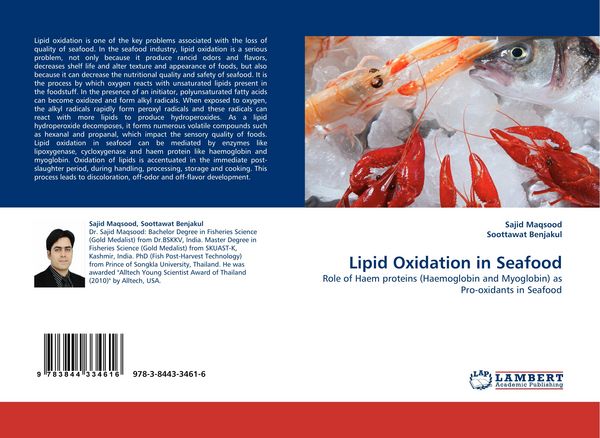
Lipid Oxidation in Seafood Role of Haem proteins (Haemoglobin and Myoglobin) as Pro-oxidants in Seafood
-
- Englisch ausgewählt
Fr. 67.90
inkl. gesetzl. MwSt.,
Beschreibung
Produktdetails
Einband
Taschenbuch
Erscheinungsdatum
27.04.2011
Verlag
LAP LAMBERT Academic PublishingSeitenzahl
88
Maße (L/B/H)
22/15/0.6 cm
Gewicht
149 g
Auflage
1. Auflage
Sprache
Englisch
ISBN
978-3-8443-3461-6
Lipid oxidation is one of the key problems associated with the loss of quality of seafood. In the seafood industry, lipid oxidation is a serious problem, not only because it produce rancid odors and flavors, decreases shelf life and alter texture and appearance of foods, but also because it can decrease the nutritional quality and safety of seafood. It is the process by which oxygen reacts with unsaturated lipids present in the foodstuff. In the presence of an initiator, polyunsaturated fatty acids can become oxidized and form alkyl radicals. When exposed to oxygen, the alkyl radicals rapidly form peroxyl radicals and these radicals can react with more lipids to produce hydroperoxides. As a lipid hydroperoxide decomposes, it forms numerous volatile compounds such as hexanal and propanal, which impact the sensory quality of foods. Lipid oxidation in seafood can be mediated by enzymes like lipoxygenase, cycloxygenase and haem protein like haemoglobin and myoglobin. Oxidation of lipids is accentuated in the immediate post-slaughter period, during handling, processing, storage and cooking. This process leads to discoloration, off-odor and off-flavor development.
Noch keine Bewertungen vorhanden
Verfassen Sie die erste Bewertung zu diesem Artikel
Helfen Sie anderen Kundinnen und Kunden durch Ihre Meinung.