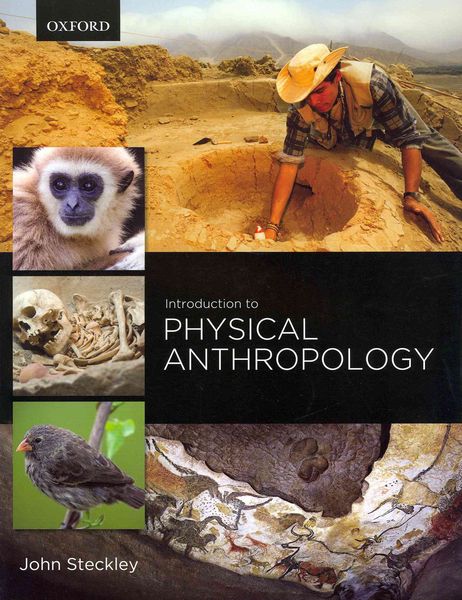
Produktbild: Introduction to Physical Anthropology

Introduction to Physical Anthropology

Fr. 113.00

inkl. gesetzl. MwSt., Versandkostenfrei


Beschreibung

Produktdetails

Einband

Taschenbuch

Erscheinungsdatum

11.04.2011

Herausgeber

John Steckley

Verlag

Oxford Academic

Seitenzahl

360

Maße (L/B/H)

27.7/21.6/1.5 cm

Gewicht

752 g

Sprache

Englisch

ISBN

978-0-19-543215-2

Beschreibung

Produktdetails

Einband

Taschenbuch

Erscheinungsdatum

11.04.2011

Herausgeber

John Steckley

Verlag

Oxford Academic

Seitenzahl

360

Maße (L/B/H)

27.7/21.6/1.5 cm

Gewicht

752 g

Sprache

Englisch

ISBN

978-0-19-543215-2

Herstelleradresse

Libri GmbH
Europaallee 1
36244 Bad Hersfeld
DE

Email: gpsr@libri.de

Noch keine Bewertungen vorhanden

Verfassen Sie die erste Bewertung zu diesem Artikel

Helfen Sie anderen Kundinnen und Kunden durch Ihre Meinung.

Kundinnen und Kunden meinen

Bewertungen (0)

  • Produktbild: Introduction to Physical Anthropology
    • Preface

    • From the Publisher

    • Tables, figures, and Maps

    • Boxed Features

    • Chapter 1:

    • Introduction: Physical Anthropology Faces Bigfoot

    • The Four Branches of Anthropology

    • A Case Study: Using the Four Branches to Solve a Historical Mystery

    • Branches of Physical Anthropology

    • Human Evolution

    • Genetics

    • Paleoanthropology

    • Anthropometry

    • Medical Anthropology

    • Forensic Anthropology

    • Primatology

    • Science

    • The Scientific Method

    • Fact, Theory, and Hypothesis

    • Objectivity and Subjectivity: Lumpers and Splitters

    • Lumpers and Splitters: Declaring Which Side You Are On

    • How do you feel about Apes?

    • Author's Message

    • Summary

    • Typical Student Questions

    • Review Questions

    • Discussion Questions

    • Key Species and Specimens

    • Key Terms

    • Key Individuals

    • Recommended Print and Online Resources

    • Chapter 2: Tools of the Trade: How Old Is That?

    • Introduction

    • Relative Dating

    • Stratigraphy

    • Seriation

    • Absolute Dating

    • A Warning about Websites and Absolute Dating

    • Writing

    • Dendrochronology

    • Varves

    • Radiocarbon Dating: Carbon 14

    • The Dead Sea Scrolls: An Exercise in Radiocarbon Dating

    • Stonehenge: Radiocarbon Dating Rewriting History

    • How to Test a New Form of Dating: Consilience

    • Poptassiul-Argon Dating

    • Electron Spin Resonance

    • Summary

    • Typical Student Questions

    • Review Questions

    • Answers to Table 2.1

    • Key Terms

    • Key Individuals

    • Recommended Print and Online Resources

    • Chapter 3: Evolution

    • What Is Evolution?

    • What Evolution Is Not

    • Philosophical Stances and Evolution

    • Natural Selection

    • Gregor Mendel and Evolution

    • Genetics: The Players

    • Mutation: We Are All X-Men

    • It's not How Many Genes You've Got that Counts

    • Selective Pressure

    • Debates within Evolutionary Theory

    • Proofs for Evolution

    • Direct Observation of Evolution

    • Transitions and Consistency in the Fossil Record

    • Biogeography

    • Comparative Anatomy

    • Unintelligent Design: Vestigial Structures and Imperfections, and Atavisms

    • Molecular Biology

    • The Embryo: 'Ontogeny recapitulates phylogeny' (in part anyway)

    • Summary

    • Typical Student Questions

    • Review Questions

    • Discussion Questions

    • Key Terms

    • Key Individuals

    • Recommended Print and Online Resources

    • Chapter 4: Evolutionary Pathways

    • Introduction

    • Family Trees and Bushes

    • Two Concepts that are Hard to Grasp

    • Deep Time

    • Continental Drift

    • Taxonomy

    • Traits

    • Genus and Beyond

    • Species

    • So Is a Bird a Reptile, or What?

    • So What is Louie?

    • Concesters: They've Come a Long Way Since Then

    • Long Live the Kingdoms (or Maybe Not)

    • Changing Kingdoms

    • Animalia

    • Running through the family: From Farthest to our Closest Relations Mammals

    • Primates and Their Evolution

    • Fossil Primates

    • Proconsul: The Speciating Genus

    • Gigantopithecus:King Kong Lives

    • Summary

    • Typical Student Questions

    • Review Questions

    • Discussion Questions

    • Key Terms

    • Recommended Print and Online Resources

    • Chapter 5: Primates: Taxonomy and Behaviour

    • Preface: The Dread of Apes

    • Introduction

    • Primatology

    • An Ape Is NOT a Monkey

    • Dental Patterns

    • Taxonomy

    • Suborders

    • Strepsiirhini

    • What I Used to Teach

    • Haplorrhini

    • Tarsiiformes (Tarsiers)

    • Simiformes (the Primates Formerly Known as Anthropoids)

    • Platyrrhinii (New World Monkeys)

    • Catarrhini (Old World Monkeys and Apes)

    • Old World Monkeys: Cercopithecoidae (Superfamily) and Cercopithecidae (Family)

    • A Close Look at Some Catarrhini Species

    • Baboons

    • Gibbons

    • Great Apes and Humans: A Taxonomic Shift

    • Orangutans

    • Gorillas

    • Chimpanzees and Bonobos

    • Bonobos

    • Summary

    • Typical Student Questions

    • Review Questions

    • Discussion Questions

    • key Species

    • Key Terms

    • Key Individuals

    • Recommended Print and Online Resources

    • Chapter 6: Hominins before Homo

    • Introduction

    • Key Anatomical Terms

    • The Arm or Upper Limb

    • The Leg or Lower Limb

    • The Skull or Cranium

    • Bipedalism

    • The Return of the Lumpers and the Splitters and the Difficulties of Naming Dead Species

    • The Species Concept and Its Difficulties

    • Vestigial Structures and Imperfections

    • Fossil Hominin Species

    • Sahelanthropus tchadensis

    • Orrorin tugenensis

    • Ardipithecus kadabba

    • Ardipithecus ramidus

    • Kenyanthropus platyops

    • Australopithecus anamensis

    • Australopithecus afarensis

    • Australopithecus bahrelghazali

    • Australopithecus africanus

    • Australopithecus garhi

    • Australopithecus robustus

    • Australopithecus boisei

    • Summary

    • Typical Student Questions

    • Review Questions

    • Discussion Questions

    • Key Species

    • Key Terms

    • Key Individuals

    • Key Specimens

    • Recommended Print and Online Resources

    • Chapter 7: Early Homo

    • Introduction

    • The Brain Game

    • Homo habilis

    • KNM-ER 1470 and the Great Cranial Capacity Debate

    • Two recent Finds

    • Dating H.Habilis

    • Final Thoughts on the 'Handyman'

    • Homo rudolfensis

    • Homo erectus

    • Why Do They Have Thick Skulls?

    • The Movius Line

    • The Big Complication

    • Homo erectus Finds in Indonesia

    • Eugene Dubois and the Discovery of Homo erectus

    • Mojokerto Child

    • Sangiran

    • Ngandong

    • Homo erectus Finds in China

    • Homo erectus pekinensis: Peking Man

    • Fire

    • Homo erectus finds in Africa

    • Homo erectus/ergaster

    • Turkana Boy

    • KNM-ER 1808

    • Related Species: H.georgicus and H. floresiensis

    • Homo georgicus

    • Homo floresiensis

    • Summary

    • Review Questions

    • Discussion Questions

    • Key Terms

    • Key Individuals

    • Recommended Print and Online Resources

    • Chapter 8: Transition to Modern Homo sapiens

    • Introduction

    • Modern Homo Sapiens: Lumper's and Splitter's Taxonomy

    • The Origins of 'Modern' Human Beings

    • Changing from Homo erectus to Homo sapiens

    • The Origins of Homo sapiens: Three Hypotheses

    • Out of Africa

    • Multiregionalism

    • Clinal Replacement

    • Tool Talk, Part 1

    • Mode 1

    • Mode 2

    • Mode 3

    • Mode 4

    • Homo heidelbergensis

    • Significant European Finds

    • Heidelberg Jaw

    • Steinheim Skull

    • Swanscombe Skull

    • Petralona Skull

    • Arago XXI or Tautavel Man

    • Sima de los Huesos (the Pit of Bones)

    • Boxgrove Man

    • Gran Dolina

    • Homo cepranensis

    • The Schöningen Spears

    • Upper Palaeolithic

    • Cro-Magnon

    • Ancient mtDNA

    • Significant African Finds

    • Kabwe (Broken Hill) Skull

    • Florisbad I

    • Salé Cranium

    • LH18 (Ngaloba)

    • Bodo Cranium

    • UA-31 (Buia)

    • Omo I and II

    • H. Sapiens idaltu (Herto)

    • Klasies River

    • Border Cave

    • Skhul 5

    • Qafzeh Cave

    • Significant Chinese Finds

    • Dali Cranium

    • Jinniushan Man

    • Maba Cranium

    • Liujiang

    • Summary

    • Typical Student Questions

    • Review Questions

    • Discussion Questions

    • Key Specimens and Species

    • Key Terms

    • Recommended Print and Online Resources

    • Chapter 9: Neandertal

    • Introduction

    • Neandertal in Popular Culture

    • Location and Time Period

    • The Physical Description

    • Early Neanderthal Finds

    • The Feldhofer Find: Naming the Other

    • Other Early Finds

    • The Spiritual Cannibal: Remaking Neandertal into a Human

    • Flowers and Compassion: Shanidar Cave, Iraq

    • Why Did Neandertal Become Extinct?

    • Theory 1: Violence between Cro-Magnon and Neandertal?

    • Theory 2: Differences in Hunting Practices Were Neanderthals Bad Hunters...

    • Or were they Turrific Hunters?

    • Theory 3: Differences in the Toolbox

    • Tool Talk, Part 2

    • What's in the Toolbox

    • Anatomy versus Culture: Who Was Better in the Cold?

    • Gorham's Cave

    • The Famous Fossil Femur Flute

    • Hybrids

    • Lapedo Child

    • The Romanian Evidence

    • Spanish Teeth

    • Mitochondrial Evidence

    • Mezmaiskaya Cave

    • Pitfalls of mtDNA Studies

    • The Neanderthal Genome

    • Summary

    • Typical Student Questions

    • Review Questions

    • Discussion Questions

    • Key Terms

    • Key Individuals

    • Recommended Print and Online Resources

    • Chapter 10: Human Variation

    • Introduction

    • Variation within(Non-human) Species

    • Phases, Mutations, and Breeds

    • Subspecies

    • A Brief Look at the History of the Race Concept in Science

    • Defining the Races: Blumenbach, Morton, and Coon The Race Game: Other Problems

    • Skin Colour as a Racializer

    • Skin Colour: Frequently Asked Student Questions and Rarely Given Answers

    • Eye Colour

    • The Cephalic Index: Race and Plasticity

    • Dental Anthropology

    • The Genetic Approach

    • Mitochondrial DNA (mtDNA)

    • Y-Chromosome: the General Picture

    • Race and Measurement: A Modern Perspective

    • Race and Disease

    • Blood Disorder and Race

    • Sickle-Cell Anemia

    • Thalassemia

    • Tay-Sachs

    • Tay-Sachs

    • The Thrifty Gene

    • Lactose Intolerance

    • HIV and CC5 delta-32

    • Summary

    • Typical Student Questions

    • Review Questions

    • Discussion Questions

    • Key Terms

    • Key Individuals

    • Recommended Print and Online Resources

    • Chapter 11: Recent History: Ethics, Migrations, and the Physical Costs of Agriculture

    • Introduction

    • Ethics

    • The Case for Science

    • Overcoming the Bias of the Book

    • The Case Against Science

    • The People's Rightful Connection to the Bones

    • Stories of Trophies of Science

    • George A. Dorsey and the Haida

    • What about Now? Science and Ethics Today

    • NAGPRA and the Kennewick Man Dispute

    • Canadian Cases

    • Kwaday Dan ts'inchi

    • Ethical Consideration in South and Central American Cases

    • Latin America: A Different Attitude toward the Dead

    • Inca Mummies: Whose Are They?

    • Trying to Resolve the Issue of Aboriginal Osteology

    • Learning About the Culture of a People

    • The Iceman

    • The Shift of Agriculture: Effects on the Body

    • The Peopling of the Americas

    • They Came from Asia

    • The Archaeological Evidence

    • The Linguistic Evidence

    • The Beringia Refuge Hypothesis

    • The Genetic Evidence: Y-Chromosomes and the Americas

    • The Cranial Evidence: Skull versus Genes

    • Summary

    • Typical Student Questions

    • Review Questions

    • Discussion Questions

    • Key Terms

    • Key Individuals

    • Recommended print and Online Resources

    • Chapter 12: Forensic Anthropology

    • Introduction: Fact meets Fiction

    • How Do You Know You're Going to Be a Forensic Anthropologist

    • A Brief History of Forensic Anthropology

    • Thomas Dwight, Father of the American Forensic Anthropology

    • George A. Dorsey and the Case of the Sausage Maker's Wife

    • Clyde Snow and the Angel of Death

    • William Bass and The Body Farm

    • Forensic Analysis Step-by-Step

    • Determining That the Body Is Human

    • Numbering the Skeletons

    • Sexing the Skeleton

    • Racing the Skeleton

    • Aging the Skeleton

    • Estimating Skeletal Stature

    • Establishing Cause of Death

    • Forensic Anthropology in Action: Two Canadian Cases

    • The Case of the Swansea Skull

    • The Robert Pickton Case

    • Unidentified Persons: A Sample from the RCMP Cold Case Files

    • Human Rights Work: Witnessing to World Oppression

    • The Equipo Argentino de Antropologia, or Argentine Forensic Anthropology Team: From Disappeared to Witness for the Prosecution

    • Clea Koff: The Bone Woman

    • Typical Student Questions

    • Review Questions

    • Discussion Questions

    • Key Terms

    • Key Individuals

    • Recommended Print and Online Resources

    • Chapter 13: Conclusions

    • Introduction: A Changing Field

    • New Thoughts on the Species Concept

    • New Thoughts on Genetic Dating: The Penguins Speak Speak

    • New Thoughts on Race: What Is the Place of Race in Physical Anthropology Today?

    • New Thoughts on Physical Anthropologists

    • New Thoughts on Bipedalism

    • New Thoughts on Human Evolution

    • New Thoughts on Nations: Seeking the Taino

    • Concluding Statements

    • Discussion Questions

    • Key Terms

    • Key Species

    • Key Individuals

    • If You Were to Read 10 Books

    • Other Recommended Resources

    • Glossary

    • Bibliography

    • Credits

    • Index