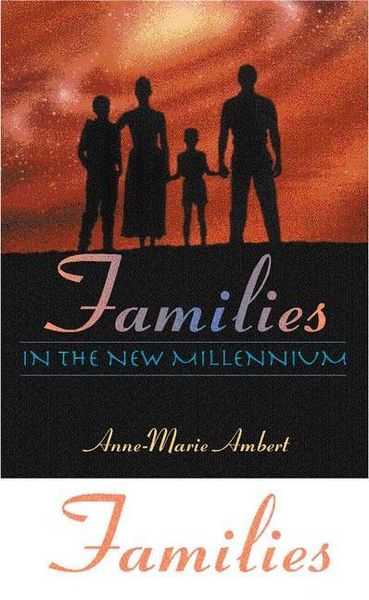
Produktbild: Families in The New Millennium

Families in The New Millennium

Fr. 171.00

inkl. gesetzl. MwSt., Versandkostenfrei


Beschreibung

Produktdetails

Einband

Taschenbuch

Erscheinungsdatum

01.09.2000

Verlag

Prentice Hall

Seitenzahl

564

Gewicht

960 g

Sprache

Englisch

ISBN

978-0-321-05048-9

Beschreibung

Produktdetails

Einband

Taschenbuch

Erscheinungsdatum

01.09.2000

Verlag

Prentice Hall

Seitenzahl

564

Gewicht

960 g

Sprache

Englisch

ISBN

978-0-321-05048-9

Kundinnen und Kunden meinen

0 Bewertungen

Informationen zu Bewertungen

Zur Abgabe einer Bewertung ist eine Anmeldung im Konto notwendig. Die Authentizität der Bewertungen wird von uns nicht überprüft. Wir behalten uns vor, Bewertungstexte, die unseren Richtlinien widersprechen, entsprechend zu kürzen oder zu löschen.

Die Bewertungen sind nach Format, Anzahl Sterne und Datum sortiert.

Verfassen Sie die erste Bewertung zu diesem Artikel

Helfen Sie anderen Kund*innen durch Ihre Meinung

Kundinnen und Kunden meinen

0 Bewertungen filtern

  • Produktbild: Families in The New Millennium
  • All chapters conclude with "Summary," "Key Concepts and Themes," " Study and Review Questions," "Suggested Readings," and "Suggested Weblinks." I.FOUNDATIONS OF FAMILY STUDY. 1.Theoretical and Methodological Perspectives in Family Studies. How Can Families Be Defined? Why Is a Multidisciplinary Approach Helpful? What Theoretical Perspectives Inform Family Studies? Why Is Feminism a Particularly Important Perspective? What Are the Main Themes in the Text? What Methods Are Used in Family Research? Conclusions: Unity in Diversity. 2.Historical Perspectives and Contemporary Issues Concerning Family Life. Comparative Perspectives on Families. American Families of the Past. Are Children Becoming Defamilialized? The Audiovisual Media and Family Life. Family Change or Decline? The Debate. Conclusions: The Pace of Change. 3.Family Diversity and Adaptation: Immigration and Minority - Group Status. Immigrant Families. Native-American Families. African-American Families. Latino-American Families. Asian-American Families. Conclusions: Minority Families Pay a Heavy Price. 4.Partner Selection, Sexual Relations, and Reproduction. Dating. Date and Partner Selection. Sexual Relations. Family Planning, Fertility and Abortion. New Reproductive Technologies. Singlehood and Childlessness by Choice. Conclusions: The Changing Profile of Reproduction. 5.Patterns of Family Formation: Single Motherhood, Cohabitation, or Marriage? Single Motherhood. Single Adolescent Motherhood. Cohabitation. Same-Sex-Parent Family Formation. Are There Advantages to Marriage? Adoption and Foster Families. Conclusions: Family Formation Alternatives in Context. II.SOCIAL AND CULTURAL FAMILY CONTEXTS. 6.Effects of the Economy and Economic Inequalities on Families. Overview of Economic Changes. Effects of Economic Changes on the Family. Causes of Family Poverty. Consequences of Poverty. Conclusions: The Costs of Poverty. 7.Impacts of Neighborhoods and Environments on Family Life. Types of Urban and Suburban Areas and Family Life. Inner-City Neighborhoods. Homeless Families. Rural Areas and Family Life. Families' Housing Conditions. Residential Mobility. Conclusions: The Meaning of Neighborhood as Context. 8.Roles of Education and Religion in Family Life. The Educational System: An Overview. Child Care: Quality and Child Outcomes. Familial Factors Related to Children's School Success. Poor Families and Poor Schools. Private Education. Religion and Family Life. Is Religiosity Functional for the Family? Conclusions: The Balancing Act of Family Functions. III.FAMILY RELATIONSHIPS. 9.Family Developmental Stages. The Gendered Social Construction of Parenthood. The Pre-Birth Stage. The Infant's Arrival. Subsequent Stages. The Grandparent Stage. The Death of Adults' Parents. Conclusions: Family Development in Context. 10.Spousal and Partner Relationships. Types of Marriage and How They Change. Division of Labor and Inequality. Aspects of Spousal Relationships. Same-Sex-Partner Relationship. The Effect of the Parental Relationship on Children. Conclusions: Definitions of Marital Quality Are Culture Specific. 11.The Parent-Child Relationship and Parenting. The Beginning of the Parent-Child Relationship. Parents' Socialization Practices. Determinants of Parenting Socialization Practices. The Parent-Adolescent Relationship. The Role of Peers in the Parent-Adolescent Relationship. The Relationship between Parents and Adult Children. Conclusions: The Macro and Micro Aspects in the Parent-Child Relationship. 12.Sibling Relationships and Situations. The Sibling Relationship Begins. Child and Adolescent Sibling Relationships. Differential Parental Treatment. Developmental Impact of Differential Treatment. Adult and Stepsibling Relationships. How Can Siblings Be So Different? Sibling Similarities and Differences: Twin Studies. Conclusions: The Nature and Nurture of Parental Influence. IV.FAMILY PROBLEMS AND SOLUTIONS. 13.Divorce and Remarriage. Divorce Rates. What Are the Factors Associated with Divorce? The Aftermath of Divorce for Adults. Serial Divorces. What Are the Effects of Divorce on Children? Widowhood and Bereavement. Remarriage. Conclusions: The Familial and Social Meanings of Divorce. 14.Family Violence, Abuse, and Child Neglect. Dating and Partner Abuse. Child Abuse and Neglect by Parents. Child Sexual Abuse by Adults. Sibling Abuse. Peer Abuse. Abuse of Parents by Children. Conclusions: The Larger Context of Family Violence. 15.Family Dynamics and Emotional, Behavioral, and Delinquency Problems. Parents Who Suffer from Depression. Parental Alcoholism. Children with Behavioral Problems. Delinquency: Family Dynamics. How Relatives and Experts Affect Family Dynamics. Conclusions: Family Vulnerability. 16.Family Futures and Social Policies. Salient Themes Revisited. What Does the Future Hold? Social Policies Pertaining to the Family. Conclusions: The Family in Context. Glossary. Name Index. Subject Index.