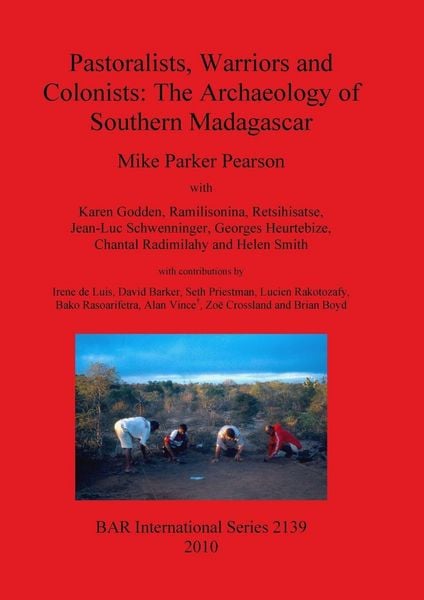
This book presents the results of archaeological research in the extreme south of Madagascar between 1991 and 2003, and provides a synthesis of the region's archaeology. Madagascar is an island with many unique species of fauna and flora; its extreme south is a semi-arid region with remarkable vegetational adaptations. Before the arrival of humans, there were many species of megafauna of which the most extraordinary were the flightless elephant birds, the largest avian species in the world. Today the inhabitants of the south have adapted to this aridity with a vibrant culture and strong traditions. The dating of the first colonisation of Madagascar is not certain, but certain sites in the southwest have provided radiocarbon dates towards the end of the first millennium BC. From the tenth to thirteenth century, there was a well-developed civilisation in the south. During the fourteenth century, population numbers fell in the far south and the majority of settlements from this period are found in locations chosen for their defensive aspects. The way of life that evolved in the fourteenth and fifteenth centuries is similar to that of recent times and today. Europeans arrived at the beginning of the sixteenth century and, by the mid-seventeenth century, the French had established a colony at Fort-Dauphin on the southeast coast. The people of the south are well known today for their large and elaborate stone tombs and standing stones. However, this is not a particularly ancient tradition. Before the appearance of these monumental funerary constructions, burials were marked by arrangements of small stone uprights or by wooden palisades. The large stone tombs that are such a dominant feature of today's landscape have their origins in standing-stone monuments around the end of the eighteenth century. Mike Parker Pearson with Karen Godden, Ramilisonina, Retsihisatse, Jean-Luc Schwenninger, Georges Heurtebize, Chantal Radimilahy and Helen Smith. With contributions by Irene de Luis, David Barker, Seth Priestman, Lucien Rakotozafy, Bako Rasoarifetra, Alan Vince, Zoë Crossland and Brian Boyd.