KI-Beratung Beta

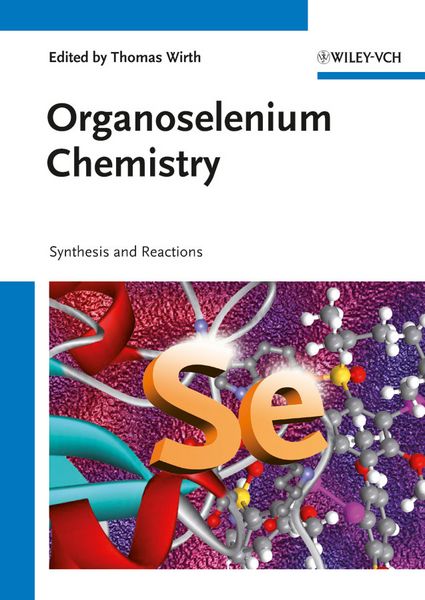
Produktbild: Organoselenium Chemistry
Band 208

Organoselenium Chemistry Synthesis and Reactions

Fr. 214.00

inkl. gesetzl. MwSt., Versandkostenfrei


Beschreibung

Selenium-based methods in synthetic chemistry have developed rapidly over the past years and are now offering highly useful tools for organic synthesis. Filling the gap for a comprehensive handbook and ready reference, this book covers all modern developments within the field, including biochemical aspects....

Beschreibung

Selenium-based methods in synthetic chemistry have developed rapidly over the past years and are now offering highly useful tools for organic synthesis. Filling the gap for a comprehensive handbook and ready reference, this book covers all modern developments within
the field, including biochemical aspects. The chemistry chapters are organized according to the different reactivities of various selenium
compounds and reagents, with each chapter dealing with a special reaction type.
 
Also includes a table with 77Se NMR shifts to aid in practical problems.
 
From the Contents:
* Electrophilic and Nucleophilic Selenium
* Selenium Compounds in Radical Reactions
* Selenium-Stabilized Carbanions
* Selenium Compounds with Valency Higher than Two
* Selenocarbonyls
* Selenoxide Elimination and [2,3]-Sigmatropic Rearrangement
* Selenium Compounds as Ligands and Catalysts
* Biological and Biochemical Aspects of Selenium Compounds

Portrait

Thomas Wirth is professor of organic chemistry at Cardiff University. After studying chemistry in Bonn and at the Technical University of Berlin, he obtained his PhD in 1992 with Professor S. Blechert. After a postdoctoral stay with Professor K. Fuji at Kyoto University a JSPS fellow, he started his independent research at the University of Basel (Switzerland). In the group of Professor B. Giese he obtained his habilitation
on stereoselective oxidation reactions supported by various scholarships before taking up his current position at Cardiff University in 2000. He was invited as a visiting professor to a number of places including the University of Toronto/Canada (1999), Chuo University in Tokyo/Japan (2000), and Osaka University/Japan (2004) and was awarded the Werner-Prize from the New Swiss Chemical Society (2000). His main
interests of research concern stereoselective electrophilic reactions, oxidative transformations with hypervalent iodine reagents including mechanistic investigations and organic synthesis performed in microreactors.

Produktdetails

Einband

Gebundene Ausgabe

Erscheinungsdatum

02.11.2011

Abbildungen

63

Herausgeber Thomas Wirth

Produktdetails

Einband

Gebundene Ausgabe

Erscheinungsdatum

02.11.2011

Abbildungen

63

Herausgeber Thomas Wirth
Verlag Wiley-VCH
Seitenzahl

462

Maße (L/B/H)

2.5/17/24 cm

Gewicht

1018 g

Auflage

1. Auflage

Sprache

Englisch

ISBN

978-3-527-32944-1

Herstelleradresse

Wiley-VCH GmbH
Boschstr. 12
69469 Weinheim
Deutschland
Email: trade@wiley.com
Url: www.wiley-vch.de
Fax: +49 6201 606328

Noch keine Bewertungen vorhanden

Verfassen Sie die erste Bewertung zu diesem Artikel

Helfen Sie anderen Kundinnen und Kunden durch Ihre Meinung.

Kundinnen und Kunden meinen

Bewertungen (0)

Die Leseprobe wird geladen.
  • Produktbild: Organoselenium Chemistry
  • Preface


    ELECTROPHILIC SELENIUM


    General Introduction


    Addition Reactions to Double Bonds


    Selenocyclizations


    NUCLEOPHILIC SELENIUM


    Introduction


    Properties of Selenols and Selenolates


    Inorganic Nucleophilic Selenium Reagents


    Organic Nucleophilic Selenium Reagents


    SELENIUM COMPOUNDS IN RADICAL REACTIONS


    Homolytic Substitution at Selenium to Generate Radical Precursors


    Selenide Building Blocks


    Solid-Phase Synthesis


    Selenide Precursors in Radical Domino Reactions


    Homolytic Substitution at Selenium for the Synthesis of Se-Containing Products


    Seleno Group Transfer onto Alkenes and Alkynes


    PhSeH in Radical Reactions


    Selenium Radical Anions, Srn1 Substitutions


    SELENIUM-STABILIZED CARBANIONS


    Introduction


    Preparation of Selenium-Stabilized Carbanions


    Reactivity of the Selenium-Stabilized Carbanions with Electrophiles and Synthetic Transformations of the Products


    Stereochemical Aspects


    Application of Selenium-Stabilized Carbanions in Total Synthesis


    Conclusion


    SELENIUM COMPOUNDS WITH VALENCY HIGHER THAN TWO


    Introduction


    Trivalent, Dicoordinated Selenonium Salts


    Trivalent, Tricoordinated Derivatives


    Tetravalent, Dicoordinated Derivatives


    Tetravalent, Tricoordinated Derivatives


    Pentavalent Derivatives


    Hexavalent, Tetracoordinated Derivatives


    Hypervalent Derivatives


    SELENOCARBONYLS


    Overview


    Theoretical Aspects of Selenocarbonyls


    Molecular Structure of Selenocarbonyls


    Synthetic Procedures of Selenocarbonyls


    Manipulation of Selenocarbonyls


    Metal Complexes of Selenocarbonyls


    Future Aspects


    SELENOXIDE ELIMINATION AND [2,3]-SIGMATROPIC REARRANGEMENT


    Introduction


    Preparation and Properties of Chiral Selenoxides


    Selenoxide Elimination


    [2,3]-Sigmatropic Rearrangement via Allylic Selenoxides


    [2,3]-Sigmatropic Rearrangement via Allylic Selenimides


    [2,3]-Sigmatropic Rearrangement via Allylic Selenium Ylides


    Summary


    SELENIUM COMPOUNDS AS LIGANDS AND CATALYSTS


    Introduction


    Selenium-Catalyzed Reactions


    BIOLOGICAL AND BIOCHEMICAL ASPECTS OF SELENIUM COMPOUNDS


    Introduction


    Biological Importance of Selenium


    Selenocysteine: The 21st Amino Acid


    Biosynthesis of Selenocysteine


    Chemical Synthesis of Selenocysteine


    Chemical Synthesis of Sec-Containing Proteins and Peptides


    Selenoenzymes


    Summary