KI-Beratung Beta

Produktbild: Advances in Combination Therapy for Asthma and COPD

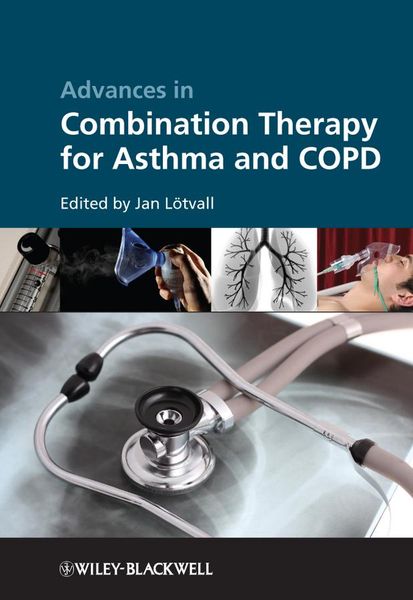
Advances in Combination Therapy for Asthma and COPD

Fr. 162.00

inkl. gesetzl. MwSt., Versandkostenfrei


Beschreibung

Produktdetails

Einband

Gebundene Ausgabe

Erscheinungsdatum

12.12.2011

Herausgeber

Jan Lotvall

Verlag

John Wiley & Sons

Seitenzahl

364

Maße (L/B/H)

24.9/17.5/2.3 cm

Gewicht

699 g

Auflage

1. Auflage

Sprache

Englisch

ISBN

978-0-470-72702-7

Beschreibung

Produktdetails

Einband

Gebundene Ausgabe

Erscheinungsdatum

12.12.2011

Herausgeber

Jan Lotvall

Verlag

John Wiley & Sons

Seitenzahl

364

Maße (L/B/H)

24.9/17.5/2.3 cm

Gewicht

699 g

Auflage

1. Auflage

Sprache

Englisch

ISBN

978-0-470-72702-7

Noch keine Bewertungen vorhanden

Verfassen Sie die erste Bewertung zu diesem Artikel

Helfen Sie anderen Kundinnen und Kunden durch Ihre Meinung.

Kundinnen und Kunden meinen

Bewertungen (0)

Die Leseprobe wird geladen.
  • Produktbild: Advances in Combination Therapy for Asthma and COPD
  • Contributors xi

    Preface xiii

    1 Similarities and differences in the pathophysiology of asthma and COPD 1
    J. Christian Virchow

    1.1 Introduction 1

    1.2 Pulmonary function abnormalities in asthma and COPD 3

    1.3 Risk factors for asthma and COPD 5

    1.4 Cellular inflammation in asthma and COPD 8

    1.5 Distribution and consequences of inflammation in asthma and COPD 9

    1.6 Patterns of epithelial injury in asthma and COPD 10

    1.7 Airway hyperresponsiveness 10

    1.8 Beta-receptor blockers 10

    1.9 Differential diagnosis of asthma and COPD 11

    1.10 Overlap syndrome 12

    1.11 Conclusion 12

    References 13

    2 Glucocorticoids: pharmacology and mechanisms 16
    Peter J. Barnes

    2.1 Introduction 16

    2.2 Chemical structures 16

    2.3 The molecular basis of inflammation 17

    2.4 Cellular effects of glucocorticoids 19

    2.5 Glucocorticoid receptors 20

    2.6 Glucocorticoid activation of gene transcription 22

    2.7 Suppression of inflammatory genes 23

    2.8 Steroid resistance 29

    2.9 Interaction with 2-adrenergic receptors 32

    2.10 Conclusions 33

    References 33

    3 Inhaled corticosteroids: clinical effects in asthma and COPD 38
    Paul M. O'Byrne and Desmond M. Murphy

    3.1 Introduction 38

    3.2 Anti-inflammatory activity of corticosteroids 38

    3.3 Routes of administration 39

    3.4 Absorption and fate of corticosteroids 41

    3.5 Currently available inhaled corticosteroids 41

    3.6 Efficacy in asthma 43

    3.7 Efficacy in COPD 44

    3.8 Side effects of ICS 46

    3.9 Conclusions 49

    References 49

    4 LABAs: pharmacology, mechanisms and interaction with anti-inflammatory treatments 53
    Gary P. Anderson

    4.1 Galenical forms of LABAs: formulations, isomers, enantiomers, diasteriomers and salts 55

    4.2 Absolute and functional 2-adrenoceptor selectivity 56

    4.3 Cellular organization of receptor clusters: functional structure of the 2-adrenoceptor and mode of signalling 58

    4.4 Dimers and oligomers: homo- and heterodimerism/oligoism 60

    4.5 Pharmacogenomics of the 2-adrenoceptor and adenylate cyclase polymorphism in relation to LABAs 61

    4.6 Understanding the 'reassertion' paradox, 'exosites' and relative speed of onset: the membrane diffusion microkinetic model of LABA action 61

    4.7 Regulation and desensitization 63

    4.8 Full versus partial agonism (pharmacological efficacy) 64

    4.9 Beta-blockers not LABAs? 67

    4.10 Non-receptor-mediated effects? 68

    4.11 Biochemical basis of functional antagonism and its critical role in LABA action in disease and exacerbations 68

    4.12 Molecular cooperativity between LABAs and steroids 69

    4.13 Perspective 73

    References 73

    5 Long- and ultra-long-acting 2-agonists 81
    Mario Cazzola and Maria Gabriella Matera

    5.1 Introduction 81

    5.2 Long-acting 2-agonists 82

    5.3 Novel ultra-long-acting 2-agonists 86

    5.4 Conclusion 95

    References 95

    6 The safety of long-acting beta-agonists and the development of combination therapies for asthma and COPD 102
    Victor E. Ortega and Eugene R. Bleecker

    6.1 Introduction 102

    6.2 Asthma-related mortality and beta-agonist exposure 103

    6.3 Long-acting beta-agonists and increased asthma-related mortality 105

    6.4 Safety and efficacy of LABA therapy in asthma: retrospective analyses 107

    6.5 Efficacy of LABA therapy as a component of combination therapy with ICS for the management of asthma 110

    6.6 Scientific basis of the beneficial and adverse effects of beta-agonist therapy: in vitro data and the beta-agonist paradox 113

    6.7 Conclusions regarding the safety of LABA therapy as a component of combination therapy with ICS for the management of asthma 114

    6.8 Beta-agonist therapy and adverse events in COPD 115

    6.9 Safety and efficacy of LABA therapy in the management of COPD: the clinical evidence 116

    6.10 Role of LABA therapy as a component of combination therapy with ICS for the management of COPD 117

    6.11 Conclusions regarding the safety of LABA therapy as a component of combination therapy for the management of COPD 120

    6.12 Pharmacogenetics of LABAs and combination therapy 120

    6.13 Safety and efficacy of LABA therapy and the development of combination therapies for the management of asthma and COPD 126

    6.14 Summary and future directions 127

    Acknowledgement 128

    References 128

    7 Inhaled combination therapy with glucocorticoids and long-acting 2-agonists in asthma and COPD, current and future perspectives 135
    Jan Lötvall

    7.1 Pharmacological management guidelines of asthma and COPD 135

    7.2 Steroid treatment in asthma 136

    7.3 Effects of adding LABA to inhaled glucocorticoids in asthma 137

    7.4 Steroid treatment in COPD 140

    7.5 Effects of LABAs in COPD 140

    7.6 Combination inhalers versus two separate inhalers for inhaled GCS and LABAs 141

    7.7 Regular treatment alone versus additional formoterol-containing combinations as reliever therapy 143

    7.8 Currently available combination inhalers 145

    7.9 Upcoming and alternative combinations of inhaled GCS and LABAs 146

    7.10 Future of combined inhalation therapy in respiratory disease 148

    References 149

    8 Novel anti-inflammatory treatments for asthma and COPD 154
    Paul A. Kirkham, Gaetano Caramori, K. Fan Chung and Ian M. Adcock

    8.1 Introduction 154

    8.2 Current asthma and COPD therapies 158

    8.3 The need for new therapies 160

    8.4 Improving current therapies 162

    8.5 Targeting chemokines and their receptors in asthma and COPD 166

    8.6 Targeting T-cell-derived and proinflammatory cytokines in asthma and COPD 169

    8.7 Targeting adhesion molecules in asthma and COPD 172

    8.8 Growth factor blockers in asthma and COPD 173

    8.9 Mucous cells, submucosal glands and mucus production in asthma and COPD 173

    8.10 Infections in asthma and COPD 174

    8.11 Intracellular signalling pathways 175

    8.12 Inhibition of transcription factors in asthma and COPD 178

    8.13 Antioxidants in asthma and COPD 181

    8.14 Immunomodulation and anti-allergy treatments in asthma and COPD 182

    8.15 Conclusions 185

    Acknowledgements 186

    References 186

    9 Novel biologicals alone and in combination in asthma and allergy 203
    Sharmilee M. Nyenhuis and William W. Busse

    9.1 Introduction 203

    9.2 Targets of therapy 204

    9.3 Interleukin-4 204

    9.4 Interleukin-5 207

    9.5 Interleukin-13 211

    9.6 Tumor necrosis factor-212

    9.7 Immunoglobulin E 215

    9.8 DNA vaccines 220

    9.9 Future directions 222

    9.10 Conclusion 224

    References 225

    10 Anti-infective treatments in asthma and COPD 232
    Jonathan D.R. Macintyre and Sebastian L. Johnston

    10.1 Introduction 232

    10.2 Current guidelines 234

    10.3 Acute exacerbations of asthma 236

    10.4 Increased susceptibility to infection in asthmatics 236

    10.5 Role of atypical bacteria in asthma 237

    10.6 Role of viruses in asthma exacerbations 244

    10.7 Anti-infectives in COPD exacerbations 250

    10.8 Use of antibiotics in stable COPD 256

    10.9 Role of vaccination 257

    10.10 Conclusion 259

    References 260

    11 Long-acting muscarinic antagonists in asthma and COPD 268
    M. Diane Lougheed, Josuel Ora and Denis E. O'Donnell

    11.1 Introduction 268

    11.2 Innervation of the airways 268

    11.3 Cholinergic mechanisms in asthma and COPD 270

    11.4 Role of long-acting anticholinergic bronchodilators in obstructive lung disease 271

    11.5 Summary 287

    References 288

    12 Phosphodiesterase inhibitors in obstructive lung disease 296
    Jan Lötvall and Bo Lundbä ck

    12.1 Introduction 296

    12.2 Phosphodiesterase enzymes 297

    12.3 Different pharmacological agents blocking PDE4 298

    12.4 Biological effects of PDE4 inhibition, preclinical information 300

    12.5 Clinical effects of PDE4 inhibition in COPD 302

    12.6 Effects of PDE4 inhibitors on systemic processes in COPD 304

    12.7 Side effects of PDE4 inhibitors 304

    12.8 PDE4 inhibitors in COPD management plans 305

    12.9 Future prospects with PDE4 inhibitors in obstructive airways disease 305

    12.10 Summary 306

    References 306

    13 Biological therapies in development for COPD 311
    J. Morjaria and R. Polosa

    13.1 Introduction 311

    13.2 Inflammatory cells involved in the pathogenesis of COPD 312

    13.3 Cytokines and chemokines in COPD 315

    13.4 Development of biological agents in COPD 320

    13.5 Conclusions 323

    References 323

    14 'Triple therapy' in the management of COPD: inhaled steroid, long-acting anticholinergic and long-acting 2-agonist 333
    Ronald Dahl

    14.1 Introduction 333

    14.2 Long-acting inhaled anticholinergic (LAMA) and 2-agonist (LABA) bronchodilators 333

    14.3 Treatment strategies for COPD 334

    14.4 Inhaled corticosteroids and COPD 334

    14.5 Combination treatment with ICS, LAMA and LABA: 'triple therapy' 335

    14.6 Extracted data from TORCH and UPLIFT studies 337

    14.7 Conclusions 340

    References 341

    Index 343