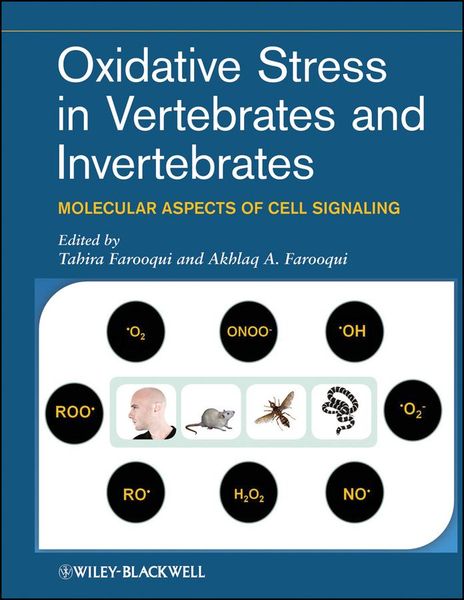
Oxidative Stress in Vertebrates and Invertebrates Molecular Aspects of Cell Signaling
Fr. 243.00
inkl. gesetzl. MwSt.,
Beschreibung
Produktdetails
Einband
Gebundene Ausgabe
Erscheinungsdatum
06.12.2011
Herausgeber
Tahira Farooqui + weitereVerlag
John Wiley & SonsSeitenzahl
416
Maße (L/B/H)
27.9/21.6/2.8 cm
Gewicht
1139 g
Auflage
1. Auflage
Sprache
Englisch
ISBN
978-1-118-00194-3
This volume presents a unique comparative treatment of the role oxidative stress plays in vertebrates and invertebrates in multiple organ systems with regards to cell death, development, aging, and human diseases, and anti-oxidant therapy. It offers comprehensive reviews of the current understanding of oxidative stress-mediated physiology and pathology as well as directions for future research. It also provides current information on the role of oxidative stress in neurodegenerative diseases, cardiovascular diseases, and various types of cancer mediated by oxidative stress. Unique comparative treatment of oxidative stress and antioxidant defenses in vertebrates and invertebrates
In one expertly edited and organized volume, Oxidative Stress in Vertebrates and Invertebrates brings together and analyzes the latest research findings in the field in order to present our current state of knowledge. The text bridges the gap between basic science and clinical studies, making it possible for readers to apply basic science to better understand and manage chronic diseases associated with oxidative stress. Moreover, it provides a unique comparative treatment of oxidative stress and antioxidant defenses in vertebrates and invertebrates, examining basic mechanisms, biomarkers, and oxidative stress-mediated chronic diseases.
Featuring contributions from leading experts in oxidative stress-mediated cell signaling, the text is divided into two sections.
Part I, Oxidative Stress in Vertebrate Systems, explores such topics as:
Generation of reactive oxygen species and their role in cell survival and suicide
Oxidative stress and neuroinflammation in Alzheimer's disease and Parkinson's disease
Comparison of oxidative stress in aging between vertebrates and invertebrates
Part II, Oxidative Stress in Invertebrate Systems, explores such topics as:
Effect of oxidative stress on insect endocrine control
Innate immune system in airway epithelial cells of Drosophila
Oxidative challenge and redox sensing in molluscs
The final chapter provides a perspective on emerging research and directions for future investigations. Throughout the text, readers will find plenty of figures and line drawings of signal transduction pathways that illustrate key concepts and processes. Extensive references to the primary literature plus a bibliography facilitate further research into each topic.
This text is recommended for biochemists, neuropharmacologists, toxicologists, and clinicians who need a state-of-the-science understanding of the mechanisms of oxidative stress in vertebrate and invertebrate systems.
In one expertly edited and organized volume, Oxidative Stress in Vertebrates and Invertebrates brings together and analyzes the latest research findings in the field in order to present our current state of knowledge. The text bridges the gap between basic science and clinical studies, making it possible for readers to apply basic science to better understand and manage chronic diseases associated with oxidative stress. Moreover, it provides a unique comparative treatment of oxidative stress and antioxidant defenses in vertebrates and invertebrates, examining basic mechanisms, biomarkers, and oxidative stress-mediated chronic diseases.
Featuring contributions from leading experts in oxidative stress-mediated cell signaling, the text is divided into two sections.
Part I, Oxidative Stress in Vertebrate Systems, explores such topics as:
Generation of reactive oxygen species and their role in cell survival and suicide
Oxidative stress and neuroinflammation in Alzheimer's disease and Parkinson's disease
Comparison of oxidative stress in aging between vertebrates and invertebrates
Part II, Oxidative Stress in Invertebrate Systems, explores such topics as:
Effect of oxidative stress on insect endocrine control
Innate immune system in airway epithelial cells of Drosophila
Oxidative challenge and redox sensing in molluscs
The final chapter provides a perspective on emerging research and directions for future investigations. Throughout the text, readers will find plenty of figures and line drawings of signal transduction pathways that illustrate key concepts and processes. Extensive references to the primary literature plus a bibliography facilitate further research into each topic.
This text is recommended for biochemists, neuropharmacologists, toxicologists, and clinicians who need a state-of-the-science understanding of the mechanisms of oxidative stress in vertebrate and invertebrate systems.
Noch keine Bewertungen vorhanden
Verfassen Sie die erste Bewertung zu diesem Artikel
Helfen Sie anderen Kundinnen und Kunden durch Ihre Meinung.