KI-Beratung Beta

Produktbild: Self on Audio

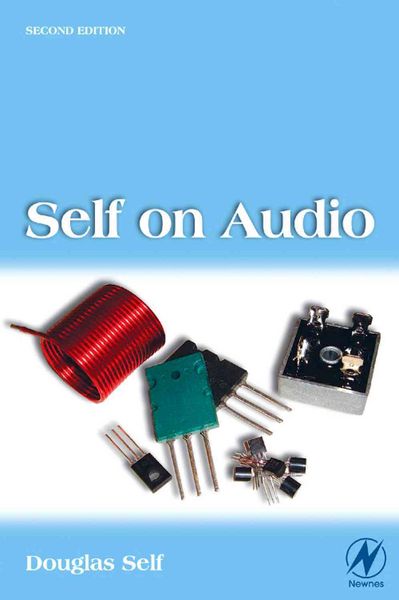
Self on Audio

Aus der Reihe Newnes

Fr. 77.90

inkl. gesetzl. MwSt., Versandkostenfrei


Beschreibung

Whether you are a dedicated audiophile who wants to gain a more complete understanding of the design issues behind a truly great amp, or a professional electronic designer seeking to learn more about the art of amplifier design, there can be no better place to start than with the 35 classic magazine...

Beschreibung

Whether you are a dedicated audiophile who wants to gain a more complete understanding of the design issues behind a truly great amp, or a professional electronic designer seeking to learn more about the art of amplifier design, there can be no better place to start than with the 35 classic magazine articles collected together in this book.
Douglas Self offers a tried and tested method for designing audio amplifiers in a way that improves performance at every point in the circuit where distortion can creep in - without significantly increasing cost. Through the articles in this book, he takes readers through the causes of distortion, measurement techniques, and design solutions to minimise distortion and efficiency. Most of the articles are based round the design of a specific amplifier, making this book especially valuable for anyone considering building a Self amplifier from scratch.
Self is senior designer with a high-end audio manufacturer, as well as a prolific and highly respected writer. His career in audio design is reflected in the articles in this book, originally published in the pages of Electronics World and Wireless World over a 25 year period.
  • An audio amp design cookbook, comprising 35 of Douglas Self's definitive audio design articles
  • Complete designs for readers to build and adapt
  • An anthology of classic designs for electronics enthusiasts, Hi-Fi devotees and professional designers alike

Produktdetails

Einband

Taschenbuch

Verlag Elsevier LTD, Oxford
Seitenzahl

488

Maße (H)

23.4 cm

Produktdetails

Einband

Taschenbuch

Verlag Elsevier LTD, Oxford
Seitenzahl

488

Maße (H)

23.4 cm

Gewicht

712 g

Auflage

2. Auflage

Sprache

Englisch

ISBN

978-0-7506-8166-7

Noch keine Bewertungen vorhanden

Verfassen Sie die erste Bewertung zu diesem Artikel

Helfen Sie anderen Kundinnen und Kunden durch Ihre Meinung.

Kundinnen und Kunden meinen

Bewertungen (0)

Die Leseprobe wird geladen.
  • Produktbild: Self on Audio
  • 1: Advanced preamplifier design

    2: High-performance preamplifier

    3: Precision preamplifier

    4: Design of moving-coil head amplifiers

    5: Precision preamplifier '96, Part I

    6: Precision preamplifier '96, Part II

    7: Overload matters

    8: A balanced view, Part I

    9: A balanced view, Part II

    10: High-quality compressor/limiter

    11: Inside mixers

    12: Electronic analogue switching, Part I: CMOS gates

    13: Electronic analogue switching, Part II: discrete FETs

    Power Amplifiers

    14: Sound mosfet design

    15: FETs versus BJTs: the linearity competition

    16: Distortion in power amplifiers, Part I: the sources of distortion

    17: Distortion in power amplifiers, Part II: the input stage

    18: Distortion in power amplifiers, Part III: the voltage-amplifier stage

    19: Distortion in power amplifiers, Part IV: the power amplifier stages

    20: Distortion in power amplifiers, Part V: output stages

    21: Distortion in power amplifiers, Part VI: the remaining distortions

    22: Distortion in power amplifiers, Part VII: frequency compensation and real designs

    23: Distortion in power amplifiers, Part VIII: Class A amplifiers

    24: Power amplifier input currents and their troubles

    25: Diagnosing distortions

    26: Trimodal audio power, Part I

    27: Trimodal audio power, Part II

    28: Load-invariant audio power

    29: Common-emitter power amplifiers: a different perception?

    30: Few compliments for non-complements

    31: Loudspeaker undercurrents

    32: Class distinction

    33: Muting relays

    34: Cool audio power

    35: Audio power analysis