Gutscheinbedingungen

*Gültig bis 20.09.2026 auf (fast) alles. Ausgeschlossen sind Smartboxen, Zeitschriften, Tickets, Lebensmittel, Gaming-Elektroartikel, Tinte/Toner, Gutscheine, Geschenkkarten, Blumen und Abos | Einlösbar in allen Buchhandlungen von Orell Füssli, Barth Bücher, Buchladen Rapunzel, Schuler Orell Füssli, Stauffacher und ZAP unter Vorweisung des Gutscheins, auf www.orellfüssli.ch durch Eingabe des Gutscheincodes. Beim Service „eBooks verschenken“ und bei eBook-Käufen via eReader nicht einlösbar | Mindesteinkaufswert: Fr. 100.- | Nicht mit anderen Rabatten kumulierbar.

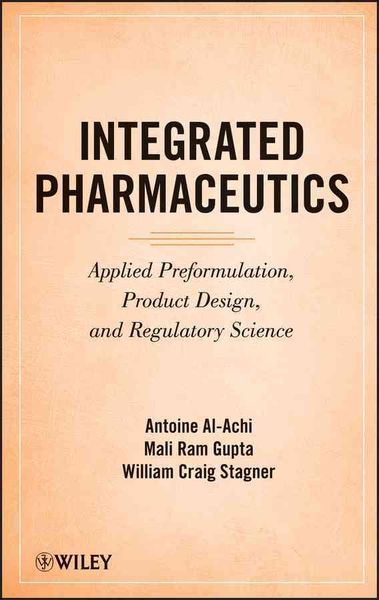
Produktbild: Integrated Pharmaceutics

Integrated Pharmaceutics Applied Preformulation, Product Design, and Regulatory Science

Fr. 199.00

inkl. gesetzl. MwSt., Versandkostenfrei


Beschreibung

Produktdetails

Einband

Gebundene Ausgabe

Verlag

John Wiley & Sons

Seitenzahl

1024

Maße (B/H)

15/25 cm

Sprache

Englisch

ISBN

978-0-470-59692-0

Beschreibung

Produktdetails

Einband

Gebundene Ausgabe

Verlag

John Wiley & Sons

Seitenzahl

1024

Maße (B/H)

15/25 cm

Sprache

Englisch

ISBN

978-0-470-59692-0

Noch keine Bewertungen vorhanden

Verfassen Sie die erste Bewertung zu diesem Artikel

Helfen Sie anderen Kundinnen und Kunden durch Ihre Meinung.

Kundinnen und Kunden meinen

Bewertungen (0)

Die Leseprobe wird geladen.
  • Produktbild: Integrated Pharmaceutics
  • FOREWORD xvPREFACE xviiPART I PREFORMULATIONCHAPTER 1 MATHEMATICAL CONCEPTS 31.1 Introduction 31.2 The Simple Linear Relationship 41.3 Exponential Rules 71.4 Logarithmic Rules 81.5 Differential Equations 101.6 Expanding and Reducing Formulas 12References 13Glossary 14CHAPTER 2 THERMODYNAMICS 152.1 Introduction 152.2 The Zeroth Law of Thermodynamics 152.3 The First Law of Thermodynamics 162.4 The Second Law of Thermodynamics 172.5 The Third Law of Thermodynamics 182.6 Polymorphism 182.7 Physical Stability of Crystal Forms 202.8 Solubility 21References 22Glossary 23CHAPTER 3 SOLUBILITY AND DISSOLUTION 253.1 Introduction 253.2 Concentration Units 263.3 What Should be Done When Alcohol is Prescribed in a Formulation 353.4 The Partition Coefficient 363.5 Disintegration and Dissolution 383.6 Concluding Remarks 43References 43Glossary 44CHAPTER 4 BIOLOGICAL ASPECTS OF FORMULATIONS 454.1 Introduction 454.2 Bioavailability and Bioequivalence 454.3 Protocols for Determining Bioequivalence 494.4 Bioequivalence Procedure 494.5 FDA-Approved Methods for Bioequivalence Studies 504.6 Approaches to Improving Bioavailability 52References 54Glossary 54CHAPTER 5 INTERFACIAL PROPERTIES 575.1 Introduction 575.2 Liquid-Solid Interface 585.3 Dosage-Form Applications 58References 63Glossary 63CHAPTER 6 ADSORPTION PHENOMENON 656.1 Introduction 656.2 Adsorption on Filters 686.3 Adsorption of Proteins 69References 70Glossary 71CHAPTER 7 RHEOLOGICAL PRINCIPLES 737.1 Introduction 737.2 Newtonian Systems 747.3 Non-Newtonian Systems 757.4 Viscoelasticity 787.5 Reynolds Number 817.6 Concluding Remarks 81References 82Glossary 82CHAPTER 8 CHEMICAL STABILITY AND SHELF-LIFE DETERMINATION 858.1 Introduction 858.2 Shelf-life Determination 868.3 Stability of Biotechnology Products 112References 113Glossary 117CHAPTER 9 PARTICLE SCIENCE 1199.1 Introduction 1199.2 Particle Size Estimation and Distribution 1209.3 Micronization 1259.4 Particle Size Preparation and Reduction for Pulmonary Delivery 1269.5 Polymeric Particulate Matter 1289.6 Nanoparticles 1289.7 Segregation of Particles 131References 132Glossary 133CHAPTER 10 BASIC STATISTICS AND DESIGN OF EXPERIMENTAL CONCEPTS 13510.1 Descriptive Statistics 13510.2 Inferential Statistics 13710.3 Statistical Applications in Quality Control Testing 14610.4 Design of Experiment 148References 154Glossary 154CHAPTER 11 FORMULATION DEVELOPMENT CONCEPTS 15711.1 Preformulation 15711.2 Scale-up Considerations 15811.3 Combination Products 15911.4 Rate-Controlled Drug Delivery 16011.5 Drug Delivery Technologies for Improving Oral Delivery 16311.6 Drug Delivery Technologies for Improving Transmucosal Delivery 16511.7 Drug Delivery Technologies for Transdermal Delivery 16611.8 Special Considerations for Biotechnology and Protein Delivery Systems 16611.9 Drug-Excipient and Excipient-Excipient Interactions 17011.10 The Presence of Contaminants in a Formulation 17211.11 Other Considerations 173References 174Glossary 176PART II PRODUCT DESIGNCHAPTER 12 THE PRODUCT DESIGN PROCESS 18112.1 Introduction 18112.2 Formulation Design 18312.3 Process Design 18812.4 Container Closure System Design 190References 192Glossary 193Appendixes 194CHAPTER 13 TABLET PRODUCT DESIGN 21513.1 Introduction 21513.2 Formulation Design 22213.3 Process Design 24313.4 Container Closure System Design 28313.5 Risk Management 29213.6 Attribute Tests 29313.7 New Drug Application Stability Assessment 296References 298Glossary 304Appendixes 306CHAPTER 14 CAPSULE PRODUCT DESIGN 31914.1 Introduction 31914.2 Hard-Shell Capsules 32014.3 Soft-Shell Capsules 34314.4 Formulation and Process Optimization 34814.5 Container Closure System 35014.6 Risk Management 35014.7 Attribute Tests 35014.8 New Drug Application Stability Assessment 352References 353Glossary 355Appendixes 356CHAPTER 15 DISPERSED SYSTEM PRODUCT DESIGN 35915.1 Introduction 35915.2 Formulation Design 36015.3 Process Design 39915.4 Container Closure System Design 40115.5 Risk Management 40215.6 Attribute Tests 40215.7 New Drug Application Stability Assessment 405References 406Glossary 408Appendixes 409CHAPTER 16 AEROSOL PRODUCT DESIGN 41516.1 Introduction 41516.2 Formulation Design 41616.3 Container Closure System Design 44316.4 Risk Management 44616.5 Attribute Tests 45016.6 New Drug Application Stability Assessment 455References 458Glossary 462Appendix 463CHAPTER 17 STERILE INJECTABLE PRODUCT DESIGN 46717.1 Introduction 46717.2 Formulation Design 46817.3 Process Design 51117.4 Container Closure System Design 53017.5 Risk Management 53517.6 Attribute Tests 53517.7 New Drug Application Stability Assessment 536References 539Glossary 546Appendixes 548CHAPTER 18 OPHTHALMIC PRODUCT DESIGN 56118.1 Introduction 56118.2 Formulation Design 56518.3 Process Design 57718.4 Container Closure System Design 57718.5 Attribute Tests 57718.6 New Drug Application Stabilty Assessment 578References 578Glossary 580Appendix 581CHAPTER 19 TRANSDERMAL PRODUCT DESIGN 58719.1 Introduction 58719.2 Formulation Design 59019.3 Conclusions 612References 613Glossary 615Appendix 615CHAPTER 20 ORAL MODIFIED-RELEASE PRODUCT DESIGN 61920.1 Introduction 61920.2 Coatings 62520.3 Matrix Systems 62820.4 Gastroretentive Devices 63120.5 Osmotic Controlled Release Systems 63220.6 Conclusions 633References 634Glossary 635Appendix 636PART III REGULATORY SCIENCECHAPTER 21 REGULATORY PRACTICES AND GUIDELINES 63921.1 Worldwide Regulatory Agencies 63921.2 Good Manufacturing Practice 65121.3 FDA Inspection and Regulatory Actions 685References 687Glossary 689CHAPTER 22 REGULATIONS FOR COMPOUNDING PHARMACIES 69722.1 Introduction 69722.2 Compounding Guidelines 69822.3 FDA Compliance Policy Guides 69922.4 Good Compounding Practices 70522.5 Stability Criteria and Beyond-Use Dating of Compounded Preparations 71722.6 Verification 71922.7 Patient Counseling 71922.8 Pharmacy Compounding Accreditation 720References 720Glossary 721Appendixes 722CHAPTER 23 IND AND NDA PHASE-APPROPRIATE NEW DRUG DEVELOPMENT PROCESS 72723.1 Introduction 72723.2 Preclinical Development Overview 72823.3 Phase-Appropriate Clinical Trials Overview 73023.4 Investigational New Drugs 73423.5 NDA Review Process 744References 750Glossary 751CHAPTER 24 GENERICS, BIOSIMILARS, AND OTCS 75324.1 Generic Drugs 75324.2 Biosimilar Drugs 75924.3 Over-the-Counter Drugs 760References 767Glossary 769Appendix 769CHAPTER 25 ACCELERATED NEW DRUG APPROVAL AND EXPEDITED ACCESS OF NEW THERAPIES 77325.1 Introduction 77325.2 Expedited Review and Approval of New Therapies 77425.3 Expanded Access to New Therapies 77625.4 Orphan Drugs 77825.5 Pediatric Drugs 78025.6 Pediatric Drug Development and the Orphan Drug Act Incentives 78325.7 Common EMEA/FDA Application for Orphan Medicinal Product Designation 784References 784Glossary 785CHAPTER 26 POST-DRUG APPROVAL ACTIVITIES 78926.1 Postmarket Requirements and Commitments 78926.2 Postapproval Manufacturing Changes 79026.3 Clinical Phase 4 Studies: Postmarketing Surveillance and Risk Assessment 79226.4 Prescription Drug Advertising and Promotional Labeling Direct to Consumers 798References 799Glossary 801Appendix 804CHAPTER 27 DRUG MASTER FILES AND EU DOSSIERS 80527.1 Drug Master Files 80527.2 European Marketing Authorization Dossiers 817References 822Glossary 824CHAPTER 28 COMMISSIONING AND QUALIFICATION 82928.1 Regulatory Requirements 82928.2 Preliminary C&Q Activities 83228.3 Commissioning 83428.4 Qualification and Validation 83828.5 Qualification Protocols 84228.6 Process Validation 84928.7 Cleaning Validation 85428.8 Computer Systems Validation 85628.9 Change Control 85628.10 Revalidation 857References 857Glossary 859CHAPTER 29 QUALITY SYSTEMS AND CONTROLS 86329.1 Pharmaceutical Quality System 86329.2 Quality Systems Approach to CGMP Regulations 86829.3 Inspection of Pharmaceutical Quality Control Laboratories 87529.4 Pharmacopeias 87729.5 Analytical Instrument Qualification 88129.6 Validation of Analytical Procedures 88629.7 Stability Testing of New Drug Substances and Products 889References 893Glossary 895Appendixes 900CHAPTER 30 SAFETY, TOXICOLOGY, AND PHARMACOGENOMICS 91130.1 Nonclinical Safety Studies 91130.2 Safety Pharmacology Studies 91430.3 Carcinogenicity Studies of Pharmaceuticals 91830.4 Genotoxicity Testing 92030.5 Immunotoxicity Studies 92330.6 Safety Reporting Requirements 92630.7 Pharmacogenomics 927References 930Glossary 932Appendixes 935CHAPTER 31 REGULATORY SCIENCE INITIATIVES FOR ADVANCING PUBLIC HEALTH 93931.1 Introduction 93931.2 Advancing Regulatory Science for Public Health: The Promise of RegulatoryScience 94031.3 Advancing Regulatory Science at FDA: Strategic Plan for RegulatoryScience 94031.4 Collaborative Implementation Framework 943References 944Glossary 945INDEX 947