KI-Beratung Beta

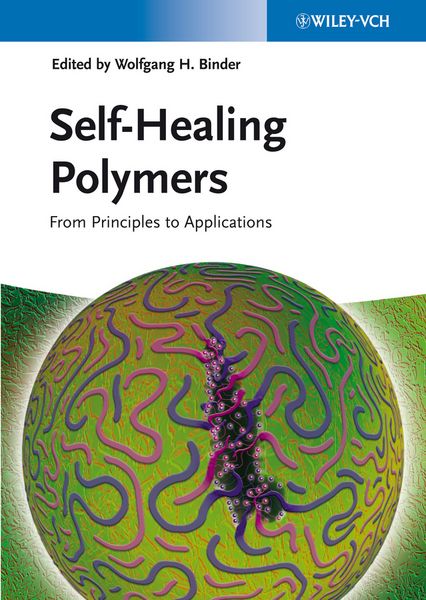
Produktbild: Self-Healing Polymers

Self-Healing Polymers From Principles to Applications

Fr. 203.00

inkl. gesetzl. MwSt., Versandkostenfrei


Beschreibung

Produktdetails

Einband

Gebundene Ausgabe

Erscheinungsdatum

05.06.2013

Abbildungen

w. figs.

Herausgeber

Wolfgang H. Binder

Verlag

Wiley-VCH

Seitenzahl

446

Maße (L/B/H)

2.8/17/24 cm

Gewicht

1100 g

Auflage

1. Auflage

Sprache

Englisch

ISBN

978-3-527-33439-1

Beschreibung

Portrait

Wolfgang H. He received his PhD in Organic Chemistry in 1995 at the University of Vienna. In his post doc research at Emory University, USA, he specialized on colloidal chemistry/macro-molecular chemistry. In 1997 he became an Assistant Professor at the Technical University of Vienna and in 2004 Associate Professor. His research is focused on synthesis and self-assembly of tailored polymers and analytical polymer science, with applications in material science, nanotechnology and medicine; Wolfgang H. Binder has published more than 120 scientific articles.

Produktdetails

Einband

Gebundene Ausgabe

Erscheinungsdatum

05.06.2013

Abbildungen

w. figs.

Herausgeber

Wolfgang H. Binder

Verlag

Wiley-VCH

Seitenzahl

446

Maße (L/B/H)

2.8/17/24 cm

Gewicht

1100 g

Auflage

1. Auflage

Sprache

Englisch

ISBN

978-3-527-33439-1

Herstelleradresse

Wiley-VCH GmbH
Boschstr. 12
69469 Weinheim
Deutschland
Email: trade@wiley.com
Url: www.wiley-vch.de
Fax: +49 6201 606328

Noch keine Bewertungen vorhanden

Verfassen Sie die erste Bewertung zu diesem Artikel

Helfen Sie anderen Kundinnen und Kunden durch Ihre Meinung.

Kundinnen und Kunden meinen

Bewertungen (0)

Die Leseprobe wird geladen.
  • Produktbild: Self-Healing Polymers
  • INTRODUCTION


    PART ONE: Design of Self-Healing Materials


    PRINCIPLES OF SELF-HEALING POLYMERS


    Introductory Remarks


    General Concept for the Design and Classification of Self-Healing Materials


    Physical Principles of Self-Healing


    Chemical Principles of Self-Healing


    Multiple versus One-Time Self-Healing


    Resume and Outlook


    SELF-HEALING IN PLANTS AS BIO-INSPIRATION FOR SELF-REPAIRING POLYMERS


    Self-Sealing and Self-Healing in Plants: A Short Overview


    Selected Self-Sealing and Self-Healing Processes in Plants as Role Models for Bio-Inspired Materials with Self-Repairing Properties


    Bio-Inspired Approaches for the Development of Self-Repairing Materials and Structures


    Bio-Inspired Self-Healing Materials: Outlook


    MODELING SELF-HEALING PROCESSES IN POLYMERS: FROM NANOGELS TO NANOPARTICLE-FILLED MICROCAPSULES


    Introduction


    Designing Self-Healing Dual Cross-Linked Nanogel Networks


    Designing 'Artificial Leukocytes' That Help Heal Damaged Surfaces via the Targeted Delivery of Nanoparticles to Cracks


    Conclusions


    PART TWO: Polymer Dynamics


    STRUCTURE AND DYNAMICS OF POLYMER CHAINS


    Foreword


    Techniques


    Structure


    Dynamics


    Application to Self-Healing


    Conclusions and Outlook


    PHYSICAL CHEMISTRY OF CROSS-LINKING PROCESSES IN SELF-HEALING MATERIALS


    Introduction


    Thermodynamics of Gelation


    Viscoelastic Properties of the Sol-Gel Transition


    Phase Separation and Gelation


    Conclusions


    THERMALLY REMENDABLE POLYMERS


    Principles of Thermal Healing


    Inorganic-Organic Systems


    Efficiency, Assessment of Healing Performance


    Conclusions


    PHOTOCHEMICALLY REMENDABLE POLYMERS


    Background


    Molecular Design


    Reversible Photo-Crosslinking Behaviors


    Evaluation of Photo-Remendability


    Concluding Remarks


    MECHANOPHORES FOR SELF-HEALING APPLICATIONS


    Introduction


    Mechanochemical Damage


    Activation of Mechanophores


    Mechanochemical Self-Healing Strategies


    Conclusions and Outlook


    CHEMISTRY OF CROSSLINKING PROCESSES FOR SELF-HEALING POLYMERS


    Introduction


    Extrinsic Self-Healing Materials


    Intrinsic Self-Healing Materials


    Concluding Remarks and Future Outlook


    PREPARATION OF NANOCAPSULES AND CORE-SHELL NANOFI BERS FOR EXTRINSIC SELF-HEALING MATERIALS


    Selected Preparation Methods for the Encapsulation of Self-Healing Agents


    Mechanically Induced Self-Healing


    Stimuli-Responsive Self-Healing Materials


    Novel Approaches and Perspectives


    PART THREE: Supramolecular Systems


    SELF-HEALING POLYMERS VIA SUPRAMOLECULAR, HYDROGEN-BONDED NETWORKS


    Introduction


    Dynamics of Hydrogen Bonds in Solution


    Supramolecular Gels


    Self-Healing Bulk Materials


    Conclusions


    METAL-COMPLEX-BASED SELF-HEALING POLYMERS


    Stimuli-Responsive Metallopolymers


    Self-Healing Metallopolymers


    Summary and Outlook


    SELF-HEALING IONOMERS


    Introduction


    Basic Principles of Ionomers


    Ionomers in Self-Healing Systems


    Actual Developments and Future Trends in Ionomeric and Related Self-Healing Systems


    PART FOUR: Analysis and Friction Detection in Self-Healing Polymers: Macroscopic, Microscopic and Nanoscopic Techniques


    METHODS TO MONITOR AND QUANTIFY (SELF-) HEALING IN POLYMERS AND POLYMER SYSTEMS


    Introduction


    Visualization Techniques


    Healing of Mechanical Properties


    Healing of Functional Integrity


    Summary


    SELF-HEALING EPOXIES AND THEIR COMPOSITES


    Introduction


    Capsule-Based Healing System


    Vascular-Based Healing Systems


    Intrinsic Healing Systems


    Conclusions


    SELF-HEALING COATINGS


    Introduction into Self-Healing Coatings


    Concept of Micro- and Nanocontainer-Based Self-Healing Coatings


    Types of Nanocontainers


    Characterization of Nanocontainer-Based Self-Healing Coatings


    Conclusions and Current Trends


    APPLICATION OF SELF-HEALING MATERIALS IN AEROSPACE ENGINEERING


    General Considerations


    Conclusions


    INDEX