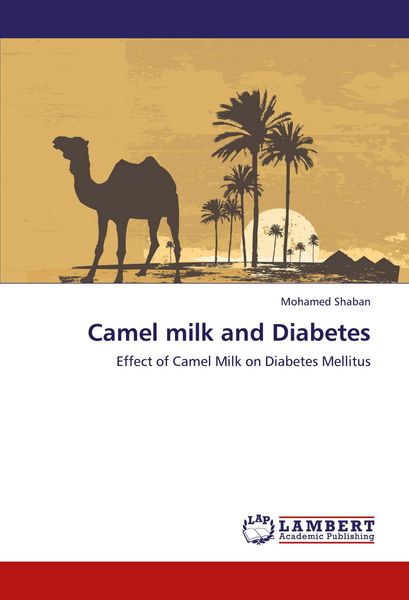
Camel milk and Diabetes Effect of Camel Milk on Diabetes Mellitus
-
- Englisch ausgewählt
Fr. 105.00
inkl. gesetzl. MwSt.,
Beschreibung
Produktdetails
Einband
Taschenbuch
Erscheinungsdatum
02.06.2012
Verlag
LAP LAMBERT Academic PublishingSeitenzahl
276
Maße (L/B/H)
22/15/1.8 cm
Gewicht
382 g
Sprache
Englisch
ISBN
978-3-659-12760-1
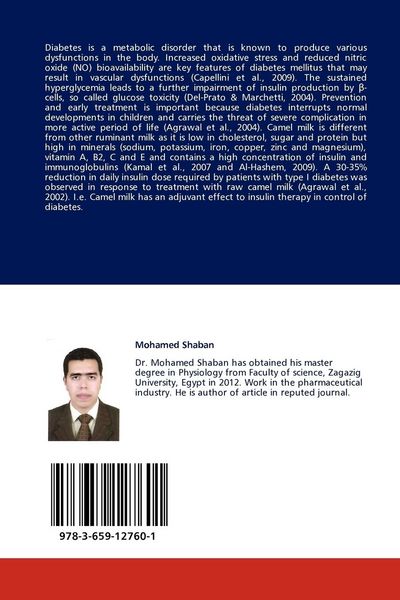
Diabetes is a metabolic disorder that is known to produce various dysfunctions in the body. Increased oxidative stress and reduced nitric oxide (NO) bioavailability are key features of diabetes mellitus that may result in vascular dysfunctions (Capellini et al., 2009). The sustained hyperglycemia leads to a further impairment of insulin production by ss-cells, so called glucose toxicity (Del-Prato & Marchetti, 2004). Prevention and early treatment is important because diabetes interrupts normal developments in children and carries the threat of severe complication in more active period of life (Agrawal et al., 2004). Camel milk is different from other ruminant milk as it is low in cholesterol, sugar and protein but high in minerals (sodium, potassium, iron, copper, zinc and magnesium), vitamin A, B2, C and E and contains a high concentration of insulin and immunoglobulins (Kamal et al., 2007 and Al-Hashem, 2009). A 30-35% reduction in daily insulin dose required by patients with type I diabetes was observed in response to treatment with raw camel milk (Agrawal et al., 2002). I.e. Camel milk has an adjuvant effect to insulin therapy in control of diabetes.
Noch keine Bewertungen vorhanden
Verfassen Sie die erste Bewertung zu diesem Artikel
Helfen Sie anderen Kundinnen und Kunden durch Ihre Meinung.