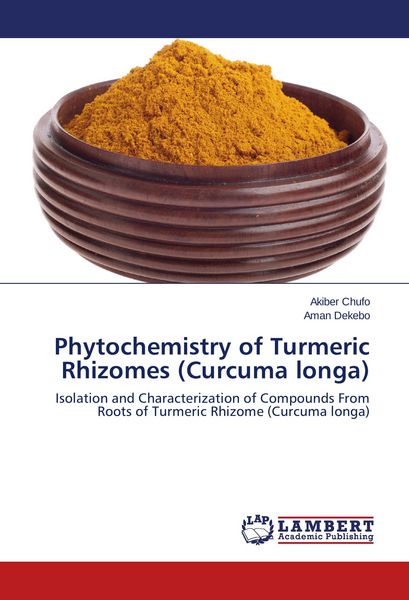
Phytochemistry of Turmeric Rhizomes (Curcuma longa) Isolation and Characterization of Compounds From Roots of Turmeric Rhizome (Curcuma longa)
-
- Englisch ausgewählt
Fr. 67.90
inkl. gesetzl. MwSt.,
Beschreibung
Produktdetails
Einband
Taschenbuch
Erscheinungsdatum
19.06.2012
Verlag
LAP LAMBERT Academic PublishingSeitenzahl
64
Maße (L/B/H)
22/15/0.5 cm
Gewicht
113 g
Sprache
Englisch
ISBN
978-3-659-15207-8
Curcuma longa L. has a perennial herb, 2-3ft high, with a short stem and tufted leaves; the rhizomes are short and thick which constitute the turmeric of commerce. The characteristic yellow matter, distributed throughout the plant, is especially concentrated in rhizomes. Curcuma longa is rich in carbohydrate; its protein value is not high while its mineral content is medium. Curcuma longa L. have been used traditionally as anti-inflammatory, anti-cancerous, choleratic, antimicrobial, antirheumatic, and antidiabetic (Govindarajan, 1980; Tonnessen, 1986; Velayudhan et. al, 1999; Kuttan et. al., 1985). It is also used as a source of coloring matter for foods, cosmetics and textiles. Turmeric is underground storage organ that is rich in secondary metabolites. Orange-red in coloured turmeric oleoresin is being used increasingly by the processed food industries in the West to impart color and aroma. Oleoresin is a mixture of compounds, namely curcuminoids, volatile oil and other active ingredients, non-volatile fatty and resinous material extractable by solvents, used singly, in sequence or in combination.
Noch keine Bewertungen vorhanden
Verfassen Sie die erste Bewertung zu diesem Artikel
Helfen Sie anderen Kundinnen und Kunden durch Ihre Meinung.