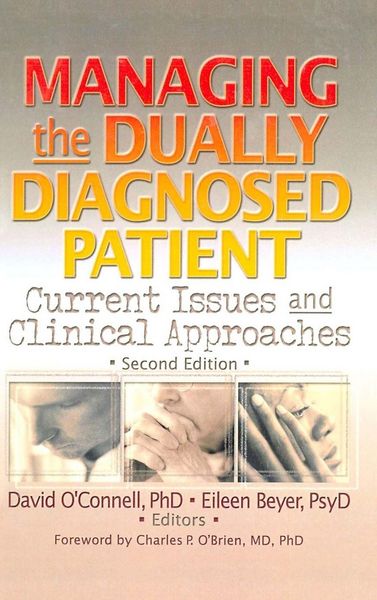
• Produktbild: Managing the Dually Diagnosed Patient
  • Produktbild: Managing the Dually Diagnosed Patient

Managing the Dually Diagnosed Patient Current Issues and Clinical Approaches, Second Edition

Fr. 88.90

inkl. gesetzl. MwSt., Versandkostenfrei


Produktdetails

Einband

Gebundene Ausgabe

Erscheinungsdatum

29.08.2002

Verlag

Taylor and Francis

Seitenzahl

370

Maße (L/B/H)

23.5/15.7/2.4 cm

Gewicht

686 g

Sprache

Englisch

ISBN

978-0-7890-0876-3

Produktdetails

Einband

Gebundene Ausgabe

Erscheinungsdatum

29.08.2002

Verlag

Taylor and Francis

Seitenzahl

370

Maße (L/B/H)

23.5/15.7/2.4 cm

Gewicht

686 g

Sprache

Englisch

ISBN

978-0-7890-0876-3

Herstelleradresse

Libri GmbH
Europaallee 1
36244 Bad Hersfeld
DE

Email: gpsr@libri.de

Noch keine Bewertungen vorhanden

Verfassen Sie die erste Bewertung zu diesem Artikel

Helfen Sie anderen Kundinnen und Kunden durch Ihre Meinung.

Kundinnen und Kunden meinen

Bewertungen (0)

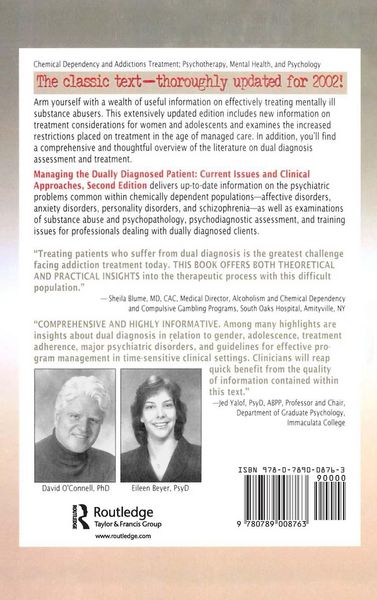
  • Produktbild: Managing the Dually Diagnosed Patient
  • Produktbild: Managing the Dually Diagnosed Patient
  • * About the Editors * Contributors * Foreword * Preface to the Second Edition * Section I: Theoretical and Programmatic Issues * Chapter 1. Managing Psychiatric Comorbidity in Inpatient Addictions Treatment * Clinical Management Policy and Procedure Guidelines * Assessment * Clinical Management and Treatment of Coexisting Psychiatric Disorders in Inpatient Addictions Treatment * Appendix: Clinical Protocols for the Treatment of Selected Psychiatric Disorders * Chapter 2. Improving Treatment Adherence Among Patients with Comorbid Psychiatric and Substance Use Disorders * Introduction and Overview * The Problem of Poor Treatment Adherence * Determinants of Treatment Adherence * Effects of Poor Adherence * Strategies That Improve Adherence * Systems Strategies to Improve Adherence * Conclusions and Recommendations * Suggested Patient Educational Videos * Chapter 3. Psychopathology and Substance Abuse: A Psychoanalytic Perspective * Libido and Personality Development * Early versus Later Psychoanalytic Thought * The Borderline Personality * A Few Nonanalytic Ideas * Comments * Implications of the Theory for the Nonanalytic Clinician * Glossary * Section II: Treatment Considerations with Special Populations * Chapter 4. Females with Dual Diagnoses: Implications for Specialized Clinical Approaches * Introduction * Gender Differences in Addiction * Context of Comorbidity: Relational Perspective * Gender Differences and Similarities in Psychiatric Comorbidity * Major Psychiatric Comorbidities in Addicted Women: Depression, Dissociative Disorders, and Eating Disorders * Need for Specialized Women's Treatment * Summary of Implications for Specialized Treatment Approaches * Chapter 5. Assessing and Treating Psychiatric Comorbidity in Chemically Dependent Adolescents * Literature Review * Assessment * Treatment * Conduct Disorder * Attention Deficit Hyperactivity Disorder * Mood Disorders * Anxiety Disorders * Conclusions * Appendix: Selected Treatment Protocols for Comorbid Disorders * Section III: Assessment and Treatment of Major Mental Disorders * Chapter 6. A Guide to the Assessment of Psychiatric Symptoms in the Addictions Treatment Setting * Introduction: Current Symptoms and Behaviors As a Guide to Addictions Treatment Planning * A Decision Tree for Assessing Psychiatric Symptoms in the Chemically Dependent Individual * Other Factors to Consider in Assessing the Mentally Ill Substance Abuser * Conclusion * Chapter 7. Affective Disorders and Affective Symptoms in Alcoholism * Alcoholism: More Often the Cause or the Result of Depression? * Incidence of Major Depression in Alcoholics * Prevalence of Major Depression in Alcoholics * Economics * Types of Depression * Diagnosis of Affective Disorder in Alcoholism * The Relationship Between Alcoholism and Affective Disorders * Familial Transmission of Alcoholism and Affective Disorders * Genetic Relationship Between Alcoholism and Affective Disorders * Cerebrospinal Fluid * Dexamethasone Suppression Test * Suicide in Depressed Alcoholics * Remission of Alcoholism and Affective Symptoms * Persistence of Affective Disorders in Alcoholism * Drinking Outcome in Affective Disorder * Pharmacological Treatment of Alcohol Dependence * Treatment Strategies for Affective Disorder in Alcoholism * Conclusion: Summary and Treatment Protocols * Chapter 8. Chemical Addictions and Anxiety Disorders: When Adaptive Mechanisms Go Awry * Introduction * The Disease of Addiction * Anxiety and Anxiety Disorders * Comorbidity * The Interaction * Diagnostic Considerations * Conclusion * Chapter 9. Schizophrenia and Substance Abuse * Introduction * Prevalence of Combined Schizophrenia and Substance Abuse * Schizophrenia * The Effect of Schizophrenia in the Subst