• Produktbild: Wound Healing and Skin Physiology
  • Produktbild: Wound Healing and Skin Physiology

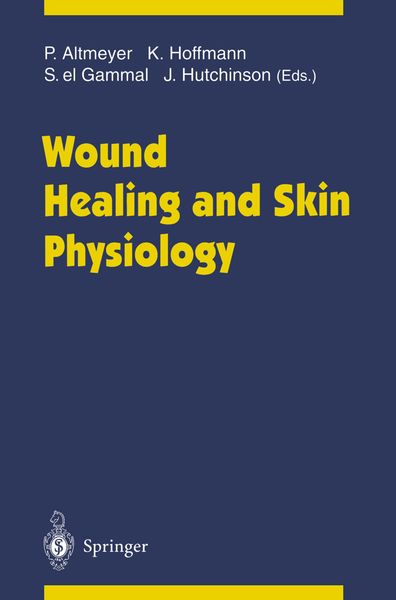
Wound Healing and Skin Physiology

Fr. 137.00

inkl. gesetzl. MwSt., Versandkostenfrei


Beschreibung

Produktdetails

Einband

Taschenbuch

Erscheinungsdatum

23.12.1994

Herausgeber

Peter Altmeyer + weitere

Verlag

Springer Berlin

Seitenzahl

717

Maße (L/B/H)

23.5/15.5/4 cm

Gewicht

1095 g

Auflage

Softcover reprint of the original 1st ed. 1994

Sprache

Englisch

ISBN

978-3-540-56124-8

Beschreibung

Portrait

Prof. Dr. med. Peter Altmeyer ist Direktor der Dermatologischen Klinik der Ruhr-Universität Bochum.

Produktdetails

Einband

Taschenbuch

Erscheinungsdatum

23.12.1994

Herausgeber

Verlag

Springer Berlin

Seitenzahl

717

Maße (L/B/H)

23.5/15.5/4 cm

Gewicht

1095 g

Auflage

Softcover reprint of the original 1st ed. 1994

Sprache

Englisch

ISBN

978-3-540-56124-8

Herstelleradresse

Springer-Verlag KG
Sachsenplatz 4-6
1201 Wien
AT

Email: GPSR Kontakt

Noch keine Bewertungen vorhanden

Verfassen Sie die erste Bewertung zu diesem Artikel

Helfen Sie anderen Kundinnen und Kunden durch Ihre Meinung.

Kundinnen und Kunden meinen

Bewertungen (0)

  • Produktbild: Wound Healing and Skin Physiology
  • Produktbild: Wound Healing and Skin Physiology
  • I. History of Wound Healing.- Theory and Practice of Wound Healing in the Past.- De rara medicatione vulnerum: An Historical Approach to Wound Care.- II. Morphology and Physiology.- Fetal Wound Repair.- Histological Examination of Skin Grafts.- Reepithelialisation of Wounds.- Pathophysiology of Wound Healing in Venous Leg Ulcers.- Collagen Metabolism and Wound Contraction.- The Role of the Connective Tissue Matrix in Wound Healing: Fibroblast and Collagen Interactions.- Modulation of Fibroblastic Cytoskeletal Features During Wound Healing and Fibrosis.- III. Microcirculation and Angiogenesis.- Measurement of Microcirculation.- Spatial Pattern of Cutaneous Perfusion in Wound Healing.- The Vascular Architecture of the Keloid: A Scanning Electron Microscope Study on Vascular Corrosion Casts.- Growth Factor Control of Wound Healing Angiogenesis.- Blood Flow in Ulcerated Tissue and Surrounding Skin: Healing Correlates with Return of the Venoarteriolar Reflex.- Three-Dimensional Reconstruction of Terminal Blood Spaces in the Proximal Tibia Metaphysis of the Growing Rat — A Model to Study Normal Angiogenesis.- IV. Biochemistry and Immunology.- Trace Elements in Normal and Impaired Wound Healing.- Plasmin-Mediated Pericellular Proteolysis by Keratinocytes: Extracellular Matrix Reorganisation vs Tissue Damage.- Reduced Migration Potential of Epithelial Cells from Explants of Chronic Decubitus Ulcers: The Cause of Impaired Wound Healing?.- Fibronectin and Its Role in Wound Healing.- Mechanisms of Action of Collagenase in Wound Repair.- Studies of Growth Factor and Matrix Proteinase Activities During Early Stages of Wound Healing.- Regulatory Aspects of Collagen Synthesis in Fibroblasts from Human Colon and Skin.- Platelet Released Factors Stimulate Rat Burn Wound Contraction.- V. Experimental Studies.- Biologic Activity of Tissue Flaps in the Treatment of Complicated Wounds.- Studies on Wound Healing in Axial Pattern Flaps of the Diabetic Rat.- Endogenous Growth Factor Pathways May Regulate Epidermal Hyperplasia in Chronic Venous Wounds: Modulation by Hydrocolloid Dressings.- Immunohistochemical Effect of a Hydrocolloid Occlusive Dressing (DuoDERM E) in Psoriasis Vulgaris.- The Treatment of Malum Perforans Pedis: Operative and Conservative Therapy.- Phosphocreatine Ameliorates Structural Integrity of Ischemic Skin Flaps.- Granulocyte Activity Is Enhanced by Culture Supernatants of Mononuclear Leukocytes Incubated with Tetrachlorodecaoxide.- Skin Reactions and Sensations Induced by Intradermal Injection of Substance P into Compound 48/80 Pretreated Skin.- Effect of Wound Fluid on Cultured Keratinocytes.- Strategies of Keratinocytes and Fibroblasts in Wound Closure Observed in an In Vitro Model.- Interleukin-2 Improves Transfusion-Suppressed Repair of Experimental Intestinal Anastomoses.- Neuropeptides and Merkel Cells in Tissue Expansion.- Congenital Factor XIII Deficiency as Cause of Therapy-Resistant Burn Wounds.- VI. Microbiology and Wound Infection.- The Microbiology of Wounds.- Pathogenesis of Wound Infections.- Interaction of Bacteria with Host Defence Cells: Mechanisms of Burn Wound Sepsis.- Streptococcus pyogenes Induced Necrosis and Ulcers of the Skin: The Possible Role of Streptococal Exotoxins.- Inhibition of Wound Healing by Topical Anti-microbial Agents.- Intra-arterial Application of Ceftizoxime Supports Wound Healing in Infected Ischemic Lesions of the Limbs.- VII. Noninvasive Measurement Techniques.- Noninvasive Measurement of Wound Healing of the Skin.- Computerized Wound Analysis — A New Method for Assessment of Healing.- A Color Image Analysis System (CD-CWA) for the Quantification of Wound Healing in Multicenter Trials.- Noninvasive Assessment of the Physical Properties of the Skin.- Noninvasive Evaluation of Skin Barrier Function.- A Cellstick Device for Wound Healing Research.- High-Resolution Ultrasound Imaging of Various Types of Wounds.- A 20 MHz Ultrasound Examination of Lipodermatosclerosis.- Physiological Changes in Aging Skin.- Diagnosis and Treatment of Venous Diseases and Leg Ulcer.- VIII. Surgery and Physical Therapy of Wounds.- Wound Healing in Oncologic Dermatosurgery.- Treatment of Keloids and Hypertrophic Scars with Cryosurgery and Silicon Gel Sheeting.- Surgery of Venous Leg Ulcers.- Treatment of Venous Leg Ulcers with a Soft Laser Light.- IX. Dressings and Agents Promoting Wound Healing.- Dressings as a New Concept for Topical Treatment of Ulcers.- The Effect of Allopurinol on Wound Contraction and Granulation Tissue Formation in the Rat.- Effects of Pale Ichthyol in a Model of Impaired Wound Healing.- Pretreatment of Photodamaged Forearm Skin with Topical Tretinoin Accelerates Healing of Full-Thickness Wounds.- Treatment of Chronic Wounds with Cultured Keratinocytes.- Influence of Agents Used for Topical Wound Treatment on Phagocyte Stimulation and Fibroblast Growth.- Both Wet and Moist Wound Environments Accelerate Cutaneous Healing.- Comparative Experimental Study on the Treatment of Open Wounds.- Comparison of Varihesive E with the Conventional Tulle Gras Dressing in Skin Graft Donor Sites Treatment of Infants.- Hydrocolloid Dressings in the Therapy of Cryolesions.- Treatment of Venous Leg Ulcers Using Occlusive Hydrocolloid Dressings (Varihesive E) Versus Conventional Phase-Adapted Wound Dressing.- Weekly treatment of Psoriatic Plaques with the Hydrocolloid Dressing DuoDERM E in Combination with Triamcinolone Acetonide.- Covering Tattoo Dermabrasion Wounds with a Hydrocolloid Dressing (Varihesive E).- A Prospective Randomized Study of the Efficacy of Hydrogel, Hydrocolloid, and Saline Moistened Dressings on the Management of Pressure Ulcers.- Pericapillary Fibrin in Venous Ulcers Treated with Hydrocolloid Dressings.