
KI-Beratung Beta

  • Produktbild: Familial Cancer Control
  • Produktbild: Familial Cancer Control

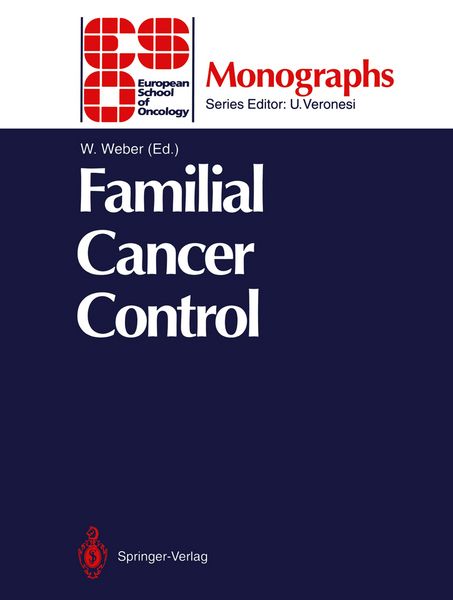
Familial Cancer Control

Aus der Reihe ESO Monographs

Fr. 137.00

inkl. gesetzl. MwSt., Versandkostenfrei


Beschreibung

The European School of Oncology came into existence to respond to a need for informa tion, education and training in the field of the diagnosis and treatment of cancer. There are two main reasons why such an initiative was considered necessary. Firstly, the teaching of oncology requires a rigorously...

Beschreibung

The European School of Oncology came into existence to respond to a need for informa tion, education and training in the field of the diagnosis and treatment of cancer. There are two main reasons why such an initiative was considered necessary. Firstly, the teaching of oncology requires a rigorously multidisciplinary approach which is difficult for the Univer sities to put into practice since their system is mainly disciplinary orientated. Secondly, the rate of technological development that impinges on the diagnosis and treatment of cancer has been so rapid that it is not an easy task for medical faculties to adapt their curricula flexibly. With its residential courses for organ pathologies and the seminars on new techniques (laser, monoclonal antibodies, imaging techniques etc.) or on the principal therapeutic controversies (conservative or mutilating surgery, primary or adjuvant chemotherapy, radiotherapy alone or integrated), it is the ambition of the European School of Oncology to fill a cultural and scientific gap and, thereby, create a bridge between the University and Industry and between these two and daily medical practice. One of the more recent initiatives of ESO has been the institution of permanent study groups, also called task forces, where a limited number of leading experts are invited to meet once a year with the aim of defining the state of the art and possibly reaching a consensus on future developments in specific fields of oncology.

Portrait

Dr. med. Walter Weber, 1944 geboren, ist Internist und seit 1973 in der Onkologie, seit 1979 in eigener Praxis in Hamburg tätig. Er veröffentlichte der Ganzheitsmediziner zahlreiche erfolgreiche Bücher zu Gesundheitsthemen.

Produktdetails

Einband

Taschenbuch

Erscheinungsdatum

16.12.2011

Abbildungen

XIV, 126 p. 3 illus.

Herausgeber Walter Weber

Produktdetails

Einband

Taschenbuch

Erscheinungsdatum

16.12.2011

Abbildungen

XIV, 126 p. 3 illus.

Herausgeber Walter Weber
Verlag Springer Berlin
Seitenzahl

126

Maße (L/B/H)

27.7/21/0.9 cm

Gewicht

368 g

Sprache

Englisch

ISBN

978-3-642-77584-0

Herstelleradresse

Springer-Verlag KG
Sachsenplatz 4-6
1201 Wien
AT

Email: ProductSafety@springernature.com

Noch keine Bewertungen vorhanden

Verfassen Sie die erste Bewertung zu diesem Artikel

Helfen Sie anderen Kundinnen und Kunden durch Ihre Meinung.

Kundinnen und Kunden meinen

Bewertungen (0)

  • Produktbild: Familial Cancer Control
  • Produktbild: Familial Cancer Control
  • to the Seminar.- Aetiology and Epidemiology.- Markovian Models as a Tool in Epidemiology.- Familial Adenomatous Polyposis: Current Status in Switzerland.- Down-Regulation of a Cell-Surface Glycoprotein Correlated with Rearrangement of Chromosome 1 in Human Breast Cancer Cells.- Gastric Cancer in Hawaii Japanese: A Family Study.- Increased Number of Multiple Melanomas in Sporadic and Familial Variants of Dysplastic Naevus Syndrome.- Family History in Clinical Trials: Experience of the IBCSG and the SAKK.- Aetiology and Epidemiology — Report of Rapporteur.- Lynch Syndromes.- Lynch Syndromes I and II — Natural History, Diagnosis and Control Strategies.- Cost-Benefit Implications in the Surveillance of Lynch Syndrome Subjects.- Treatment.- Is Endoscopy Still Controversial in Secondary Prevention of Colon Cancer ?.- Preventive Surgery.- Desmoids in Gardner’s Syndrome: A Challenge for Surgeons.- Radiation and Cancer Prevention.- Chemoprevention.- Familial Cancer Control.- Cancer Prevention Through Genetic Counselling.- Identification of Persons at High Risk for Cancer: A Delay in UV-lnduced DNA Repair is Correlated with Multiple Skin Cancer.- The Nurse’s Role in Familial Cancer.- Screening for Colorectal Neoplasia in Families.- Risk Assessment in Hereditary Breast Cancer.- A Screening Programme for Medullary Thyroid Carcinoma and Breast Cancer for Families at High Risk.- Familial Cancer Control — Report of Rapporteur.- A Clinical Study of Familial Cancer in Japan.- DNA Diagnosis in Families with Hereditary Forms of Cancer.- UICC Strategy Meeting.- Familial Cancer Among Cancer Patients Registered at the Aichi Cancer Registry — Heterogeneity of Aggregation of Familial Cancer.- Report of the First UICC Strategy Meeting on Familial Cancer.