• Produktbild: Biosynthesis, Metabolism and Mode of Action of Invertebrate Hormones
  • Produktbild: Biosynthesis, Metabolism and Mode of Action of Invertebrate Hormones

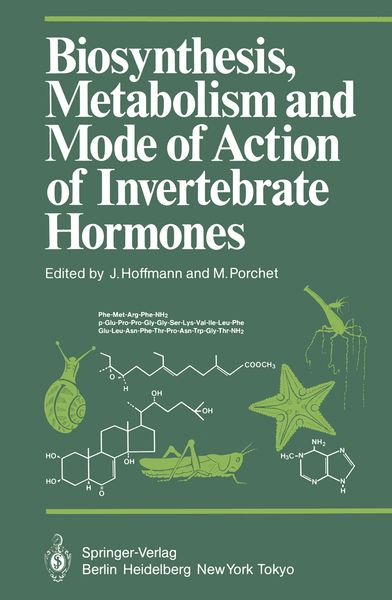
Biosynthesis, Metabolism and Mode of Action of Invertebrate Hormones

Fr. 191.00

inkl. gesetzl. MwSt., Versandkostenfrei


Beschreibung

Produktdetails

Einband

Taschenbuch

Erscheinungsdatum

20.11.2011

Herausgeber

J. Hoffmann + weitere

Verlag

Springer Berlin

Seitenzahl

519

Maße (L/B/H)

24.4/17/2.9 cm

Gewicht

919 g

Auflage

Softcover reprint of the original 1st ed. 1984

Sprache

Englisch

ISBN

978-3-642-69924-5

Beschreibung

Produktdetails

Einband

Taschenbuch

Erscheinungsdatum

20.11.2011

Herausgeber

Verlag

Springer Berlin

Seitenzahl

519

Maße (L/B/H)

24.4/17/2.9 cm

Gewicht

919 g

Auflage

Softcover reprint of the original 1st ed. 1984

Sprache

Englisch

ISBN

978-3-642-69924-5

Herstelleradresse

Springer-Verlag KG
Sachsenplatz 4-6
1201 Wien
AT

Email: GPSR Kontakt

Noch keine Bewertungen vorhanden

Verfassen Sie die erste Bewertung zu diesem Artikel

Helfen Sie anderen Kundinnen und Kunden durch Ihre Meinung.

Kundinnen und Kunden meinen

Bewertungen (0)

  • Produktbild: Biosynthesis, Metabolism and Mode of Action of Invertebrate Hormones
  • Produktbild: Biosynthesis, Metabolism and Mode of Action of Invertebrate Hormones
  • I Peptide Hormones.- I.1 Hormonal Control of Regeneration in Hydra.- I.2 Peptidic Hormones in Annelids.- I.3 Recent Progress in Endocrinology of Molluscs.- I.4 The Structure of the Commands for a Neuropeptide-Mediated Behavior, Egg-Laying, in an Opisthobranch Mollusc.- I.5 Studies on Release Activities of the Neurosecretory Caudo-Dorsal Cells of Lymnaea stagnalis.- I.6 Roles of Calcium and cAMP in Biosynthesis and Release of the Ovulation Hormone of the Freshwater Snail Lymnaea stagnalis.- I.7 The Egg-Laying Behavior of the Pond Snail: Electrophysiological Aspects.- I.8 Prothoracicotropic Hormone of Bombyx mori.- I.9 Neurohormonal Regulation of Molting and Metamorphosis in the Tobacco Hornworm, Manduca sexta.- I.10 Isolation of an Allatotropic Factor in Locusta migratoria and Its Effect on Corpus Allatum Activity in Vitro.- I.11 Neurosecretion in Insects: Multisynthesis, Mode of Action, and Multiregulation.- I.12 Neuropeptides of Vertebrate Type in the Blowfly, Calliphora.- I.13 Peptides from the Corpora cardiaca and CNS of Locusts.- I.14 Adipokinetic Hormones in Locusts.- I.15 Ecdysteroids Regulate the Release and Action of Eclosion Hormone in the Moth Manduca sexta.- I.16 Studies on Crustacean Eyestalk Neuropeptides by Use of High Performance Liquid Chromatography.- I.17 Present State of Knowledge on the Chemical Nature of the Androgenic Hormone in Higher Crustaceans.- II Ecdysteroids.- II.1 Ecdysteroids in Ovaries and Embryos of Locusta migratoria.- II.2 Biosynthesis of Ovarian Ecdysteroid Phosphates and Their Metabolic Fate During Embryogenesis in Schistocerca gregaria.- II.3 Ecdysone Metabolism.- II.4 Ecdysone 20-Monooxygenases.- II.5 Ecdysteroids and Integuments in Locusts.- II.6 Relationships Between Hormones and Epidermal Cell Cycles During the Metamorphosis of Tenebrio molitor.- II.7 On the Mode of Action of Ecdysteroids in Crustaceans.- II.8 Hormonal Control of Sequential Gene Expression in Insect Epidermis.- II.9 Ecdysteroid Regulation of the Major Transcripts of Drosophila melanogaster Larval Salivary Glands and Fat Bodies.- II.10 Ecdysteroid-Regulated Puffs and Genes in Drosophila.- II.11 Pleiotropic Specific Responses Induced by Ecdysterone in the Cultured Kc Cells of Drosophila melanogaster.- II.12 The Action of Ecdysone in Imaginal Discs and Kc Cells of Drosophila melanogaster.- II.13 Ecdysteroids in Helminths.- II.14 Ecdysteroids in Schistosomes and Host-Parasite Relationship.- II.15 The Occurrence and Possible Physiological Significance of Ecdysteroids During Nematode and Cestode Development.- II.16 Ecdysteroids in Annelids.- III Juvenile Hormones.- III.1 Radioimmunoassays of Juvenile Hormones. State of the Methods and Recent Data on Validation.- III.2 The Qualitative and Quantitative Determination of Juvenile Hormones by Mass Spectrometry.- III.3 Juvenile Hormones O, I, and II Exist Only in Lepidoptera.- III.4 Biochemical Aspects of Juvenile Hormone Biosynthesis in Hemimetabola.- III.5 Regulation of Juvenile Hormone Titer in the Adult Female Cockroach Diploptera punctata.- III.6 Environmentally Controlled Changes in Juvenile Hormone Titers: The Colorado Potato Beetle as a Model System.- III.7 The Role of Juvenile Hormone Metabolism in the Metamorphosis of Selected Lepidoptera.- III.8 Hemolymph Transport of the Juvenile Hormones.- III.9 Photoaffinity Labelling of Juvenile Hormone-Binding Proteins in Leucophaea maderae.- III.10 Regulation of Vitellogenesis in Insects: The Pleiotropic Role of Juvenile Hormones.- III.11 On Titers, Origin, and Functions of Juvenile Hormone III, Methylfarnesoate, and Ecdysteroids in Embryonic Development of the Ovoviviparous Cockroach Nauphoeta cinerea.- III.12 Defining the Anti-Metamorphic Action of Juvenile Hormone.- III.13 Vitellogenin Synthesis in Locust Fat Body: Juvenile Hormone-Stimulated Gene Expression.- IV Hormonal Mechanisms in Echinoderms.- IV.1 Early Steps in Transduction of the Hormonal Signal Controlling Starfish Oocyte Maturation.- IV.2 Production of the Maturation-Promoting Factor (MPF) Following Hormonal Stimulation of Starfish Oocytes.- IV.3 Hormonal Mechanism of Starfish Spawning.- Genera Index.