Gutscheinbedingungen

*Gültig bis 05.07.2026 auf (fast) alles. Ausgeschlossen sind Smartboxen, Zeitschriften, Tickets, Lebensmittel, Gaming-Elektroartikel, Tinte/Toner, Gutscheine, Geschenkkarten, Blumen und Abos | Einlösbar in allen Buchhandlungen von Orell Füssli, Barth Bücher, Buchladen Rapunzel, Papeterie Köhler, Schuler Orell Füssli, Stauffacher und ZAP unter Vorweisung des Gutscheins, auf www.orellfüssli.ch durch Eingabe des Gutscheincodes. Beim Service „eBooks verschenken“ und bei eBook-Käufen via eReader nicht einlösbar | Mindesteinkaufswert: Fr. 30.- | Nicht mit anderen Rabatten kumulierbar.

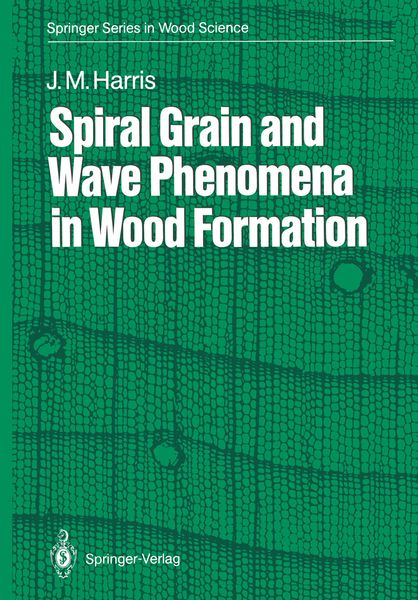
  • Produktbild: Spiral Grain and Wave Phenomena in Wood Formation
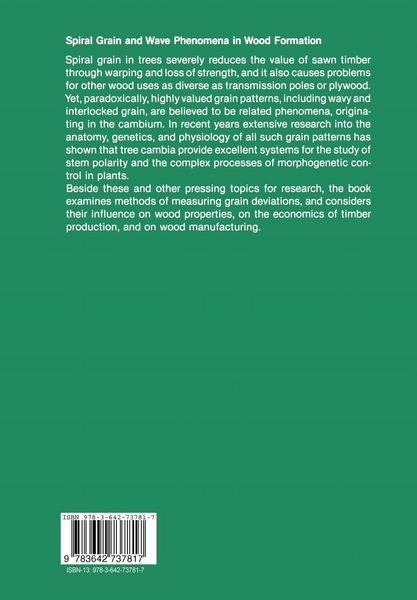
  • Produktbild: Spiral Grain and Wave Phenomena in Wood Formation

Spiral Grain and Wave Phenomena in Wood Formation

Fr. 137.00

inkl. gesetzl. MwSt., Versandkostenfrei


Beschreibung

Produktdetails

Einband

Taschenbuch

Erscheinungsdatum

10.12.2011

Verlag

Springer Berlin

Seitenzahl

215

Maße (L/B/H)

24.4/17/1.3 cm

Gewicht

426 g

Auflage

Softcover reprint of the original 1st ed. 1989

Sprache

Englisch

ISBN

978-3-642-73781-7

Beschreibung

Produktdetails

Einband

Taschenbuch

Erscheinungsdatum

10.12.2011

Verlag

Springer Berlin

Seitenzahl

215

Maße (L/B/H)

24.4/17/1.3 cm

Gewicht

426 g

Auflage

Softcover reprint of the original 1st ed. 1989

Sprache

Englisch

ISBN

978-3-642-73781-7

Herstelleradresse

Springer-Verlag KG
Sachsenplatz 4-6
1201 Wien
AT

Email: GPSR Kontakt

Noch keine Bewertungen vorhanden

Verfassen Sie die erste Bewertung zu diesem Artikel

Helfen Sie anderen Kundinnen und Kunden durch Ihre Meinung.

Kundinnen und Kunden meinen

Bewertungen (0)

  • Produktbild: Spiral Grain and Wave Phenomena in Wood Formation
  • Produktbild: Spiral Grain and Wave Phenomena in Wood Formation
  • 1 Defining Spiral Grain.- 1.1 Patterns of Spirality.- 1.1.1 The Simple Spiral.- 1.1.1.1 Direction of the Spiral.- 1.1.1.2 Degree of Spirality.- 1.1.1.3 Defect or Normal Growth?.- 1.1.2 Change in Spiral Angle and Direction.- 1.1.2.1 Stem Pattern in Softwoods.- 1.1.2.2 Stem Pattern in Hardwoods.- 1.1.2.3 A Three-Dimensional View of Spiral Grain.- 1.1.2.4 Pattern Down an Annual Increment.- 1.2 Interlocked Grain.- 1.3 Wavy Grain.- 1.4 Other Growth Patterns.- 1.4.1 Spiral Bole and Spiralled Branches.- 1.4.2 Birdseye and Dimples.- 1.4.3 Curly Birch.- 1.4.4 A Collection of Oddities.- 1.5 Conclusions.- 2 Measuring Grain Angle.- 2.1 Detection of Grain Angle.- 2.1.1 Detection in Trees and Round Produce.- 2.1.1.1 Evidence from Radial Splits and Scars.- 2.1.1.2 Evidence from Shape of Stem and Branches.- 2.1.1.3 Evidence from Bark Patterns.- 2.1.2 Detection in Seedlings.- 2.1.3 Detection in Wood.- 2.1.3.1 Natural Features.- 2.1.3.2 Ink Test.- 2.1.3.3 Dye Injection.- 2.1.3.4 Radioactive Tracers.- 2.1.3.5 Scribe Test.- 2.1.3.6 Pick Test.- 2.1.3.7 Splitting.- 2.1.3.8 Sonic and Capacitance Properties.- 2.1.3.9 Microscopic Observation.- 2.2 Sampling for Grain Angle.- 2.2.1 Destructive Sampling.- 2.2.2 Non-Destructive Sampling.- 2.3 Methods of Measurement and Analysis.- 2.3.1 Units of Measurement.- 2.3.2 Precision of Measurement.- 2.3.2.1 Axis of Reference.- 2.3.2.2 Techniques of Measurement.- 2.3.3 Measurements on Trees and Roundwood.- 2.3.4 Measurements on Sawn Timber.- 2.3.5 Measurements on Large Wood Samples.- 2.3.6 Measurements on Increment Cores.- 2.3.7 Measurements on Veneers.- 2.3.8 Analysis of Measurements.- 2.4 Measurement of Interlocked and Wavy Grain.- 2.5 Conclusions.- 3 Effects of Grain Angle on Wood Properties and Uses.- 3.1 Consequences of Anisotropy.- 3.2 Effects on Shrinkage.- 3.2.1 Warping in Sawn Timber.- 3.2.2 Movement in Roundwood.- 3.2.3 Warping in Plywood and Sliced Wood.- 3.3 Effects on Wood Strength.- 3.3.1 Strength of Sawn Timber.- 3.3.2 Strength of Tree Trunks and Roundwood.- 3.4 Effect on Other Aspects of Wood Physics.- 3.5 Effect on Conversion, Use and Economics.- 3.5.1 Effect on Conversion.- 3.5.2 Effects on Wood Use.- 3.6 Effect of Interlocked Grain.- 3.7 Effect of Wavy Grain.- 3.8 Conclusions.- 4 Spiral Grain in Relation to the Environment.- 4.1 Effect of Environmental Variables.- 4.1.1 Movement of Earth and Sun.- 4.1.2 Soil Conditions.- 4.1.3 Roots.- 4.1.4 Slope and Aspect.- 4.1.5 Wind.- 4.1.6 Altitude.- 4.1.7 Temperature.- 4.1.8 Eccentric Growth and Reaction Wood.- 4.1.9 Structural Breakage and Wounding.- 4.1.10 The Case for Environmental Influence.- 4.2 Effect of Growth Rate.- 4.2.1 Slow Growth, Increased Spirality.- 4.2.2 Fast Growth, Increased Spirality.- 4.2.3 Spirality Independent of Growth Rate.- 4.2.4 Other Consequences of Growth Rate.- 4.3 Balance of Controls.- 4.4 Effects of Silviculture.- 4.5 Advantages for Survival.- 4.6 Conclusions.- 5 Anatomy of Changing Grain Angles.- 5.1 The Role of Cell Structure.- 5.2 Cambium.- 5.2.1 Methods of Studying the Cambium.- 5.2.2 Nature of the Cambium.- 5.2.3 Cell Division.- 5.2.3.1 Anticlinal Division.- 5.2.3.2 Periclinal Division.- 5.2.4 Cell Survival.- 5.2.5 Cell Re-arrangement and Elongation.- 5.2.6 Plasticity of the Cambium.- 5.3 Morphogenetic Events.- 5.4 Cambial Domains.- 5.4.1 Domain Origins and Intensity.- 5.4.2 Domain Integrity.- 5.5 Wave Aspects of Domain Structure and Function.- 5.5.1 Wave Interactions.- 5.5.2 Complex Wave Interactions.- 5.6 Anatomy of Slow Changes.- 5.7 Conclusions.- 6 Genetics of Spiral Grain.- 6.1 Basic Requirements.- 6.1.1 Concept of Heritability.- 6.1.2 Genetic Gain and Potential for Improvement.- 6.2 Geographical Variation.- 6.2.1 Provenance Trials.- 6.2.1.1 Provenances of Pinus radiata.- 6.2.1.2 Provenances of Larix kaempferi.- 6.2.1.3 Provenances of Pinus pinaster.- 6.2.2 Use of Provenances in Tree Breeding.- 6.3 Clonal Variation.- 6.3.1 Clonal Trials.- 6.3.2 Broad-Sense Heritability.- 6.4 Sexually Propagated Progeny.- 6.4.1 Narrow-Sense Heritability.- 6.5 Modification of Genotypes.- 6.6 Heritability of Wavy and Interlocked Grain.- 6.7 Strategies for Tree Improvement.- 6.8 Conclusions.- 7 Physiological Aspects of Changing Grain Angles.- 7.1 Requirements.- 7.2 Polarity.- 7.2.1 Manipulating Polarity.- 7.2.2 Patch Grafting.- 7.2.3 Implications for Polarity.- 7.3 The Role of Auxin.- 7.3.1 Auxin and Cambial Activity.- 7.3.2 Wave Patterns in Auxin Transport.- 7.3.3 Auxin and Morphogenesis.- 7.3.4 Response of Cambial Initials to Auxin Vectors.- 7.3.5 Orientation of Pseudotransverse Division.- 7.4 Other Factors.- 7.4.1 Environmental Causes.- 7.4.2 Microfibril Angle.- 7.4.3 Phyllotaxis.- 7.4.4 Time.- 7.4.5 Straight Grain and Uncontrolled Grain.- 7.5 Conclusions.- References.