Gutscheinbedingungen

*Gültig bis 04.08.2026 auf (fast) alles. Ausgeschlossen sind Smartboxen, Zeitschriften, Tickets, Lebensmittel, Gaming-Elektroartikel, Tinte/Toner, Gutscheine, Geschenkkarten, Blumen und Abos | Einlösbar in allen Buchhandlungen von Orell Füssli, Barth Bücher, Buchladen Rapunzel, Papeterie Köhler, Schuler Orell Füssli, Stauffacher und ZAP unter Vorweisung des Gutscheins, auf www.orellfüssli.ch durch Eingabe des Gutscheincodes. Beim Service „eBooks verschenken“ und bei eBook-Käufen via eReader nicht einlösbar | Mindesteinkaufswert: Fr. 30.- | Nicht mit anderen Rabatten kumulierbar.

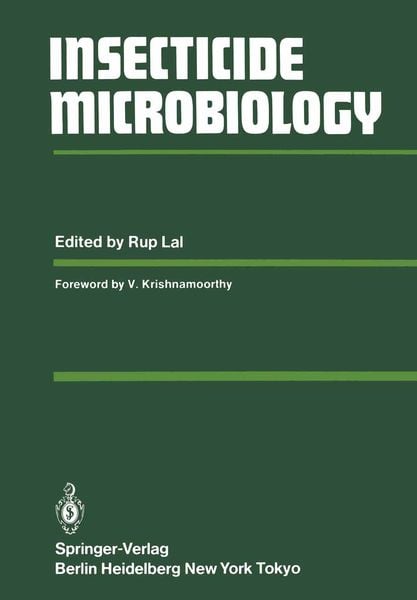
  • Produktbild: Insecticide Microbiology
  • Produktbild: Insecticide Microbiology

Insecticide Microbiology

Fr. 137.00

inkl. gesetzl. MwSt., Versandkostenfrei


Beschreibung

Produktdetails

Einband

Taschenbuch

Erscheinungsdatum

08.12.2011

Herausgeber

R. Lal

Verlag

Springer Berlin

Seitenzahl

270

Maße (L/B/H)

24.4/17/1.6 cm

Gewicht

508 g

Auflage

Softcover reprint of the original 1st ed. 1984

Sprache

Englisch

ISBN

978-3-642-69919-1

Beschreibung

Produktdetails

Einband

Taschenbuch

Erscheinungsdatum

08.12.2011

Herausgeber

R. Lal

Verlag

Springer Berlin

Seitenzahl

270

Maße (L/B/H)

24.4/17/1.6 cm

Gewicht

508 g

Auflage

Softcover reprint of the original 1st ed. 1984

Sprache

Englisch

ISBN

978-3-642-69919-1

Herstelleradresse

Springer-Verlag KG
Sachsenplatz 4-6
1201 Wien
AT

Email: GPSR Kontakt

Noch keine Bewertungen vorhanden

Verfassen Sie die erste Bewertung zu diesem Artikel

Helfen Sie anderen Kundinnen und Kunden durch Ihre Meinung.

Kundinnen und Kunden meinen

Bewertungen (0)

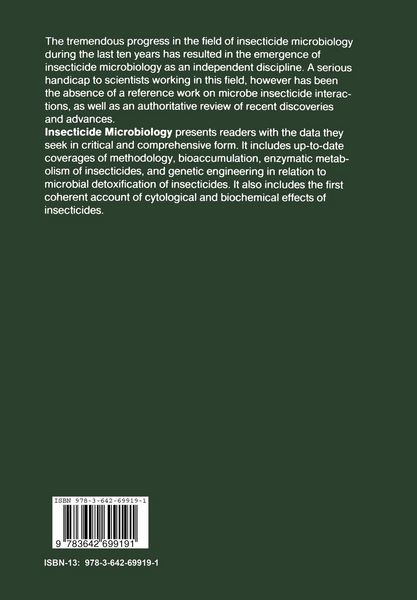
  • Produktbild: Insecticide Microbiology
  • Produktbild: Insecticide Microbiology
  • 1 Introduction.- 2 Insecticides and Microbial Environments.- 1 Introduction.- 2 Classification of Insecticides.- 2.1 Inorganic Insecticides.- 2.2 Insecticides of Natural Origin.- 2.3 Organochlorine Insecticides.- 2.4 Organophosphorus Insecticides.- 2.5 Carbamates.- 2.6 Synthetic Pyrethroids.- 3 Microbial Environments.- 3.1 Terrestrial Habitats.- 3.2 Aquatic Environments.- 3.3 The Atmosphere.- 4 Entry and Dispersal of Insecticides in Microbial Environments.- 4.1 Soil Environments.- 4.2 Aquatic Environments.- 4.3 The Atmosphere.- References.- 3 Experimental, Methodological and Analytical Approach to the Study of Microbe-Insecticide Interactions.- 1 Introduction.- 2 Accumulation.- 3 Metabolism.- 4 Analytical Implications.- 4.1 Extraction.- 4.2 Clean-Up.- 4.3 Identification and Estimation.- 5 Effects.- 5.1 Soil Microorganisms.- 5.2 Algae.- References.- 4 Microbial Accumulation of Insecticides.- 1 Introduction.- 2 Quantitative Aspects.- 3 Bioconcentration.- 4 Bioconcentration Factors and Biomagnification.- 5 Patterns of Accumulation.- 6 Factors Affecting Microbial Accumulation of Insecticides.- 6.1 Insecticide Solubility.- 6.2 Insecticide Concentration.- 6.3 Chemical Structure of Insecticides.- 6.4 Temperature and pH.- 6.5 Type and Nature of Microorganisms.- 6.6 Biomass, Cell Number and Cell Size.- 7 Mechanisms of Accumulation.- 8 Conclusions and Future Prospects.- References.- 5 Metabolism of Insecticides by Microorganisms.- 1 Introduction.- 2 Adaptation and Enrichment Techniques.- 3 Organophosphates.- 3.1 Diazinon.- 3.2 Fenitrothion.- 3.3 Methyl Parathion.- 3.4 Parathion.- 3.5 Other Organophosphates.- 3.6 Metabolites of Organophosphates.- 4 Dithioates.- 4.1 Azinophosmethyl (Gusathion).- 4.2 Malathion.- 5 Carbamates.- 5.1 Carbaryl.- 5.2 Carbofuran.- 5.3 1-Naphthol.- 6 Organochlorines.- 6.1 DDT.- 6.2 DDT Analogs.- 7 Pesticide Combination.- 8 Microorganisms and Pesticide Waste Treatment.- 9 Conclusions.- References.- 6 Enzymes Associated with the Microbial Metabolism of Insecticides.- 1 Introduction.- 2 Fundamental Reactions of Insecticide Metabolism.- 3 Organophosphates.- 4 Carbamates.- 5 Miscellaneous Enzyme Reactions.- 6 Discussion.- 7 Directions and Goals.- References.- 7 Genetic Engineering and Biological Detoxification/Degradation of Insecticides.- 1 Introduction.- 2 Insecticides, Microbes and Enzymes.- 2.1 Degradative Bacteria — Toxonomy and Phylogeny.- 2.2 Insecticides.- 3 Cellular Location of Detoxification/Degradation Genes.- 3.1 Conjugation.- 3.2 Degradative Plasmids.- 4 Genetic Engineering.- 4.1 Microorganisms and Cloning Strategies.- 4.2 Gene Cloning — the Process.- 5 Conclusion.- References.- 8 Effects of Insecticides on Soil Microorganisms.- 1 Introduction.- 2 Soil Microbial Populations.- 3 Ammonification.- 4 Nitrification.- 5 Denitrification.- 6 Biological Nitrogen Fixation.- 6.1 Symbiotic Nitrogen Fixation.- 6.2 Asymbiotic Nitrogen Fixation.- 7 Respiration.- 8 Soil Enzymes.- 9 Plant Pathogenic Microflora.- References.- 9 Effects of Insecticides on Algae.- 1 Introduction.- 2 Direct Effects.- 2.1 1,1,1-Trichloro-2,2-bis(p-Chlorophenyl)Ethane (DDT).- 2.2 Lindane.- 2.3 Aldrin, Dieldrin, and Endrin.- 2.4 Endosulfan.- 2.5 Toxaphene.- 2.6 Diazinon.- 2.7 Parathion and Methyl Parathion.- 2.8 Malathion.- 2.9 Permethrin.- 2.10 Other Insecticides.- 3 Factors Influencing Microbe/Insecticide Interactions.- 3.1 Light.- 3.2 Nutrients and Chemical Composition of the Media.- 3.3 pH and Temperature.- 3.4 Aeration.- 3.5 Insecticide Concentration.- 3.6 Insecticide Combination with Other Chemicals.- 3.7 Number, Type and Nature of Microorganisms.- 3.8 Multispecies Interactions.- 4 Secondary Effects.- 5 Conclusions and Future Prospects.- References.- 10 Cytological and Biochemical Effects of Insecticides on Microorganisms.- 1 Introduction.- 2 Cell Membranes.- 3 Energy Production, Enzymes and Metabolic Pathways.- 4 Nucleic Acids and Protein Synthesis.- 5 Photosynthesis.- 6 Cell Morphology.- 7 Conclusions and Future Prospects.- References.