Gutscheinbedingungen

*Gültig bis 07.06.2026 auf (fast) alles. Ausgeschlossen sind Smartboxen, Zeitschriften, Tickets, Lebensmittel, Gaming-Elektroartikel, Tinte/Toner, Gutscheine, Geschenkkarten, Blumen und Abos | Einlösbar in allen Buchhandlungen von Orell Füssli, Barth Bücher, Buchladen Rapunzel, Schuler Orell Füssli, Stauffacher und ZAP unter Vorweisung des Gutscheins, auf www.orellfüssli.ch durch Eingabe des Gutscheincodes. Beim Service „eBooks verschenken“ und bei eBook-Käufen via eReader nicht einlösbar | Mindesteinkaufswert: Fr. 100.- | Nicht mit anderen Rabatten kumulierbar.

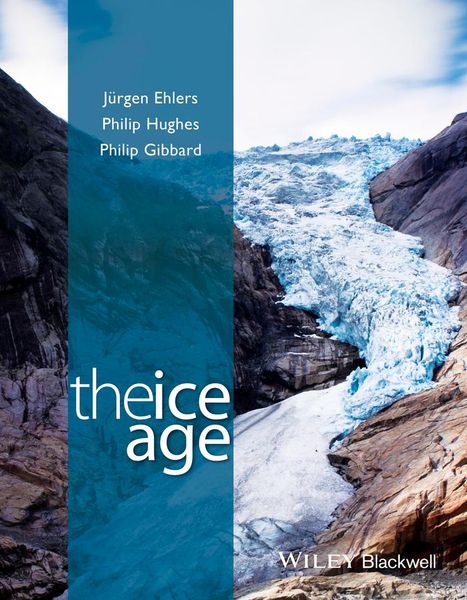
Produktbild: The Ice Age

The Ice Age

Fr. 223.00

inkl. gesetzl. MwSt., Versandkostenfrei


Beschreibung

Produktdetails

Einband

Gebundene Ausgabe

Erscheinungsdatum

30.03.2016

Verlag

WILEY

Seitenzahl

560

Maße (L/B/H)

28.2/21.8/3 cm

Gewicht

1769 g

Sprache

Englisch

ISBN

978-1-118-50781-0

Beschreibung

Produktdetails

Einband

Gebundene Ausgabe

Erscheinungsdatum

30.03.2016

Verlag

WILEY

Seitenzahl

560

Maße (L/B/H)

28.2/21.8/3 cm

Gewicht

1769 g

Sprache

Englisch

ISBN

978-1-118-50781-0

Kundinnen und Kunden meinen

0 Bewertungen

Informationen zu Bewertungen

Zur Abgabe einer Bewertung ist eine Anmeldung im Konto notwendig. Die Authentizität der Bewertungen wird von uns nicht überprüft. Wir behalten uns vor, Bewertungstexte, die unseren Richtlinien widersprechen, entsprechend zu kürzen oder zu löschen.

Die Bewertungen sind nach Format, Anzahl Sterne und Datum sortiert.

Verfassen Sie die erste Bewertung zu diesem Artikel

Helfen Sie anderen Kund*innen durch Ihre Meinung

Kundinnen und Kunden meinen

0 Bewertungen filtern

Die Leseprobe wird geladen.
  • Produktbild: The Ice Age
  • About the Authors vii

    Preface ix

    Acknowledgements xi

    About the companion website xiii

    1. Introduction 3

    1.1 In the Beginning was the Great Flood 4

    1.2 The Ice Ages of the Earth 14

    1.3 Causes of an Ice Age 18

    2. The Course of the Ice Age 27

    2.1 When did the Quaternary Period Begin? 27

    2.2 What's in Stratigraphy? 33

    2.3 Traces in the Deep Sea 35

    2.4 Systematics of the Ice Age 43

    2.5 Günz, Mindel, Riss and Würm: Do They Still Apply? 46

    2.6 Northern Germany and Adjacent Areas 58

    2.7 The British Pleistocene Succession 76

    2.8 Quaternary History of North America 86

    2.9 The Course of the Ice Ages: A Global View 100

    3. Ice and Water 107

    3.1 The Origin of Glaciers 107

    3.2 Recent Glaciers: Small and Large 113

    3.3 Dynamics of Ice Sheets 121

    3.4 Meltwater 129

    4. Till and Moraines: The Traces of Glaciers 137

    4.1 Till 137

    4.2 Moraines 172

    5. Meltwater: From Moulins to the Urstromtal 191

    5.1 Fjords, Channels and Eskers 191

    5.2 Outwash Plains and Gravel Terraces 202

    5.3 Ice-dammed Lakes 207

    5.4 Kames: Deposits at the Ice Margin 213

    5.5 Urstromtäler 220

    6. Maps: Where Are We? 227

    6.1 Digital Maps 229

    6.2 Satellite Images: Basic Data for Ice-Age Research 236

    6.3 Projections and Ellipsoids 240

    7. Extent of the Glaciers 243

    7.1 Exploring the Arctic by Airship 243

    7.2 Glaciers in the Barents Sea 244

    7.3 Isostasy and Eustasy 246

    7.4 Ice in Siberia? 252

    7.5 Asia: The Mystery of Tibet 258

    7.6 South America: Volcanoes and Glaciers 265

    7.7 Mediterranean Glaciations 269

    7.8 Were Africa, Australia and Oceania Glaciated? 272

    7.9 Antarctica: Eternal Ice? 273

    8. Ice in the Ground: The Periglacial Areas 277

    8.1 Definition and Distribution 277

    8.2 Extent of Frozen Ground during the Pleistocene 281

    8.3 Frost Weathering 283

    8.4 Cryoplanation 286

    8.5 Rock Glaciers: Glaciers (Almost) Without Ice 288

    8.6 Involutions 291

    8.7 Solifluction 294

    8.8 Periglacial Soil Stripes 296

    8.9 Frost Cracks and Ice Wedges 297

    8.10 Pingos, Palsas and other Frost Phenomena 301

    9. Hippos in the Thames: The Warm Stages 311

    9.1 Tar Pits of Evidence 311

    9.2 Development of Fauna 312

    9.3 Development of Vegetation 316

    9.4 Weathering and Soil Formation 324

    9.5 Water in the Desert: The Shifting of Climate Zones 336

    9.6 Changes in the Rainforest 345

    10. The Course of Deglaciation 349

    10.1 Contribution to Landforms 349

    10.2 Ice Decay 350

    10.3 The Origin of Kettle Holes 354

    10.4 Pressure Release 357

    10.5 A Sudden Transition? 359

    10.6 The Little Ice Age 363

    11. Wind, Sand and Stones: Aeolian Processes 369

    11.1 Dunes 369

    11.2 Aeolian Sand 378

    11.3 Loess 378

    12. What Happened to the Rivers? 383

    12.1 River Processes and Landforms 383

    12.2 Dry Valleys 386

    12.3 The Rhine: Influences of Alpine and Nordic Ice 387

    12.4 The Elbe: Once Flowed to the Baltic Sea 396

    12.5 The Thames: Influence of British Ice 400

    13. North and Baltic Seas during the Ice Age 405

    13.1 Development of the North Sea 406

    13.2 Development of the Baltic Sea 414

    14. Climate Models and Reconstructions 427

    14.1 Ice Cores 427

    14.2 The Marine Circulation 429

    14.3 Modelling the Last Ice Sheets 431

    14.4 Modelling Glaciers and Climate 442

    15. Human Interference 447

    15.1 Out of Africa: Humans Spread Out 448

    15.2 Neanderthals and Homo sapiens 452

    15.3 The Middle Stone Age 452

    15.4 The Neolithic Period: The Beginning of Agriculture 453

    15.5 Bronze and Iron 454

    15.6 The Romans 455

    15.7 Middle Ages 457

    15.8 Recent Land Grab 457

    15.9 Drying Lakes, Melting Glaciers and other Problems 459

    15.10 The Anthropocene: Defining the Human Age? 465

    References 469

    Index 541