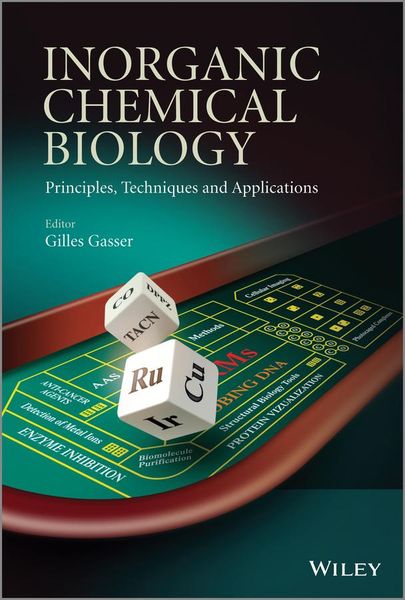
Inorganic Chemical Biology Principles, Techniques and Applications
Fr. 208.00
inkl. gesetzl. MwSt.,
Beschreibung
Produktdetails
Einband
Gebundene Ausgabe
Erscheinungsdatum
23.06.2014
Verlag
John Wiley & Sons IncSeitenzahl
432
Maße (L/B/H)
25.1/17.2/2.7 cm
Gewicht
973 g
Auflage
1. Auflage
Sprache
Englisch
ISBN
978-1-118-51002-5
Understanding, identifying and influencing the biological systems are the primary objectives of
chemical biology. From this perspective, metal complexes have always been of great assistance
to chemical biologists, for example, in structural identification and purification of essential
biomolecules, for visualizing cellular organelles or to inhibit specific enzymes. This inorganic side
of chemical biology, which continues to receive considerable attention, is referred to as inorganic
chemical biology.
Inorganic Chemical Biology: Principles, Techniques and Applications provides a comprehensive
overview of the current and emerging role of metal complexes in chemical biology. Throughout all
of the chapters there is a strong emphasis on fundamental theoretical chemistry and experiments
that have been carried out in living cells or organisms. Outlooks for the future applications of
metal complexes in chemical biology are also discussed.
Topics covered include:
* Metal complexes as tools for structural biology
* IMAC, AAS, XRF and MS as detection techniques for metals in chemical biology
* Cell and organism imaging and probing DNA using metal and metal carbonyl complexes
* Detection of metal ions, anions and small molecules using metal complexes
* Photo-release of metal ions in living cells
* Metal complexes as enzyme inhibitors and catalysts in living cells
Written by a team of international experts, Inorganic Chemical Biology: Principles, Techniques and
Applications is a must-have for bioinorganic, bioorganometallic and medicinal chemists as well as
chemical biologists working in both academia and industry.
chemical biology. From this perspective, metal complexes have always been of great assistance
to chemical biologists, for example, in structural identification and purification of essential
biomolecules, for visualizing cellular organelles or to inhibit specific enzymes. This inorganic side
of chemical biology, which continues to receive considerable attention, is referred to as inorganic
chemical biology.
Inorganic Chemical Biology: Principles, Techniques and Applications provides a comprehensive
overview of the current and emerging role of metal complexes in chemical biology. Throughout all
of the chapters there is a strong emphasis on fundamental theoretical chemistry and experiments
that have been carried out in living cells or organisms. Outlooks for the future applications of
metal complexes in chemical biology are also discussed.
Topics covered include:
* Metal complexes as tools for structural biology
* IMAC, AAS, XRF and MS as detection techniques for metals in chemical biology
* Cell and organism imaging and probing DNA using metal and metal carbonyl complexes
* Detection of metal ions, anions and small molecules using metal complexes
* Photo-release of metal ions in living cells
* Metal complexes as enzyme inhibitors and catalysts in living cells
Written by a team of international experts, Inorganic Chemical Biology: Principles, Techniques and
Applications is a must-have for bioinorganic, bioorganometallic and medicinal chemists as well as
chemical biologists working in both academia and industry.
Noch keine Bewertungen vorhanden
Verfassen Sie die erste Bewertung zu diesem Artikel
Helfen Sie anderen Kundinnen und Kunden durch Ihre Meinung.