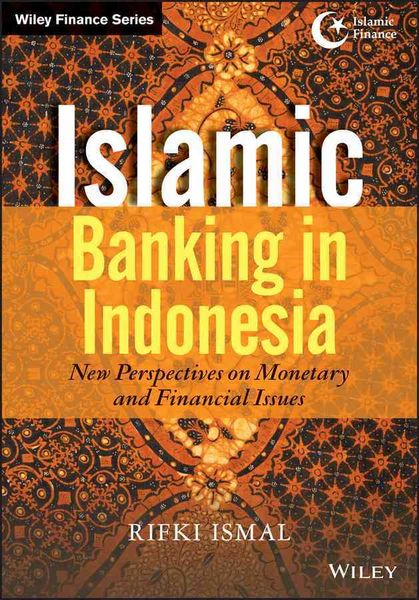
Islamic Banking in Indonesia New Perspectives on Monetary and Financial Issues
Aus der Reihe
Wiley Finance Series
Fr. 121.00
inkl. gesetzl. MwSt.,
Beschreibung
Produktdetails
Einband
Gebundene Ausgabe
Verlag
John Wiley & SonsSeitenzahl
544
Maße (H)
26.1 cm
Auflage
1. Auflage
Sprache
Englisch
ISBN
978-1-118-50993-7
A comprehensive overview of key developments in Islamic banking
In Islamic Banking in Indonesia, renowned economist Dr. Rifki Ismal explores current issues in Islamic banking and financial products with a particular focus on the danger of liquidity risk in Indonesia. It approaches liquidity risk from the conventional perspective of international banking standards, as well as from the Islamic banking perspective. Dr. Ismal also covers the issues of asset-liability balancing, liquidity risk index, organizational structures for managing liquidity, industrial analysis, withdrawal risk, bankruptcy risk, moral hazard risk, and market risk.
Compiling all the latest academic research on liquidity risk and other risks in Islamic banking, the book provides a theoretical foundation for managing risk that will is highly useful for researchers on Islamic banking and practitioners and academics.
Written by a renowned expert on Islamic banking who works on monetary policy at the central bank of Indonesia Covers the latest developments in Islamic banking, particularly liquidity risk, for a rapidly expanding market
Ideal for European and American readers, in addition to Asian readers, who need a fuller understanding of Islamic banking institutions, markets, and products
With the latest academic research and the expertise of a leading practitioner in Islamic banking, this book offers in-depth coverage of the most pressing issues in the field.
In Islamic Banking in Indonesia, renowned economist Dr. Rifki Ismal explores current issues in Islamic banking and financial products with a particular focus on the danger of liquidity risk in Indonesia. It approaches liquidity risk from the conventional perspective of international banking standards, as well as from the Islamic banking perspective. Dr. Ismal also covers the issues of asset-liability balancing, liquidity risk index, organizational structures for managing liquidity, industrial analysis, withdrawal risk, bankruptcy risk, moral hazard risk, and market risk.
Compiling all the latest academic research on liquidity risk and other risks in Islamic banking, the book provides a theoretical foundation for managing risk that will is highly useful for researchers on Islamic banking and practitioners and academics.
Written by a renowned expert on Islamic banking who works on monetary policy at the central bank of Indonesia Covers the latest developments in Islamic banking, particularly liquidity risk, for a rapidly expanding market
Ideal for European and American readers, in addition to Asian readers, who need a fuller understanding of Islamic banking institutions, markets, and products
With the latest academic research and the expertise of a leading practitioner in Islamic banking, this book offers in-depth coverage of the most pressing issues in the field.
Noch keine Bewertungen vorhanden
Verfassen Sie die erste Bewertung zu diesem Artikel
Helfen Sie anderen Kundinnen und Kunden durch Ihre Meinung.