KI-Beratung Beta

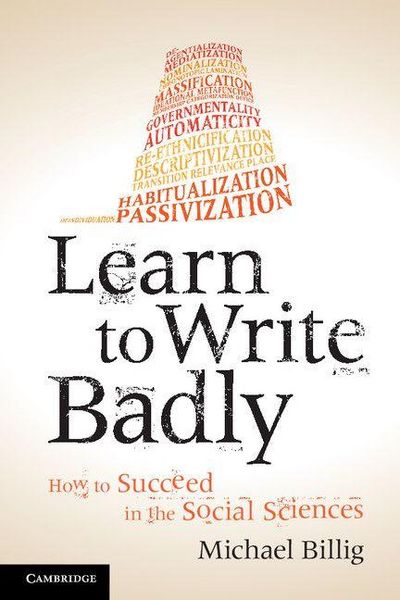
  • Produktbild: Learn to Write Badly
  • Produktbild: Learn to Write Badly

Learn to Write Badly

Fr. 29.90

inkl. gesetzl. MwSt., zzgl. Versandkosten


  • Kostenlose Lieferung ab Fr. 30 Einkaufswert

    Schweiz & Liechtenstein:

    Versandkostenfrei ab Fr. 30.00
    Versandkosten bis Fr. 30.00: Fr. 3.50

    Andere Lieferländer

    Fr. 18.00 unabhängig vom Warenwert

Rezension

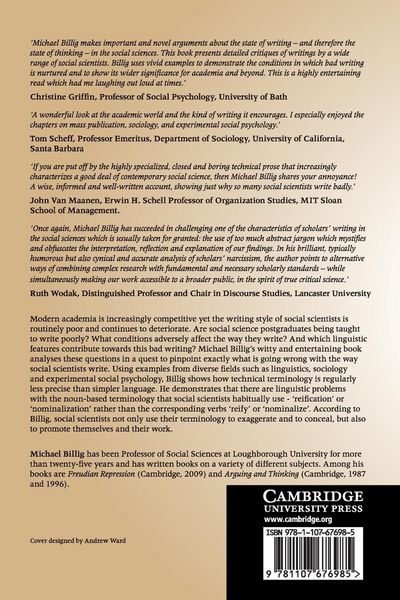
'Michael Billig makes important and novel arguments about the state of writing - and therefore the state of thinking - in the social sciences. This book presents detailed critiques of writings by a wide range of social scientists. Billig uses vivid examples to demonstrate the conditions in which bad writing is nurtured and to show its wider significance for academia and beyond. This is a highly entertaining read which had me laughing out loud at times.' Christine Griffin, University of Bath

Produktdetails

Einband

Taschenbuch

Erscheinungsdatum

30.10.2017

Abbildungen

Worked examples or Exercises

Verlag

Cambridge University Press

Seitenzahl

244

Maße (L/B/H)

22.9/15.2/1.5 cm

Gewicht

402 g

Sprache

Englisch

ISBN

978-1-107-67698-5

Rezension

Produktdetails

Einband

Taschenbuch

Erscheinungsdatum

30.10.2017

Abbildungen

Worked examples or Exercises

Verlag

Cambridge University Press

Seitenzahl

244

Maße (L/B/H)

22.9/15.2/1.5 cm

Gewicht

402 g

Sprache

Englisch

ISBN

978-1-107-67698-5

Herstelleradresse

Libri GmbH
Europaallee 1
36244 Bad Hersfeld
DE

Email: gpsr@libri.de

Noch keine Bewertungen vorhanden

Verfassen Sie die erste Bewertung zu diesem Artikel

Helfen Sie anderen Kundinnen und Kunden durch Ihre Meinung.

Kundinnen und Kunden meinen

Bewertungen (0)

Die Leseprobe wird geladen.
  • Produktbild: Learn to Write Badly
  • Produktbild: Learn to Write Badly
  • 1. Introduction; 2. Mass publication and academic life; 3. Learning to write badly; 4. Jargon, nouns and acronyms; 5. Turning people into things; 6. How to avoid saying who did it; 7. Some sociological things: governmentality, cosmopolitanization and conversation analysis; 8. Experimental social psychology: concealing and exaggerating; 9. Conclusion and recommendations.