Gutscheinbedingungen

*Gültig bis 20.09.2026 auf (fast) alles. Ausgeschlossen sind Smartboxen, Zeitschriften, Tickets, Lebensmittel, Gaming-Elektroartikel, Tinte/Toner, Gutscheine, Geschenkkarten, Blumen und Abos | Einlösbar in allen Buchhandlungen von Orell Füssli, Barth Bücher, Buchladen Rapunzel, Schuler Orell Füssli, Stauffacher und ZAP unter Vorweisung des Gutscheins, auf www.orellfüssli.ch durch Eingabe des Gutscheincodes. Beim Service „eBooks verschenken“ und bei eBook-Käufen via eReader nicht einlösbar | Mindesteinkaufswert: Fr. 100.- | Nicht mit anderen Rabatten kumulierbar.

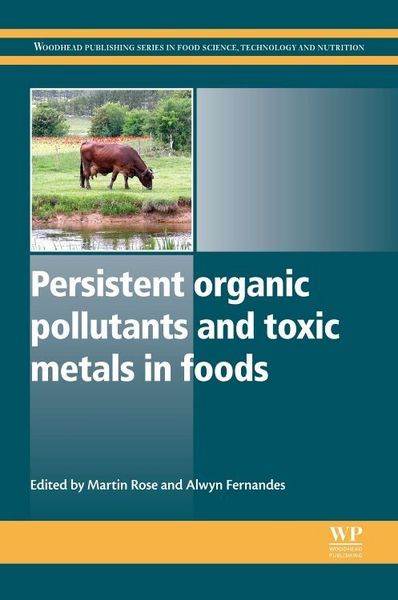
Produktbild: Rose, M: Persistent Organic Pollutants and Toxic Metals in F

Rose, M: Persistent Organic Pollutants and Toxic Metals in F

Fr. 272.00

inkl. gesetzl. MwSt., Versandkostenfrei


Beschreibung

Produktdetails

Einband

Gebundene Ausgabe

Erscheinungsdatum

15.05.2013

Herausgeber

Rose Martin + weitere

Verlag

Elsevier Science & Technology

Seitenzahl

520

Maße (L/B/H)

23.4/15.5/23.3 cm

Gewicht

900 g

Sprache

Englisch

ISBN

978-0-85709-245-8

Beschreibung

Rezension

"This book.explores the scientific and regulatory challenges faced by those responsible for ensuring that our food is safe to eat.While this book is of interest for analytical chemists, it is intended to address to an evenly great extend to regulators and policy makers since it gives a comprehensive view of current knowledge of the presence of known and emerging contaminants in our food and a firm background of analytical capabilities." --Quality Assurance and Safety of Crops & Foods, March 2014

Produktdetails

Einband

Gebundene Ausgabe

Erscheinungsdatum

15.05.2013

Herausgeber

Verlag

Elsevier Science & Technology

Seitenzahl

520

Maße (L/B/H)

23.4/15.5/23.3 cm

Gewicht

900 g

Sprache

Englisch

ISBN

978-0-85709-245-8

EU-Ansprechpartner

Kolibri 360 GmbH
Ettore-Bugatti-Straße 6-14
51149 Köln
DE
produktsicherheit@kolibri360.de

Herstelleradresse

Elsevier Science & Technology
125 London Wall
EC2Y 5AS London
GB
tradeorders@elsevier.com

Noch keine Bewertungen vorhanden

Verfassen Sie die erste Bewertung zu diesem Artikel

Helfen Sie anderen Kundinnen und Kunden durch Ihre Meinung.

Kundinnen und Kunden meinen

Bewertungen (0)

Die Leseprobe wird geladen.
  • Produktbild: Rose, M: Persistent Organic Pollutants and Toxic Metals in F
  • Contributor contact details

    Woodhead Publishing Series in Food Science, Technology and Nutrition

    Foreword

    Preface

    Part I: Regulatory control and environmental pathways

    Chapter 1: Persistent organic pollutants in foods: science, policy and regulation

    Abstract:

    1.1 Introduction

    1.2 Dietary exposure and total diet studies (TDSs)

    1.3 Risk assessment, policy making and regulatory limits

    1.4 Enforcement and implications for food businesses

    1.5 Analytical methods and their influence on policy

    1.6 Future trends and conclusions

    1.7 References

    Chapter 2: Regulatory control and monitoring of heavy metals and trace elements in foods

    Abstract:

    2.1 Introduction

    2.2 Risk assessment and policy making

    2.3 Monitoring of foodstuffs

    2.4 Impact of legislation on industry and enforcement

    2.5 Suitability of analytical methods

    2.6 Future trends

    2.7 Sources of further information

    2.8 References

    Chapter 3: Screening and confirmatory methods for the detection of dioxins and polychlorinated biphenyls (PCBs) in foods

    Abstract:

    3.1 Introduction

    3.2 Biological versus physico-chemical screening for dioxins and PCBs in food and feed

    3.3 Specific analytical requirements for biological and physico-chemical tools

    3.4 Quantitative versus semi-quantitative approach

    3.5 Validation QA/QC

    3.6 Confirmatory methods for dioxins and PCBs in food and feed

    3.7 Future trends

    3.8 Sources of further information and advice

    3.9 References

    Chapter 4: Screening and confirmatory methods for the detection of heavy metals in foods

    Abstract:

    4.1 Introduction

    4.2 Screening methods for heavy metal detection in foods

    4.3 Confirmatory methods for heavy metal detection in foods

    4.4 Quality assurance and method validation

    4.5 Future trends

    4.6 References

    Chapter 5: Responding to food contamination incidents: principles and examples from cases involving dioxins

    Abstract:

    5.1 Introduction

    5.2 The risk analysis paradigm

    5.3 Food traceability

    5.4 Food recall and withdrawal

    5.5 Risk communication strategies

    5.6 Future trends

    5.7 Sources of further information

    5.8 References

    Chapter 6: Uptake of organic pollutants and potentially toxic elements (PTEs) by crops

    Abstract:

    6.1 Introduction

    6.2 Uptake of organic pollutants by plants

    6.3 Uptake of PTEs by plants

    6.4 In situ monitoring of plant available pollutants

    6.5 Conclusions

    6.6 References

    Chapter 7: Transfer and uptake of dioxins and polychlorinated biphenyls (PCBs) into sheep: a case study

    Abstract:

    7.1 Introduction

    7.2 Uptake pathways and sources

    7.3 Transfer of PCBs and polychlorinated dibenzo-P-dioxins and dibenzofurans (PCDD/Fs) into animal tissues

    7.4 Experimental rearing, sampling and analysis

    7.5 Results and discussion for PCDD/Fs, dioxin-like PCBs (DL-PCBs) and ICES6 PCBs

    7.6 Conclusions and future trends

    7.7 Acknowledgements

    7.8 References

    Chapter 8: Risk assessment of chemical contaminants and residues in foods

    Abstract:

    8.1 Introduction

    8.2 Risk assessment

    8.3 Role of risk assessment in risk management

    8.4 Sources of further information

    8.5 References

    Part II: Particular persistent organic pollutants, toxic metals and metalloids

    Chapter 9: Dioxins and polychlorinated biphenyls (PCBs) in foods

    Abstract:

    9.1 Introduction

    9.2 Properties and occurrence of polychlorinated dibenzo-p-dioxins and dibenzofurans (PCDD/Fs)

    9.3 Toxicity of PCDD/Fs

    9.4 Toxic effects of PCDD/Fs in humans and experimental animals

    9.5 Properties and occurrence of PCBs

    9.6