Zitat
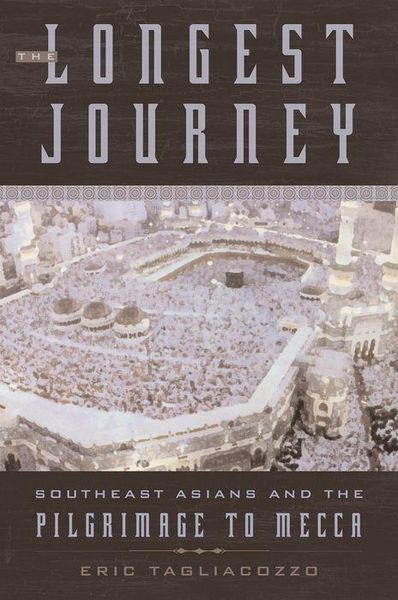
"In this brilliant and evocative study, Eric Tagliacozzo brings to life what is perhaps one of the most significant long-distance circulations of people for a common purpose in history: the Indian Ocean pilgrimage to Mecca. Drawing upon research of breath-taking geographical range and depth, Tagliacozzo charts how the hajj embedded itself in the rhythms of diverse Indian Ocean societies and spurred the movement of texts and ideas, trade and wealth, politics and law, across many centuries and vast distances. He charts the dangers, opportunities and spiritual elation of these voyages through the written and oral testimonies of pilgrims themselves, alongside the fear and fascination that the hajj has exerted on non-Muslims from colonial times. The Longest Journey is a work unflagging insight; a major contribution to the practice of world history, it captures the experience of the 'transnational' in a most vital and compelling way." --Tim Harper, University of Cambridge "Over five centuries, millions of Southeast Asian Muslims have undertaken the 'longest journey' to Mecca, in fulfillment of the fifth pillar of their faith. Drawing on a range of rich and diverse sources-including precolonial Malay histories, colonial reports, personal memoirs, and popular memories-Eric Tagliacozzo has woven an epic story of these journeys and their political, economic, spiritual, medical, and institutional underpinnings. As necessary as it is ambitious, The Longest Journey is an eminently readable account of continuities and transformations of the Hajj in Southeast Asia during the colonial and postcolonial eras." --Mary Margaret Steedly, author of Rifle Reports: A Story of Indonesian Independence"The Longest Journey is also the most enjoyable. In this wondrously documented, lyrically mellifluous text, one grasps the Hajj, or annual Muslim pilgrimage, as a multi-faceted social institution. While its religious motivations are evident, no less critical are its com