KI-Beratung Beta

  • Produktbild: Monitoring for Conservation and Ecology
  • Produktbild: Monitoring for Conservation and Ecology
Band 3

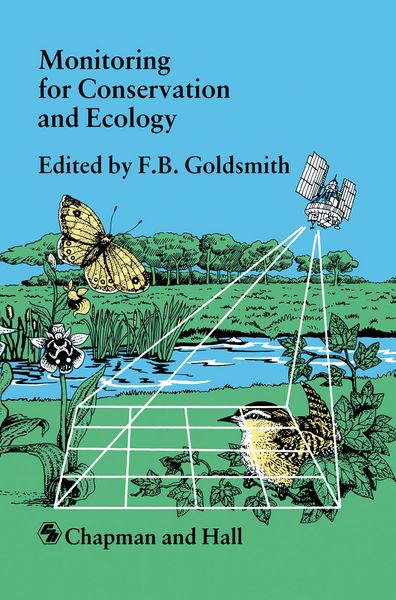
Monitoring for Conservation and Ecology

Aus der Reihe Conservation Biology

Fr. 137.00

inkl. gesetzl. MwSt., Versandkostenfrei


Beschreibung

Produktdetails

Einband

Taschenbuch

Erscheinungsdatum

31.12.1990

Abbildungen

XV, 275 p.

Verlag

Springer Netherland

Seitenzahl

275

Maße (L/B/H)

23.5/15.5/1.7 cm

Gewicht

452 g

Auflage

Softcover reprint of the original 1st ed. 1991

Sprache

Englisch

ISBN

978-0-412-35600-1

Beschreibung

Rezension

This is an excellent book...everyone concerned with assessing environmental changes or managing reserves should read this book. British Ecological Society Bulletin; good practical advice to all those involved in monitoring activities - A J M Baker

Produktdetails

Einband

Taschenbuch

Erscheinungsdatum

31.12.1990

Abbildungen

XV, 275 p.

Verlag

Springer Netherland

Seitenzahl

275

Maße (L/B/H)

23.5/15.5/1.7 cm

Gewicht

452 g

Auflage

Softcover reprint of the original 1st ed. 1991

Sprache

Englisch

ISBN

978-0-412-35600-1

Herstelleradresse

Springer-Verlag GmbH
Tiergartenstr. 17
69121 Heidelberg
DE

Email: ProductSafety@springernature.com

Noch keine Bewertungen vorhanden

Verfassen Sie die erste Bewertung zu diesem Artikel

Helfen Sie anderen Kundinnen und Kunden durch Ihre Meinung.

Kundinnen und Kunden meinen

Bewertungen (0)

  • Produktbild: Monitoring for Conservation and Ecology
  • Produktbild: Monitoring for Conservation and Ecology
  • 1 Development of a rationale for monitoring.- 1.1 Introduction.- 1.2 Definitions.- 1.3 Why monitor?.- 1.4 Design of monitoring strategies.- 1.5 Conclusion.- 2 Scientific requirements of a monitoring programme.- 2.1 Introduction.- 2.2 Purpose.- 2.3 Method.- 2.4 Analysis.- 2.5 Interpretation.- 2.6 Fulfillment.- 2.7 Discussion.- 3 Remote sensing techniques for monitoring land-cover.- 3.1 Introduction to remote sensing.- 3.2 Aerial sensors.- 3.3 Ground survey.- 3.4 Conclusion.- 4 Monitoring plant populations: census as an aid to conservation.- 4.1 Introduction.- 4.2 The need for monitoring plant populations.- 4.3 Methods.- 4.4 Case studies involving monitoring of rare plant populations.- 4.5 Towards more monitoring studies on plant species.- 5 Vegetation monitoring.- 5.1 What is vegetation?.- 5.2 Samples.- 5.3 Location of samples.- 5.4 Measures of abundance of species.- 5.5 Quadrat size.- 5.6 Sampling patterns.- 5.7 Mapping schemes.- 5.8 Comparing two sets of data.- 5.9 Conclusion.- 6 Monitoring butterfly numbers.- 6.1 Introduction.- 6.2 The butterfly monitoring scheme.- 6.3 Case study: Castle Hill National Nature Reserve.- 6.4 Limitations and potential of butterfly monitoring.- 7 Monitoring terrestrial breeding bird populations.- 7.1 Introduction.- 7.2 Methods for monitoring bird populations.- 7.3 Monitoring schemes in the UK and Ireland.- 7.4 Integrated population monitoring.- 7.5 Discussion.- 8 National species distribution surveys.- 8.1 Introduction.- 8.2 Types of surveys.- 8.3 Survey methods.- 8.4 Products of surveys.- 8.5 Interpretation of species distributions.- 8.6 Role of surveys in monitoring.- 9 Monitoring at the county level.- 9.1 Role of County Biological Records Centre.- 9.2 Data.- 9.3 Recording procedures.- 9.4 Technology.- 9.5 Use of the data.- 9.6 Network.-10 Field monitoring: confessions of an addict.- 10.1 Introduction.- 10.2 Field monitoring in theory.- 10.3 The metaphysics of monitoring.- 10.4 Monitoring motives and philosophy.- 10.5 Observation problems.- 10.6 Identification problems.- 10.7 Selecting the criteria.- 10.8 Timing.- 10.9 Samples and reality.- 10.10 Simple factors with complex consequences.- 10.11 To interfere — or not?.- 10.12 Utilizing old surveys.- 10.13 A problem with numbers.- 10.14 Integrated monitoring.- 10.15 Birds and reserve management.- 10.16 Conclusion.- 11 Monitoring overseas: Prespa National Park, Greece.- 11.1 Introduction.- 11.2 Objectives of monitoring.- 11.3 Decisions needed.- 11.4 Recommendations for monitoring.- 11.5 Staffing, costs and administration.- 11.6 Conclusion.- 12 The calculation of index numbers from wildlife monitoring data.- 12.1 Introduction.- 12.2 Index numbers and their properties.- 12.3 Wildlife index numbers in practice.- 12.4 The effect on index numbers of transforming raw abundance data.- 12.5 Conclusions.- 13 Biological monitoring and ecological prediction: from nature reserve management to national state of the environment indicators.- 13.1 Introduction.- 13.2 Choosing the state variables to measure.- 13.3 Biological monitoring at the national scale: towards a State of the Environment index from the World Conservation Strategy.- 13.4 Prediction, monitoring and decision-making.- 14 Synthesis.