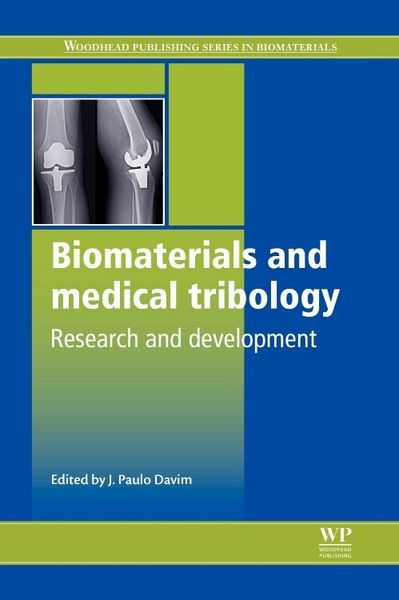
Dvim, J: Biomaterials and Medical Tribology Research and Development
Fr. 258.00
inkl. gesetzl. MwSt.,
Beschreibung
Produktdetails
Einband
Gebundene Ausgabe
Erscheinungsdatum
31.07.2013
Herausgeber
Davim J. Paulo + weitereVerlag
Elsevier Science & TechnologySeitenzahl
152
Maße (L/B/H)
23.4/15.6/2.7 cm
Gewicht
870 g
Sprache
Englisch
ISBN
978-0-85709-017-1
Medical tribology can be defined as the science of tribological phenomena in the human body, both those that naturally occur in the tissues or organs and those that arise after implantation of an artificial device, while biomaterials are inert substances designed to be incorporated into living systems. Biomaterials and medical tribology brings together a collection of high quality articles and case studies focussing on new research and developments in these two important fields.
The book provides details of the different types of biomaterial available and their applications, including nanoparticles for biomedical applications, synergism effects during fiction and fretting corrosion experiments, application of biomedical-grade titanium alloys in trabecular bone and artificial joints, fatigue strengthening of an orthopaedic Ti6AI4V alloy, wear determination on retrieved metal-on-metal hip arthoplasty, natural articular joints, the importance of bearing porosity in engineering and natural lubrication, tribological characterization of human tooth enamel, and finally, liposome-based carrier systems and devices used for pulmonary drug delivery.
Biomaterials and medical tribology is an essential reference for materials scientists, engineers, and researchers in the field of medical tribology. The title also provides an overview for academics and clinicians in this area.
The book provides details of the different types of biomaterial available and their applications, including nanoparticles for biomedical applications, synergism effects during fiction and fretting corrosion experiments, application of biomedical-grade titanium alloys in trabecular bone and artificial joints, fatigue strengthening of an orthopaedic Ti6AI4V alloy, wear determination on retrieved metal-on-metal hip arthoplasty, natural articular joints, the importance of bearing porosity in engineering and natural lubrication, tribological characterization of human tooth enamel, and finally, liposome-based carrier systems and devices used for pulmonary drug delivery.
Biomaterials and medical tribology is an essential reference for materials scientists, engineers, and researchers in the field of medical tribology. The title also provides an overview for academics and clinicians in this area.
Noch keine Bewertungen vorhanden
Verfassen Sie die erste Bewertung zu diesem Artikel
Helfen Sie anderen Kundinnen und Kunden durch Ihre Meinung.