Beschreibung
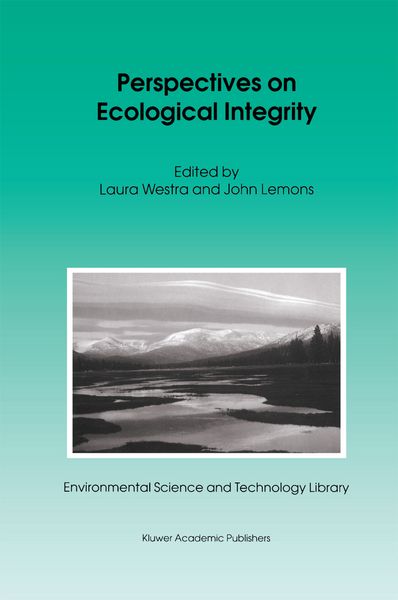
Concepts of ecological integrity have recently been proposed to facilitate enhanced protection of biological and ecological resources against the threat of human activities. The promotion of ecological integrity as a basis for public policy and decision making stems from scientists and others concerned about the threats of human activities to ecosystems and species, and from philosophers attempting to derive a more suitable ethic to guide the relationships between humans and the non-human environment. Although ecological integrity has been proposed as a norm for public policy and decision making, the concept is relatively new and therefore the underlying scientific and philosophical rationales have not been fully developed. This book offers a number of perspectives to stimulate and inform future discussion on the importance and consequences of ecological integrity for science, morality and public policy.
Audience:
Environmental professionals, whether academic, governmental or industrial, or working in the private consultancy sector. Also suitable as an upper-level reference text.
Rezension
`
Appropriately assuming that environmental policy is both a matter of science and ethics, this book compellingly argues that ecosystem integrity should be the goal of environmental policy.
'
Donald A. Brown, Director Bureau of Hazardous Sites and Superfund
Enforcement, Pennsylvania Dept. of Environmental Resources,
Harrisburg
`
Westra and Lemons have done an admirable job fleshing out the debate on the role of ecological integrity in environmental decisionmaking.
'
Margaret Mellon, Director Biotechnology and Agricultural Program,
Union of Concerned Scientists, Washington, D.C.