• Produktbild: Channelling Mobilities
  • Produktbild: Channelling Mobilities

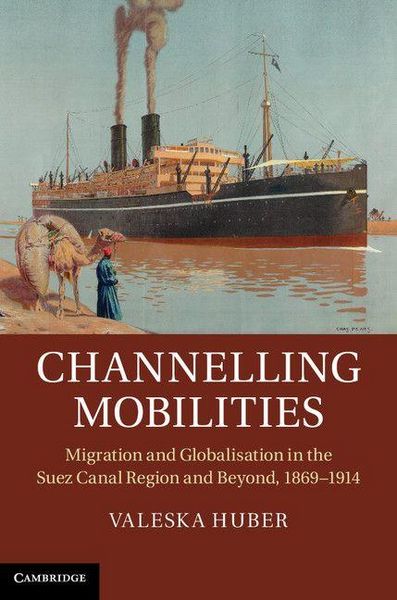
Channelling Mobilities Migration and Globalisation in the Suez Canal Region and Beyond, 1869–1914

Fr. 122.00

inkl. gesetzl. MwSt., Versandkostenfrei


Beschreibung

Produktdetails

Einband

Gebundene Ausgabe

Erscheinungsdatum

01.08.2013

Verlag

Cambridge Academic

Seitenzahl

380

Maße (L/B/H)

23.5/15.7/2.5 cm

Gewicht

680 g

Sprache

Englisch

ISBN

978-1-107-03060-2

Beschreibung

Zitat

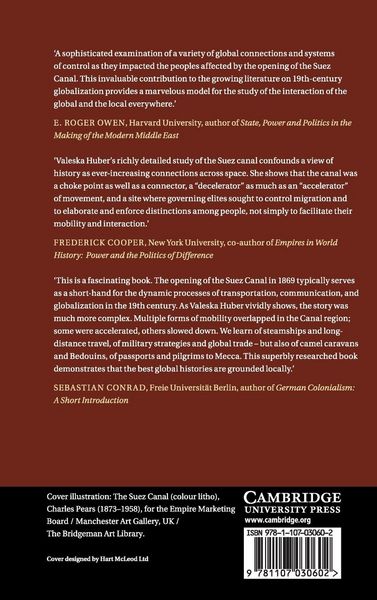
Advance praise: 'A sophisticated examination of a variety of global connections and systems of control as they impacted the peoples affected by the opening of the Suez Canal. This invaluable contribution to the growing literature on nineteenth-century globalization provides a marvelous model for the study of the interaction of the global and the local everywhere.' E. Roger Owen, author of State, Power and Politics in the Making of the Modern Middle East Advance praise: 'This is a fascinating book. The opening of the Suez Canal in 1869 typically serves as a short-hand for the dynamic processes of transportation, communication, and globalization in the nineteenth century. As Valeska Huber vividly shows, the story was much more complex. Multiple forms of mobility overlapped in the Canal region; some were accelerated, others slowed down. We learn of steamships and long-distance travel, of military strategies and global trade - but also of camel caravans and Bedouins, of passports and pilgrims to Mecca. This superbly researched book demonstrates that the best global histories are grounded locally.' Sebastian Conrad, author of German Colonialism: A Short Introduction Advance praise: 'Valeska Huber's richly detailed study of the Suez canal confounds a view of history as ever-increasing connections across space. She shows that the canal was a choke point as well as a connector, a 'decelerator' as much as an 'accelerator' of movement, and a site where governing elites sought to control migration and to elaborate and enforce distinctions among people, not simply to facilitate their mobility and interaction.' Frederick Cooper, co-author of Empires in World History: Power and the Politics of Difference

Produktdetails

Einband

Gebundene Ausgabe

Erscheinungsdatum

01.08.2013

Verlag

Cambridge Academic

Seitenzahl

380

Maße (L/B/H)

23.5/15.7/2.5 cm

Gewicht

680 g

Sprache

Englisch

ISBN

978-1-107-03060-2

Herstelleradresse

Libri GmbH
Europaallee 1
36244 Bad Hersfeld
DE

Email: gpsr@libri.de

Kundinnen und Kunden meinen

0 Bewertungen

Informationen zu Bewertungen

Zur Abgabe einer Bewertung ist eine Anmeldung im Konto notwendig. Die Authentizität der Bewertungen wird von uns nicht überprüft. Wir behalten uns vor, Bewertungstexte, die unseren Richtlinien widersprechen, entsprechend zu kürzen oder zu löschen.

Die Bewertungen sind nach Format, Anzahl Sterne und Datum sortiert.

Verfassen Sie die erste Bewertung zu diesem Artikel

Helfen Sie anderen Kund*innen durch Ihre Meinung

Kundinnen und Kunden meinen

0 Bewertungen filtern

Die Leseprobe wird geladen.
  • Produktbild: Channelling Mobilities
  • Produktbild: Channelling Mobilities
  • Introduction: mobility and its limits; Part I. Imperial Relay Station: Global Space, New Thresholds, 1870s-90s: 1. Rites de passage and perceptions of global space; 2. Regimes of passage: troops in the canal zone; 3. Companies and workers; Part II. Frontier of the Civilising Mission: Mobility Regulation East of Suez, 1880s-1900s: 4. Bedouin and caravans; 5. Dhows and slave trading in the Red Sea; 6. Mecca pilgrims under imperial surveillance; Part III. Checkpoint: Tracking Microbes and Tracing Travellers, 1890s-1914: 7. Contagious mobility and the filtering of disease; 8. Rights of passage and the identification of individuals; Conclusion: rites de passage and rights of passage in the Suez Canal region and beyond; Bibliography.