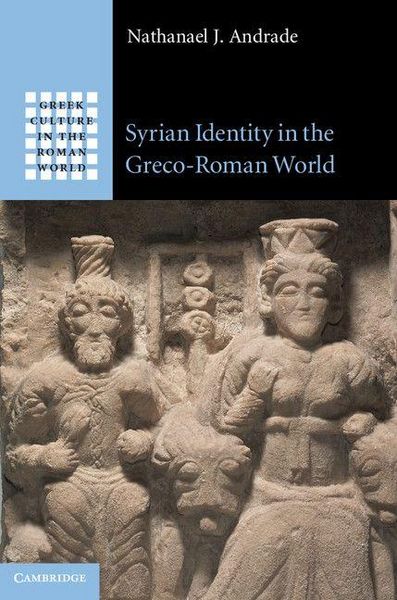
Syrian Identity in the Greco-Roman World
-
- Hardcover ausgewählt
- Taschenbuch
- eBook
-
Sprache:Englisch
Fr. 172.00
inkl. gesetzl. MwSt.,
Beschreibung
Produktdetails
Einband
Gebundene Ausgabe
Erscheinungsdatum
11.06.2015
Verlag
Cambridge AcademicSeitenzahl
444
Maße (L/B/H)
23.5/15.7/2.8 cm
Gewicht
760 g
Sprache
Englisch
ISBN
978-1-107-01205-9
By engaging with recent developments in the study of empires, this book examines how inhabitants of Roman imperial Syria reinvented expressions and experiences of Greek, Roman and Syrian identification. It demonstrates how the organization of Greek communities and a peer polity network extending citizenship to ethnic Syrians generated new semiotic frameworks for the performance of Greekness and Syrianness. Within these, Syria's inhabitants reoriented and interwove idioms of diverse cultural origins, including those from the Near East, to express Greek, Roman and Syrian identifications in innovative and complex ways. While exploring a vast array of written and material sources, the book thus posits that Greekness and Syrianness were constantly shifting and transforming categories, and it critiques many assumptions that govern how scholars of antiquity often conceive of Roman imperial Greek identity, ethnicity and culture in the Roman Near East, and processes of 'hybridity' or similar concepts.
Kundinnen und Kunden meinen
Verfassen Sie die erste Bewertung zu diesem Artikel
Helfen Sie anderen Kund*innen durch Ihre Meinung