• Produktbild: Biochemical Pharmacology as an Approach to Gastrointestinal Disorders
  • Produktbild: Biochemical Pharmacology as an Approach to Gastrointestinal Disorders

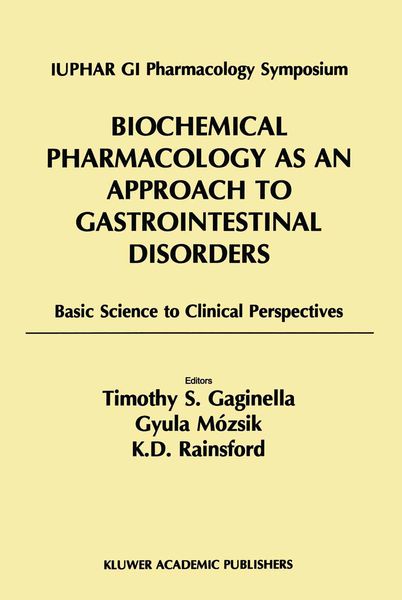
Biochemical Pharmacology as an Approach to Gastrointestinal Disorders Basic Science to Clinical Perspectives (1996)

Fr. 72.90

inkl. gesetzl. MwSt., Versandkostenfrei


Beschreibung

Produktdetails

Einband

Taschenbuch

Erscheinungsdatum

09.11.2012

Herausgeber

Timothy S. Gaginella + weitere

Verlag

Springer Netherland

Seitenzahl

396

Maße (L/B/H)

24/16/2.3 cm

Gewicht

655 g

Auflage

Softcover reprint of the original 1st ed. 1997

Sprache

Englisch

ISBN

978-94-010-6267-1

Beschreibung

Produktdetails

Einband

Taschenbuch

Erscheinungsdatum

09.11.2012

Herausgeber

Verlag

Springer Netherland

Seitenzahl

396

Maße (L/B/H)

24/16/2.3 cm

Gewicht

655 g

Auflage

Softcover reprint of the original 1st ed. 1997

Sprache

Englisch

ISBN

978-94-010-6267-1

Herstelleradresse

Springer-Verlag KG
Sachsenplatz 4-6
1201 Wien
AT

Email: GPSR Kontakt

Noch keine Bewertungen vorhanden

Verfassen Sie die erste Bewertung zu diesem Artikel

Helfen Sie anderen Kundinnen und Kunden durch Ihre Meinung.

Kundinnen und Kunden meinen

Bewertungen (0)

  • Produktbild: Biochemical Pharmacology as an Approach to Gastrointestinal Disorders
  • Produktbild: Biochemical Pharmacology as an Approach to Gastrointestinal Disorders
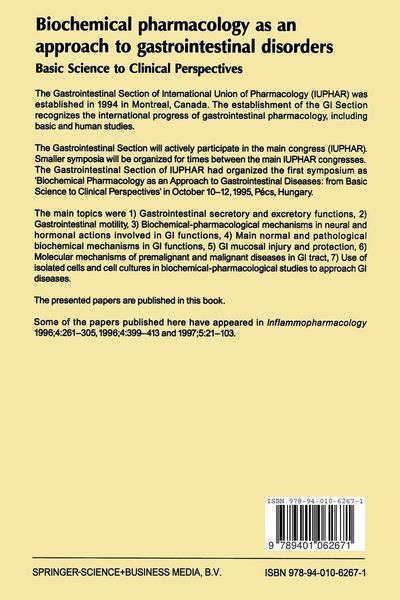
  • Introduction: Advances in the biochemical pharmacology of gastrointestinal (GI) functions as an approach to understanding GI disorders.- I. Gastrointestinal Secretory and Excretory Functions.- Possible compensation in epidermal growth factor production by saliva in rat.- Regulatory mechanism of acid secretion in rat stomach after damage — role of nitric oxide, histamine and sensory neurons.- Secretory pathways in histamine-containing enterochromaffin-like cells of rat stomach.- Nitric oxide as a modulator of fluid absorption in rat jejunum in vivo.- Mechanism of cholera.- Critical evaluation of acinar, ductal, vascular and intestinal intraluminal factors influencing pancreatic cytoprotection.- Peptide receptor antagonists and monoclonal antibodies raised against peptides: tools to study physiological regulation of pancreatic function.- Mechanisms and regulation of Cl- secretion in the large intestine: studies with the rat distal colon.- II. Gastrointestinal Motility.- Prostaglandin E2: actions on the circular and longitudinal contractions of the canine colon.- Gastric motor effects of endothelins in the lower brainstem of the rat.- Effects of erythromycin on the propulsive motility of upper gastrointestinal tract in rats.- Bicuculline blocks the inhibitory effects of substance P but not vasoactive intestinal polypeptide on gastric motor function in the nucleus raphe obscurus of the rat.- Pathological basis and clinical aspects of oesophageal motor disorders.- III–IV. Biochemical—Pharmacological Mechanisms in Neural and Hormonal Normal and Pathological Reactions Involved in GI Functions.- Distribution of muscarinic receptor mRNAs in the stomach of normal or immobilized rats.- Changes of sensory neuropeptides in experimental gastrointestinal diseases.- V. GI MucosalInjury and Protection.- Biochemical energetical backgrounds and their regulation in the gastric corpus mucosa in patients with different gastric secretory responses.- Oxidative stress and its prevention in toxic liver lesions. An overview.- The effect of drugs on liver function and biliary secretion.- Alteration of microvascular regeneration and permeability during acetic acid-induced gastric ulcer healing: effect of basic fibroblast growth factor.- Modulation of gastric wound repair by hepatocyte growth factor and basic fibroblast growth factor.- The effect of resiniferatoxin on experimental gastric ulcer in rats.- AIDS treatment and the heat shock protein level in the gastrointestinal tract.- ELISA and Western blot studies with basic fibroblast growth factor (bFGF) and platelet-derived growth factor (PDGF) in experimental duodenal ulceration and healing.- Biological oxidants as intestinal secretagogues.- A new uniform biochemical explanation for the development and location of ‘genuine’ gastric, duodenal and jejunal ulcers in patients.- VI. Molecular Mechanisms of Premalignant and Malignant Diseases in GI Tract.- Current problems and results of tumour immunology: diagnostic and therapeutic relevance of tumour-associated antigens.- VII. Use of Isolated Cells and Cell Cultures in Biochemical Pharmacological Studies to Approach GI Diseases.- Does omeprazole-induced hypergastrinaemia contribute to the enhanced healing of acetic acid-induced gastric ulcers in rats?.- Modification of pathobiological events by potential hepatopharmacological agents.- Organoprotection and cytoprotection of histamine differ in rats.- Comparative viability studies on isolated gastric mucosal mixed cells and hepatoma and myeloma cell lines with ethanol, indomethacin and their combination.