Gutscheinbedingungen

*Gültig bis 05.07.2026 auf (fast) alles. Ausgeschlossen sind Smartboxen, Zeitschriften, Tickets, Lebensmittel, Gaming-Elektroartikel, Tinte/Toner, Gutscheine, Geschenkkarten, Blumen und Abos | Einlösbar in allen Buchhandlungen von Orell Füssli, Barth Bücher, Buchladen Rapunzel, Papeterie Köhler, Schuler Orell Füssli, Stauffacher und ZAP unter Vorweisung des Gutscheins, auf www.orellfüssli.ch durch Eingabe des Gutscheincodes. Beim Service „eBooks verschenken“ und bei eBook-Käufen via eReader nicht einlösbar | Mindesteinkaufswert: Fr. 30.- | Nicht mit anderen Rabatten kumulierbar.

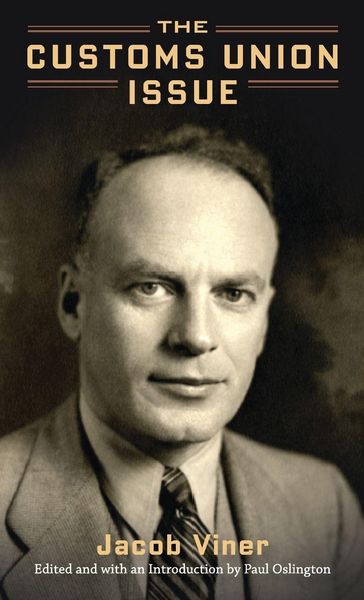
Produktbild: Customs Union Issue (Revised)

Customs Union Issue (Revised)

Fr. 93.90

inkl. gesetzl. MwSt., Versandkostenfrei


Beschreibung

Produktdetails

Einband

Gebundene Ausgabe

Erscheinungsdatum

01.02.2014

Herausgeber

Oslington Paul

Verlag

Oxford University Press

Seitenzahl

248

Maße (L/B/H)

22.2/14.5/1.7 cm

Gewicht

363 g

Sprache

Englisch

ISBN

978-0-19-975612-4

Beschreibung

Produktdetails

Einband

Gebundene Ausgabe

Erscheinungsdatum

01.02.2014

Herausgeber

Oslington Paul

Verlag

Oxford University Press

Seitenzahl

248

Maße (L/B/H)

22.2/14.5/1.7 cm

Gewicht

363 g

Sprache

Englisch

ISBN

978-0-19-975612-4

Herstelleradresse

Libri GmbH
Europaallee 1
36244 Bad Hersfeld
DE

Email: gpsr@libri.de

Noch keine Bewertungen vorhanden

Verfassen Sie die erste Bewertung zu diesem Artikel

Helfen Sie anderen Kundinnen und Kunden durch Ihre Meinung.

Kundinnen und Kunden meinen

Bewertungen (0)

  • Produktbild: Customs Union Issue (Revised)
    • Acknowledgements

    • Preface by Gene Grossman

    • Foreword by George A. Finch

    • Introduction by Paul Oslington

    • I. Introduction

    • II. The Compatibility of Customs Union with the Most-Favored-Nation Principle

    • 1. The Criteria of a "Customs Union"

    • 2. Diplomatic Controversies Arising out of Most-Favored-Nation obligations of Members of Customs Unions

    • 3. The Most-Favored-Nation Principle Not a Serious Barrier to Customs Unions

    • III. Exemption from Most-Favored-Nation Obligations of Preferential Arrangements other than Customs Union

    • 1. Imperial Preference

    • 2. Regional Agreements

    • 3. Plurilateral Agreements

    • IV. The Economics of Customs Unions

    • 1. Customs Union as an Approach to Free Trade

    • 2. Customs Union and the "Terms of Trade"

    • 3. Administrative Economies of Customs Union

    • 4. Revenue Duties

    • 5. The "Level " of the Customs Union Tariff

    • 6. Increased Tariff Protection as the Major Economic Objective of Customs Unions

    • 7. Cartels in Relation to Customs Unions

    • 8. The Allocation of Customs Revenues

    • V. Political Aspects of Customs Unions

    • 1. The Location of Administrative Authority in Customs Unions

    • 2. Customs Union and Neutrality Obligations

    • 3. Customs Union and Political Unification

    • 4. The Austro-German Treaty of 1918

    • VI. The Havana Charter and Customs Union

    • 1. The Most-Favored-Nation Principle

    • 2. Exemptions from Most-Favored-Nation Obligations of Customs Unions, Free-Trade Areas, and Interim Agreements

    • 3. Exemptions from Most-Favored-Nation Obligations of Agreements in the Interest of Economic Development, Including Regional Agreements

    • 4. Relations with Non-Members

    • 5. Significance of the Havana Charter for the Customs Union Question

    • VII. Prospects for Customs Unions

    • 1. Customs Unions Now in Operation or in Active Process of Negotiation

    • 2. Customs Union in Western Europe

    • 3. Obstacles to the Formation of Customs Unions

    • Bibliography

    • Index