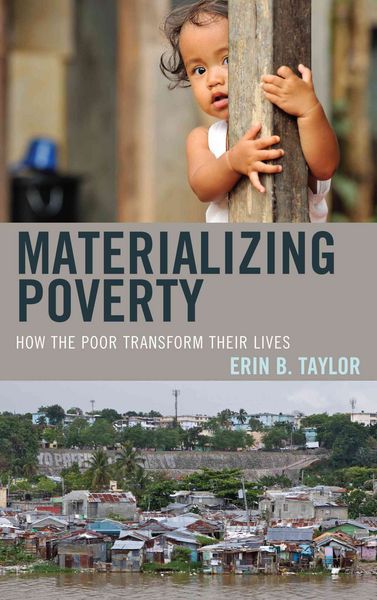
Produktbild: Materializing Poverty

Materializing Poverty How the Poor Transform Their Lives

Fr. 152.00

inkl. gesetzl. MwSt., Versandkostenfrei


Beschreibung

Produktdetails

Einband

Gebundene Ausgabe

Altersempfehlung

18 - 30 Jahr(e)

Erscheinungsdatum

10.10.2013

Verlag

Rowman & Littlefield

Seitenzahl

192

Maße (L/B/H)

23.5/15.7/1.5 cm

Gewicht

422 g

Sprache

Englisch

ISBN

978-0-7591-2421-9

Beschreibung

Zitat

What is poverty? In answer, we need more than statistics, we need to understand what is experienced as poverty. Through scholarly and incredibly rich ethnography Taylor shows the consequence of appreciating that it is the poor rather than the rich whose experience is dominated by materiality. Materializing Poverty is an account that respects both the creativity and the constraints that may accompany poverty. People from all disciplines would be better educated in this essential issue by reading this empathetic engagement which goes beyond the meaning of poverty to how the poor create meaning. -- Daniel Miller, University College London

Produktdetails

Einband

Gebundene Ausgabe

Altersempfehlung

18 - 30 Jahr(e)

Erscheinungsdatum

10.10.2013

Verlag

Rowman & Littlefield

Seitenzahl

192

Maße (L/B/H)

23.5/15.7/1.5 cm

Gewicht

422 g

Sprache

Englisch

ISBN

978-0-7591-2421-9

Herstelleradresse

Libri GmbH
Europaallee 1
36244 Bad Hersfeld
DE

Email: GPSR Kontakt

Noch keine Bewertungen vorhanden

Verfassen Sie die erste Bewertung zu diesem Artikel

Helfen Sie anderen Kundinnen und Kunden durch Ihre Meinung.

Kundinnen und Kunden meinen

Bewertungen (0)

Die Leseprobe wird geladen.
  • Produktbild: Materializing Poverty
  • Contents
    Acknowledgments
    Introduction: The Wealth of Poverty
    Chapter One. More than Artifacts: The Materiality of Poverty
    Chapter Two. Building Futures: Squatting as an Enabling Constraint
    Chapter Three. Too Big to Ignore: The State and the Persistence of Squatting
    Chapter Four. ¡Crisis is Coming! Material Manifestations of Immaterial Ends
    Chapter Five. Moving Places: Barrios as Barometers of National Progress
    Chapter Six. Flexible Identities: Negotiating Values Through Material Forms
    Coda
    Glossary
    Bibliography