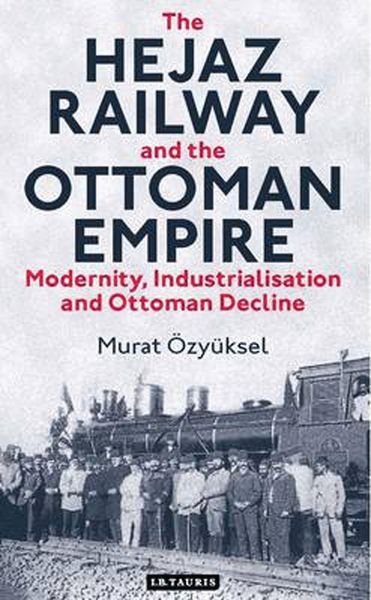
The Hejaz Railway and the Ottoman Empire Modernity, Industrialisation and Ottoman Decline
Fr. 157.00
inkl. gesetzl. MwSt.,
Beschreibung
Produktdetails
Einband
Gebundene Ausgabe
Erscheinungsdatum
22.10.2014
Abbildungen
8 bw integrated
Verlag
Bloomsbury USASeitenzahl
320
Maße (L/B/H)
22.3/14.1/3.2 cm
Gewicht
532 g
Sprache
Englisch
ISBN
978-1-78076-364-4
Railway expansion was symbolic of modernization in the late 19th century, and Britain, Germany and France built railways at enormous speed and reaped great commercial benefits. In the Middle East, railways were no less important and the Ottoman Empire's Hejaz Railway was the first great industrial project of the 20th century. A route running from Damascus to Mecca, it was longer than the line from Berlin to Baghdad and was designed to function as the artery of the Arab world - linking Constantinople to Arabia. Built by German engineers, and instituted by Sultan Abdul Hamid II, the railway was financially crippling for the Ottoman state and the its eventual stoppage 250 miles short of Mecca (the railway ended in Medina) was symbolic of the Ottoman Empire's crumbling economic and diplomatic fortunes. This is the first book in English on the subject, and is essential reading for those interested in Industrial History, Ottoman Studies and the geopolitics of the Middle East before World War I.
Noch keine Bewertungen vorhanden
Verfassen Sie die erste Bewertung zu diesem Artikel
Helfen Sie anderen Kundinnen und Kunden durch Ihre Meinung.