KI-Beratung Beta

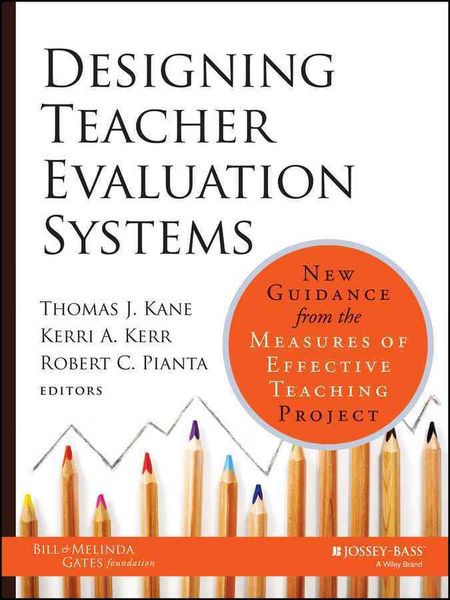
Produktbild: Designing Teacher Evaluation Systems

Designing Teacher Evaluation Systems New Guidance from the Measures of Effective Teaching Project

Fr. 62.90

inkl. gesetzl. MwSt., Versandkostenfrei


Beschreibung

WHAT IS EFFECTIVE TEACHING? It's not enough to say "I know it when I see it" - not when we're expecting so much more from students and teachers than in the past. To help teachers achieve greater success with their students we need new and better ways to identify and develop effective teaching. The Measures...

Beschreibung

WHAT IS EFFECTIVE TEACHING? It's not enough to say "I know it when I see it" - not when we're expecting so much more from students and teachers than in the past. To help teachers achieve greater success with their students we need new and better ways to identify and develop effective teaching.
The Measures of Effective Teaching (MET) project represents a groundbreaking effort to find out what works in the classroom. With funding by the Bill & Melinda Gates Foundation, the MET project brought together leading academics, education groups, and 3,000 teachers to study teaching and learning from every angle. Its reports on student surveys, observations, and other measures have shaped policy and practice at multiple levels.
This book shares the latest lessons from the MET project. With 15 original studies, some of the field's most preeminent experts tap the MET project's unprecedented collection of data to offer new insights on evaluation methods and the current state of teaching in our schools. As feedback and evaluation methods evolve rapidly across the country, Designing Teacher Evaluation Systems is a must read and timely resource for those working on this critical task.
PRAISE FOR DESIGNING TEACHER EVALUATION SYSTEMS
"This book brings together an all-star team to provide true data-driven, policy-relevant guidance for improving teaching and learning. From student achievement to student perceptions, from teacher knowledge to teacher practices, the authors address key issues surrounding the elements of a comprehensive teacher evaluation and improvement system. Highly recommended for anyone seriously interested in reform."
--PETE GOLDSCHMIDT, Assistant Secretary, New Mexico Public Education Department
"This book is an invaluable resource for district and state leaders who are looking to develop growth and performance systems that capture the complexity of teaching and provide educators with the feedback needed to develop in their profession."
--TOM BOASBERG, Superintendent, Denver Public Schools
"A rare example of practical questions driving top quality research and a must read for anyone interested in improving the quality of teaching."
--ROBERT C. GRANGER, Former President (Ret.), The William T. Grant Foundation
"This will be the 'go to' source in years to come for those involved in rethinking how teachers will be evaluated and how evaluation can and should be used to increase teacher effectiveness. The superb panel of contributors to this book presents work that is incisive, informative, and accessible, providing a real service to the national efforts around teacher evaluation reform."
--JOHN H. TYLER, Professor of Education, Brown University
Produktdetails

Einband

Gebundene Ausgabe

Verlag John Wiley & Sons Inc
Seitenzahl

648

Maße (L/B/H)

25/15/1.5 cm

Produktdetails

Einband

Gebundene Ausgabe

Verlag John Wiley & Sons Inc
Seitenzahl

648

Maße (L/B/H)

25/15/1.5 cm

Gewicht

666 g

Auflage

1. Auflage

Sprache

Englisch

ISBN

978-1-118-83435-0

Noch keine Bewertungen vorhanden

Verfassen Sie die erste Bewertung zu diesem Artikel

Helfen Sie anderen Kundinnen und Kunden durch Ihre Meinung.

Kundinnen und Kunden meinen

Bewertungen (0)

  • Produktbild: Designing Teacher Evaluation Systems
  • About the Editors ix
    About the Contributors xi
    About the Bill & Melinda Gates Foundation xix
    Chapter 1: Why Measure Effective Teaching? 1
    Jeff Archer, Kerri A. Kerr, and Robert C. Pianta
    SECTION 1: Using Data for Feedback and Evaluation 7
    Chapter 2: Grade-Level Variation in Observational Measures of Teacher Effectiveness 9
    Kata Mihaly and Daniel F. McCaffrey
    Chapter 3: Improving Observational Score Quality: Challenges in Observer Thinking 50
    Courtney A. Bell, Yi Qi, Andrew J. Croft, Dawn Leusner, Daniel F. McCaffrey, Drew H. Gitomer, and Robert C. Pianta
    Chapter 4: How Framework for Teaching and Tripod 7Cs Evidence Distinguish Key Components of Effective Teaching 98
    Ronald F. Ferguson with Charlotte Danielson
    Chapter 5: Making Decisions with Imprecise Performance Measures: The Relationship Between Annual Student Achievement Gains and a Teacher's Career Value Added 144
    Douglas O. Staiger and Thomas J. Kane
    Chapter 6: To What Extent Do Student Perceptions of Classroom Quality Predict Teacher Value Added? 170
    Stephen W. Raudenbush and Marshall Jean
    SECTION 2: Connecting Evaluation Measures with Student Learning 203
    Chapter 7: Combining Classroom Observations and Value Added for the Evaluation and Professional Development of Teachers 205
    Erik A. Ruzek, Christopher A. Hafen, Bridget K. Hamre, and Robert C. Pianta
    Chapter 8: Classroom Observation and Value-Added Models Give Complementary Information About Quality of Mathematics Teaching 234
    Candace Walkington and Michael Marder
    Chapter 9: Does the Test Matter? Evaluating Teachers When Tests Differ in Their Sensitivity to Instruction 278
    Morgan S. Polikoff
    Chapter 10: Understanding Instructional Quality in English Language Arts: Variations in PLATO Scores by Content and Context 303
    Pam Grossman, Julie Cohen, and Lindsay Brown
    Chapter 11: How Working Conditions Predict Teaching Quality and Student Outcomes 332
    Ronald F. Ferguson with Eric Hirsch
    SECTION 3: The Properties of Evaluation Systems: Issues of Quality, Underlying Frameworks, and Design Decisions 381
    Chapter 12: Evaluating Efforts to Minimize Rater Bias in Scoring Classroom Observations 383
    Yoon Soo Park, Jing Chen, and Steven L. Holtzman
    Chapter 13: Scoring Design Decisions: Reliability and the Length and Focus of Classroom Observations 415
    Jilliam N. Joe, Catherine A. McClellan, and Steven L. Holtzman
    Chapter 14: Assessing Quality Teaching in Science 444
    Susan E. Schultz and Raymond L. Pecheone
    Chapter 15: Evidence on the Validity of Content Knowledge for Teaching Assessments 493
    Drew H. Gitomer, Geoffrey Phelps, Barbara H. Weren, Heather Howell, and Andrew J. Croft
    Chapter 16: Optimizing Resources to Maximize Student Gains 529
    Catherine A. McClellan, John R. Donoghue, and Robert Pianta
    Conclusion: Measuring Effective Teaching--The Future Starts Now 583
    Robert Pianta and Kerri A. Kerr
    Author Index 591
    Subject Index 599