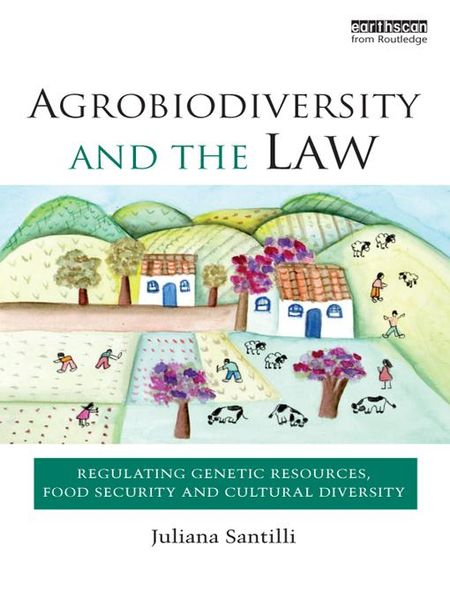
Agrobiodiversity and the Law Regulating Genetic Resources, Food Security and Cultural Diversity
-
- Hardcover
- Taschenbuch
- eBook ausgewählt
-
Form:Einzelkauf Download
-
Sprache:Englisch
Fr. 76.90
inkl. gesetzl. MwSt.Beschreibung
Produktdetails
Format
Kopierschutz
Ja
Family Sharing
Nein
Text-to-Speech
Nein
Erscheinungsdatum
15.03.2012
Verlag
Taylor & Francis eBooksSeitenzahl
368 (Printausgabe)
Dateigröße
2064 KB
Sprache
Englisch
EAN
9781136580031
A wide range of crop genetic resources is vital for future food security. Loss of agricultural biodiversity increases the risk of relying on a limited number of staple food crops. However, many laws, such as seed laws, plant varieties protection and access and benefit-sharing laws, have direct impacts on agrobiodiversity, and their effects have been severely underestimated by policy-makers. This is of concern not only to lawyers, but also to agronomists, biologists, and social scientists, all of whom need clear guidance as to the relevance of the law to their work.
This book analyzes the impact of the legal system on agrobiodiversity (or agricultural biodiversity) - the diversity of agricultural species, varieties, and ecosystems. Using an interdisciplinary approach, it takes up the emerging concept of agrobiodiversity and its relationship with food security, nutrition, health, environmental sustainability, and climate change. It assesses the impacts on agrobiodiversity of key legal instruments, including seeds laws, the International Convention for the Protection of New Varieties of Plants, plant breeders' rights, the Convention on Biological Diversity (regarding specifically its impact on agrobiodiversity), and the International Treaty on Plant Genetic Resources for Food and Agriculture. It also reviews the options for the implementation of these instruments at the national level in several countries. It discusses the interfaces between the free software movement, the 'commons' movement, and seeds, as well as the legal instruments to protect cultural heritage and their application to safeguard agrobiodiversity-rich systems. Finally, it analyzes the role of protected areas and the possibility of using geographical indications to enhance the value of agrobiodiversity products and processes.
Kundinnen und Kunden meinen
Verfassen Sie die erste Bewertung zu diesem Artikel
Helfen Sie anderen Kund*innen durch Ihre Meinung