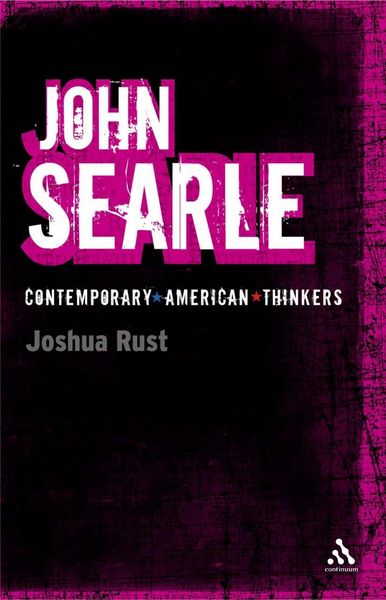
John Searle
Fr. 36.90
inkl. gesetzl. MwSt.Beschreibung
Produktdetails
Format
Kopierschutz
Ja
Family Sharing
Nein
Text-to-Speech
Nein
Erscheinungsdatum
23.09.2009
Verlag
Bloomsbury eBooks UKSeitenzahl
186 (Printausgabe)
Dateigröße
4849 KB
Auflage
1. Auflage
Sprache
Englisch
EAN
9781441153876
John Searle is one of the most important and influential analytic philosophers working today. He has made significant contributions to the fields of the philosophy of language and the philosophy of mind.
This concise and accessible book provides a critical review of Searle's philosophical themes. While Searle began his career as a philosopher of language, this book proceeds thematically, starting with a review of Searle's general ontological commitments. His conception of the mental is then located within that general framework. A theory of intentionality sets the stage for Searle's accounts of action, rationality, freedom, language, and social reality. Searle weaves together this broad array of topics by means of a set of theoretical and methodological assumptions. Part of the task of this book is to articulate some of those unifying tendencies, while locating Searle within the history of analytic philosophy.
In addition to comparing Searle's views to those of his interlocutors, the book also attempts to identify changes in those views, as articulated over the course of Searle's career.
This concise and accessible book provides a critical review of Searle's philosophical themes. While Searle began his career as a philosopher of language, this book proceeds thematically, starting with a review of Searle's general ontological commitments. His conception of the mental is then located within that general framework. A theory of intentionality sets the stage for Searle's accounts of action, rationality, freedom, language, and social reality. Searle weaves together this broad array of topics by means of a set of theoretical and methodological assumptions. Part of the task of this book is to articulate some of those unifying tendencies, while locating Searle within the history of analytic philosophy.
In addition to comparing Searle's views to those of his interlocutors, the book also attempts to identify changes in those views, as articulated over the course of Searle's career.
Kundinnen und Kunden meinen
Verfassen Sie die erste Bewertung zu diesem Artikel
Helfen Sie anderen Kund*innen durch Ihre Meinung