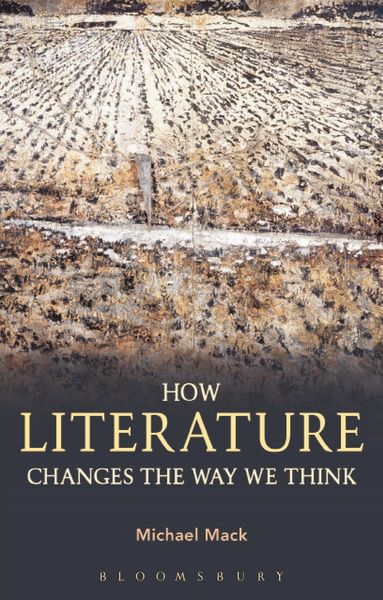
How Literature Changes the Way We Think
-
- Hardcover
- Taschenbuch
- eBook ausgewählt
-
Form:Einzelkauf Download
-
Sprache:Englisch
-
eBook Format:ePUB
- PDF Fr. 45.90
- ePUB Fr. 45.90 ausgewählt
Fr. 45.90
inkl. gesetzl. MwSt.Beschreibung
Produktdetails
Format
ePUB
Kopierschutz
Ja
Family Sharing
Nein
Text-to-Speech
Ja
Erscheinungsdatum
01.12.2011
Verlag
Bloomsbury eBooks USSeitenzahl
208 (Printausgabe)
Dateigröße
1024 KB
Auflage
1. Auflage
Sprache
Englisch
EAN
9781441137630
The capacity of the arts and the humanities, and of literature in particular, to have a meaningful societal impact has been increasingly undervalued in recent history. Both humanists and scientists have tended to think of the arts as a means to represent the world via imagination. Mack maintains that the arts do not merely describe our world but that they also have the unique and underappreciated power to make us aware of how we can change accustomed forms of perception and action.
Mack explores the works of prominent writers and thinkers, including Nietzsche, Foucault, Benjamin, Wilde, Roth, and Zizek, among others, to illustrate how literature interacts with both people and political as well as scientific issues of the real world. By virtue of its distance from the real world-its virtuality-the aesthetic has the capability to help us explore different and so far unthinkable forms of action and thereby to resist the repetition and perpetuation of harmful practices such as stereotyping, stigma, exclusion, and the exertion of violence.
Mack explores the works of prominent writers and thinkers, including Nietzsche, Foucault, Benjamin, Wilde, Roth, and Zizek, among others, to illustrate how literature interacts with both people and political as well as scientific issues of the real world. By virtue of its distance from the real world-its virtuality-the aesthetic has the capability to help us explore different and so far unthinkable forms of action and thereby to resist the repetition and perpetuation of harmful practices such as stereotyping, stigma, exclusion, and the exertion of violence.
Kundinnen und Kunden meinen
Verfassen Sie die erste Bewertung zu diesem Artikel
Helfen Sie anderen Kund*innen durch Ihre Meinung