Gutscheinbedingungen

*Gültig bis 04.08.2026 auf (fast) alles. Ausgeschlossen sind Smartboxen, Zeitschriften, Tickets, Lebensmittel, Gaming-Elektroartikel, Tinte/Toner, Gutscheine, Geschenkkarten, Blumen und Abos | Einlösbar in allen Buchhandlungen von Orell Füssli, Barth Bücher, Buchladen Rapunzel, Papeterie Köhler, Schuler Orell Füssli, Stauffacher und ZAP unter Vorweisung des Gutscheins, auf www.orellfüssli.ch durch Eingabe des Gutscheincodes. Beim Service „eBooks verschenken“ und bei eBook-Käufen via eReader nicht einlösbar | Mindesteinkaufswert: Fr. 30.- | Nicht mit anderen Rabatten kumulierbar.

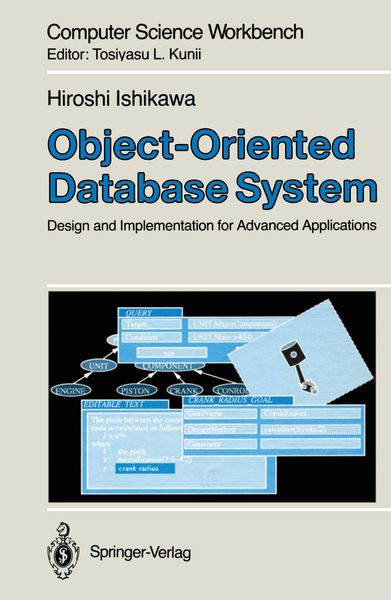
  • Produktbild: Object-Oriented Database System
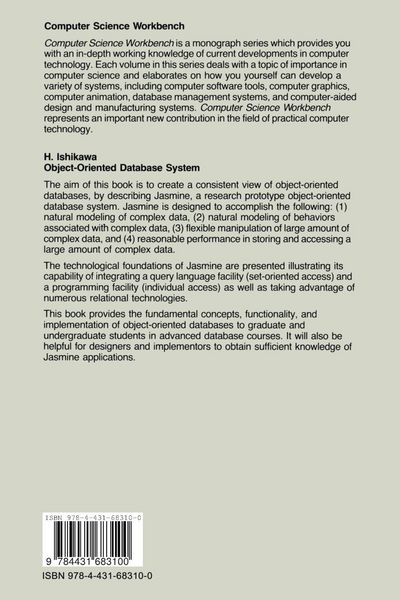
  • Produktbild: Object-Oriented Database System

Object-Oriented Database System Design and Implementation for Advanced Applications

Fr. 72.90

inkl. gesetzl. MwSt., Versandkostenfrei


Beschreibung

Produktdetails

Einband

Taschenbuch

Erscheinungsdatum

04.01.2012

Verlag

Springer Tokyo

Seitenzahl

164

Maße (L/B/H)

23.5/15.5/1.1 cm

Gewicht

289 g

Auflage

Softcover reprint of the original 1st ed. 1993

Sprache

Englisch

ISBN

978-4-431-68310-0

Beschreibung

Produktdetails

Einband

Taschenbuch

Erscheinungsdatum

04.01.2012

Verlag

Springer Tokyo

Seitenzahl

164

Maße (L/B/H)

23.5/15.5/1.1 cm

Gewicht

289 g

Auflage

Softcover reprint of the original 1st ed. 1993

Sprache

Englisch

ISBN

978-4-431-68310-0

Herstelleradresse

Springer-Verlag KG
Sachsenplatz 4-6
1201 Wien
AT

Email: GPSR Kontakt

Noch keine Bewertungen vorhanden

Verfassen Sie die erste Bewertung zu diesem Artikel

Helfen Sie anderen Kundinnen und Kunden durch Ihre Meinung.

Kundinnen und Kunden meinen

Bewertungen (0)

  • Produktbild: Object-Oriented Database System
  • Produktbild: Object-Oriented Database System
  • 1. Introduction.- 1.1 Motivation.- 1.2 Overview.- 2. Data Model.- 2.1 Object Semantics.- 2.2 Classification and Generalization.- 2.3 System-Defined Classes.- 2.4 More Formal Semantics.- 3. Database Programming Language.- 3.1 Set-Oriented Access.- 3.1.1 Object expressions.- 3.1.2 Queries.- 3.1.3 Incomplete knowledge access.- 3.1.4 Set-oriented operation.- 3.1.5 Aggregate functions and set functions.- 3.1.6 Procedural attributes in conditions.- 3.1.7 Demons.- 3.2 More Formal Semantics.- 3.2.1 Object operators.- 3.2.2 Query semantics.- 3.3 Singleton Access and Object Variables.- 3.4 Procedural Attribute and Demon Definition.- 3.5 Miscellaneous Operations.- 3.5.1 Class operations.- 3.5.2 Database operations.- 3.5.3 Multimedia operations.- 3.5.4 Persistent objects and temporary objects.- 4. Implementation.- 4.1 System Architecture.- 4.2 Data Management Subsystem.- 4.2.1 Relation organization.- 4.2.2 Predicate and manipulation functions.- 4.2.3 Operators.- 4.2.4 Implementation detail.- 4.3 Object Management Subsystem.- 4.3.1 Storage structures of objects.- 4.3.2 Set-oriented support.- 4.3.2.1 Query graph generation.- 4.3.2.2 Access plan generation.- 4.3.2.3 Object-oriented query optimization.- 4.3.3 Singleton access support and object buffering.- 4.3.4 Support for miscellaneous operations.- 4.3.5 Interpreter.- 4.3.6 Extensibility.- 5. Artificial Intelligence Applications.- 5.1 Introduction.- 5.2 System Overview.- 5.3 World Model Design.- 5.3.1 Domain model.- 5.3.1.1 Classification and aggregation.- 5.3.1.2 Generalization.- 5.3.1.3 Derivation.- 5.3.1.4 Integration.- 5.3.2 Linguistic model.- 5.3.3 Mapping.- 5.4 Semantic Interpretation.- 5.4.1 Issues in parsing.- 5.4.2 Our approach.- 5.4.2.1 Meaning representation.- 5.4.2.2 Principles for using the WM.- 5.4.2.3 Rules.- 5.4.2.4 Control of rules.- 5.4.2.5 How the rules work.- 5.5 Query Translation.- 5.5.1 WM query language.- 5.5.2 Our approach to translation.- 5.5.3 Translation rules.- 5.5.3.1 Target ruleset.- 5.5.3.2 Groupby ruleset.- 5.5.3.3 Having ruleset.- 5.5.3.4 Qualification ruleset.- 5.5.3.5 Translation example.- 5.6 Conclusion.- 5.6.1 Related work.- 5.6.2 Summary.- 6. Hypermedia Applications.- 6.1 Introduction.- 6.2 Current Hypermedia Systems.- 6.2.1 Common characteristics.- 6.2.2 Issues.- 6.3 Data Model.- 6.3.1 Object semantics.- 6.3.2 Classification and generalization.- 6.4 Database Programming Language.- 6.4.1 Object expressions.- 6.4.2 Queries.- 6.4.3 Incomplete knowledge access.- 6.4.4 Set-oriented operation.- 6.4.5 Procedural attributes in conditions.- 6.4.6 Demons.- 6.4.7 Class operations.- 6.5 Application of Jasmine.- 6.5.1 Hypermedia engine.- 6.5.2 Hypermedia model.- 6.5.3 Solutions.- 6.6 Conclusion.- 6.6.1 Related work.- 6.6.2 Experiment.- 7. Engineering Applications.- 7.1 Introduction.- 7.2 Object-Oriented Database.- 7.2.1 Functionality.- 7.2.2 Implementation.- 7.3 Issues for Engineering Tasks.- 7.4 Design Data Management.- 7.5 Intelligent CAD Support.- 7.6 Engineering Information Management.- 7.7 Conclusion.- 7.7.1 Related work.- 7.7.2 Summary.- 8. Conclusion.- 8.1 Related Work.- 8.2 Summary.- A Query Expression Syntax.